
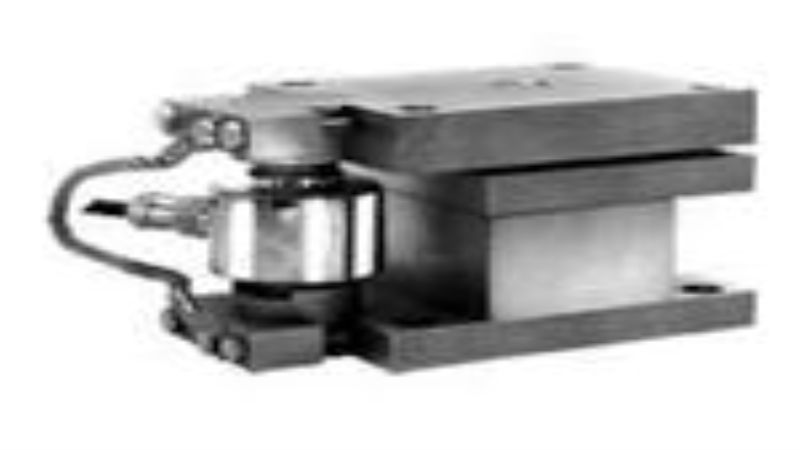
The various types of load cells are a staple of the scaling and weighing industry. They are used to make getting accurate measurements of both flexible and compressive weight possible. This technology is used to measure weight and deviations in weight over a time period. Here is a basic overview of load cells, the most popular types, and how they work:
Purpose
A load cell is basically a sensor mechanism that is used to measure force. Different load cells do this in different ways, but the end result is that a load cell is used to convert the force put on it into a readable electrical signal. No matter how the load is measured, these cells provide a much-needed and accurate measurement of force and weight.
How They Do It
Unfortunately, the conversion of force into a readable electrical signal does not happen by magic. It is done mainly, though not always, through the use of a strain gauge. This is the mechanical part of the load cell that is used to sense the amount of force being put on it. It does this through a wire or foil grid-fashioned pattern, which is set up to sense changes in electrical resistance. Therefore, the force of something pressing on this grid changes the shape of the strain gauge. This is then calculated and converted into an electrical signal, which can then be measured based on certain mathematical equations. There are a few other ways the electrical signal can be calculated, but load cells that use strain gauges are typically the most precise and least expensive, making them the most commonly used type.
Types
A tension load cell is one of the most popular types of load cells, along with compression cells. Without getting too much into the scientific background on how each of these types works, basically a compression load cell measures weight by pushing against a solitary axis, while a tension load cell processes mass by towing force along a single axis. For example, a compression load cell is usually placed under the item that is to be weighed. This is not the case with a tension load cell, which instead pulls an object from the side or from above.
These two types of load cells can be used to weigh items ranging anywhere from two or three ounces to two thousand tons, depending on their size and how they are built. They can also usually be customized to have either digital or analog displays and instrumentation, as well as different amplification options, wireless capabilities, or hardware plating options, such as zinc or stainless steel.