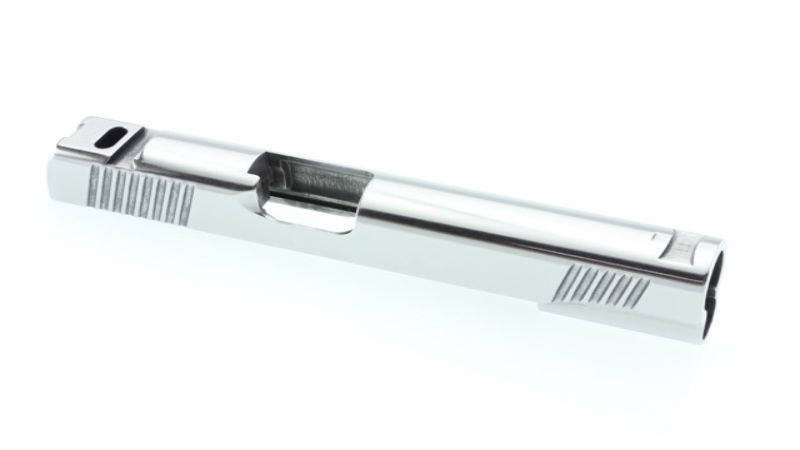
With a variety of makes and models of firearms on the market, firearm finishing is a way to enhance the appearance of the gun, while also helping to increase the longevity of its metal parts. To suit the many types of firearms available, there is a wide range of finishes to choose from to suit a variety of preferences and applications. This assortment of finishes are can also be chosen and tailored to match any budget.
Types of Finishing Processes and How They Work
It is important to choose the correct techniques and finishes to ensure safe operation of the firearm. There are multiple techniques used to add finish to firearm components that will help the gun operate smoothly and increase the life of the metal parts.
The finishing process used depends on the type of material the firearm is made out of and what type of finish is desired. These techniques are used along with a range of media, abrasives, and polishing agents to achieve the desired finish. Techniques used for finishing firearm parts, include:
* Anodizing – a process where a metal coated with an oxide through the process of electrolysis. These coats can be decorative, coming in a variety of colors, while also serving as protection for the metal components.
* Deburring – a process that is part of vibratory finishing, a mass finishing done using a vibratory tumbler tub where small parts are placed in with a specially shaped pellets of media and then are vibrated. Helps to improve the surface by removing burs, even on internal features, such as holes.
* Polishing – commonly done using a centrifugal barrel finishing technique due to it’s consistent and constant finishing results, used to bring out the shine of the metal helping to enhance appearances.
* Passivation – a technique used to apply a light coat of protective material to a surface to strengthen and preserve metal parts. After the metal is soaked in a passivating acid bath, it is then neutralized and rinsed. After drying, an outer protective layer is left on the metal. Bluing is a common type of passivation process, named for the color of the blue-black protective layer that guards against rust and other types of corrosion.
With a variety of finishes and techniques available, firearm finishing can be used to protect any firearm from the elements while also providing an enhanced appearance.