Simply put:
- Extending wall cabinets closer to the ceiling and using slim, shallow units can add significant usable storage without changing a kitchen’s footprint.
- Matching cabinet depth and height to how items are actually used keeps daily cooking tools within reach and reduces clutter.
- Layout choices such as open shelving transitions, corner solutions, and interior organizers make the biggest practical difference in small or mid-size kitchens.
Kitchen wall cabinets hold more than most homeowners realize once their height, depth, and interior layout are matched to how a kitchen is actually used. The difference between a cramped kitchen and an efficient one often comes down to cabinet planning rather than square footage.
Choosing and configuring Kitchen Wall Cabinets correctly affects daily function more than almost any other kitchen decision, since these units typically hold everyday dishware, pantry goods, and small appliances. Homeowners in San Bernardino working with older housing stock or compact kitchen layouts often find that strategic cabinet upgrades deliver more usable space than a full remodel.
- Why Cabinet Height and Depth Matter
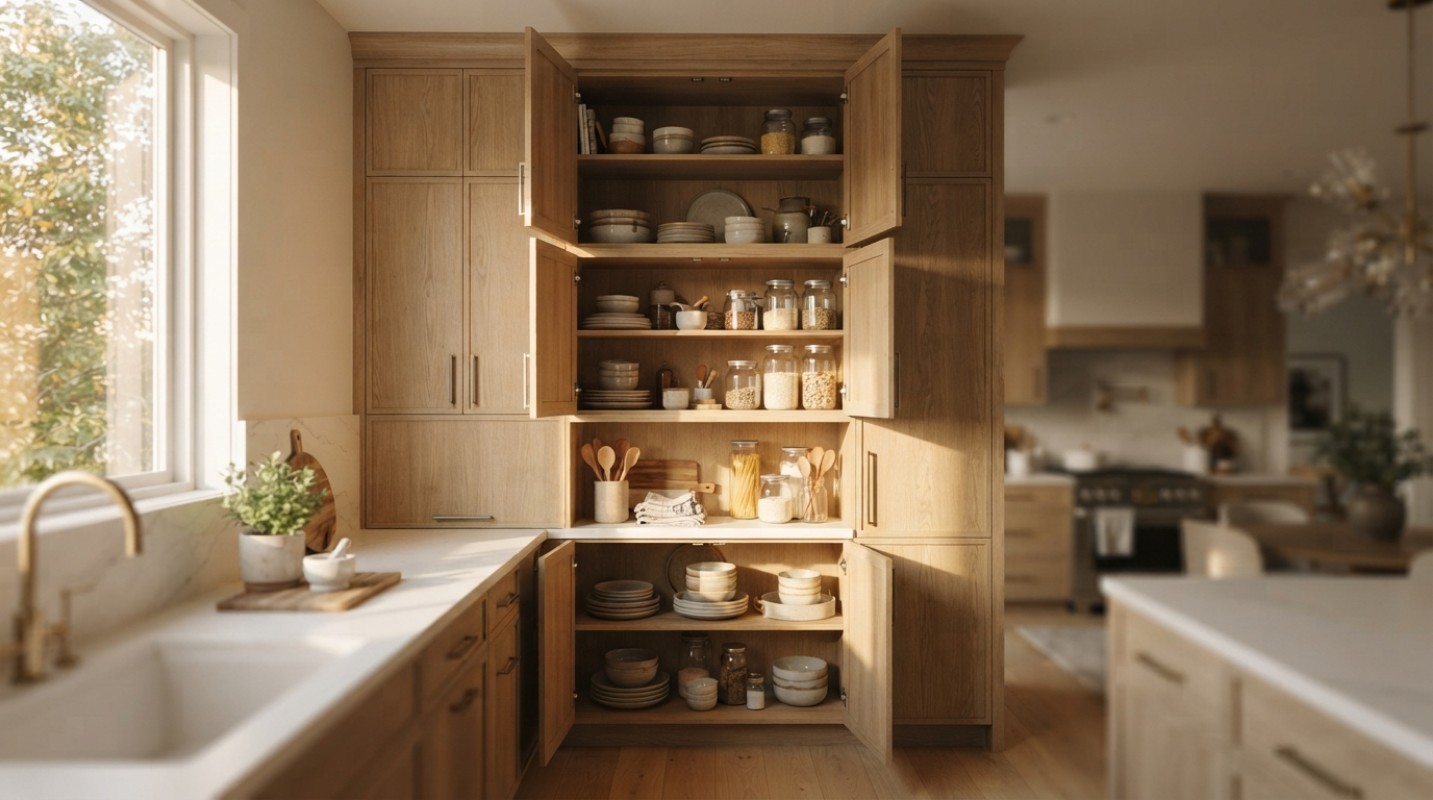
Standard wall cabinets leave unused space near the ceiling that many kitchens never put to work. Extending wall cabinets to full ceiling height, typically 8 feet in a modern home, adds roughly 30 percent more cabinet volume per run.
Depth matters just as much as height, particularly in smaller rooms:
- Shallow wall cabinets work well in alcoves and recesses that cannot take a standard 12-inch-deep unit.
- Slim six-inch-deep wall cabinets positioned 16 inches above the worktop keep spices, oils, and small storage jars accessible without encroaching on the backsplash or task lighting zone.
- An eight-inch-deep wall-hung shelf running the full length of a 10-foot kitchen wall adds around six to seven square feet of usable surface without touching the floor plan.
These adjustments work well for San Bernardino homes with narrow galley kitchens or older construction where floor space cannot be expanded.
- Organizing the Interior for Daily Use
Cabinet volume only helps if the inside layout matches how items are actually retrieved. Store the most-used items closer to the center, at the top of base cabinets and bottom of wall cabinets, so they stay easy to access, while items used less often can sit at the top of wall cabinets and bottom of base cabinets.
Practical interior upgrades include:
- Adding a second fixed shelf partway up a wall cabinet, since fitting a second fixed shelf 6 inches above the base of a wall cabinet effectively creates two usable tiers where previously only one existed.
- Installing shelf risers or turntables, which add surface area to cabinet shelves and let homeowners double storage space while keeping items organized.
- Using drawer dividers and labeled containers to keep smaller categories, such as spices or utensils, separated and visible.
For broader organization guidance beyond cabinetry, the U.S. Department of Agriculture’s food storage guidance offers useful reference points on keeping pantry and refrigerated goods properly rotated once storage space is optimized.
- Extending Storage Beyond Standard Cabinet Runs
When wall cabinet space runs out, several supplemental strategies extend usable storage without a full kitchen overhaul.
| Strategy | Best For | Key Benefit |
|---|---|---|
| Floating shelves | Open wall sections near stove or sink | Adds display and reach-in storage without doors |
| Under-cabinet hooks | Mugs, small tools, utensils | Uses dead space below cabinet bottoms |
| Corner pull-out units | Awkward corner cabinets | Converts hard-to-reach corners into accessible storage |
| Pegboard panels | Flexible, changing storage needs | Allows configuration to adjust over time |
Walls can hold more than expected, and a pegboard adds flexible storage space that can be adjusted over time as needs change. Floating storage created under cabinets also provides extra room even after cabinets appear completely full.
- Frequently Asked Questions
How much extra storage can taller wall cabinets provide? Raising cabinet runs to ceiling height can meaningfully increase volume, since extending wall cabinets to full ceiling height adds roughly 30 percent more cabinet volume per run compared to standard-height units.
Are shallow wall cabinets a good option for small kitchens? Yes. Shallow wall cabinets work well in alcoves and recesses that cannot accommodate a standard 12-inch-deep unit, making them useful in compact or oddly shaped kitchens common in older San Bernardino homes.
What is the most practical way to organize wall cabinet interiors? Placing frequently used items at the most accessible heights and reserving higher or lower shelves for occasional-use items keeps daily cooking efficient, since the most-used items should be stored closer to the center for easy access.
Can wall storage help if base cabinets are already full? Yes. Supplemental wall solutions such as floating shelves, hooks, and pegboards extend storage capacity without requiring floor space or a layout change.
- Planning Cabinet Layouts With Local Support
Based in Chino, CA, Mayfair Cabinet and Stone serves customers across San Bernardino with cabinet and countertop supply for kitchen projects of varying sizes. Information on current cabinet styles and availability for Mayfair Cabinet and Stone is accessible for homeowners planning a wall cabinet upgrade.