In brief:
- IV sedation delivers anti-anxiety medication directly into the bloodstream, producing a deeper, more controlled calming effect than oral sedatives.
- It is typically used for longer procedures, complex dental work, or patients with significant dental anxiety.
- Candidates are screened for medical history, and recovery requires an escort home due to lingering drowsiness.
Patients who feel significant fear or discomfort during dental visits often ask whether a deeper form of relaxation is available beyond local numbing or oral sedatives. Dental IV sedation is designed specifically for that need, allowing a dentist to adjust the medication dose in real time while the patient remains in a relaxed, semi-conscious state throughout the procedure.
Dental IV Sedation High Point NC works by administering sedative medication through a vein, allowing it to take effect faster and more predictably than oral medications or inhaled gas. Unlike oral sedation, where the dose is fixed once swallowed, an IV line lets the dental team titrate medication throughout treatment based on how the patient responds. This method is commonly reserved for patients with moderate to severe anxiety, lengthy restorative work, or multiple procedures scheduled in a single visit.
How IV Sedation Differs From Other Sedation Options
Dental offices generally offer a range of sedation levels, and understanding the differences helps patients in High Point, Nc decide which option fits their situation.
| Sedation Type | Administration | Onset Speed | Typical Use Case |
|---|---|---|---|
| Nitrous Oxide | Inhaled through a mask | Minutes | Mild anxiety, short procedures |
| Oral Sedation | Pill taken before visit | 30-60 minutes | Moderate anxiety, fixed dosing |
| IV Sedation | Delivered through a vein | Minutes, adjustable | Moderate to severe anxiety, longer procedures |
IV sedation stands apart because the dosage can be modified mid-procedure rather than committing to a single pre-measured amount. This adjustability is one reason it is frequently chosen for more involved dental work where procedure length can vary.
What Happens During the Procedure
Patients considering this option often want to know what the actual appointment involves from start to finish.
- A member of the dental team reviews medical history and current medications beforehand to confirm the patient is a safe candidate.
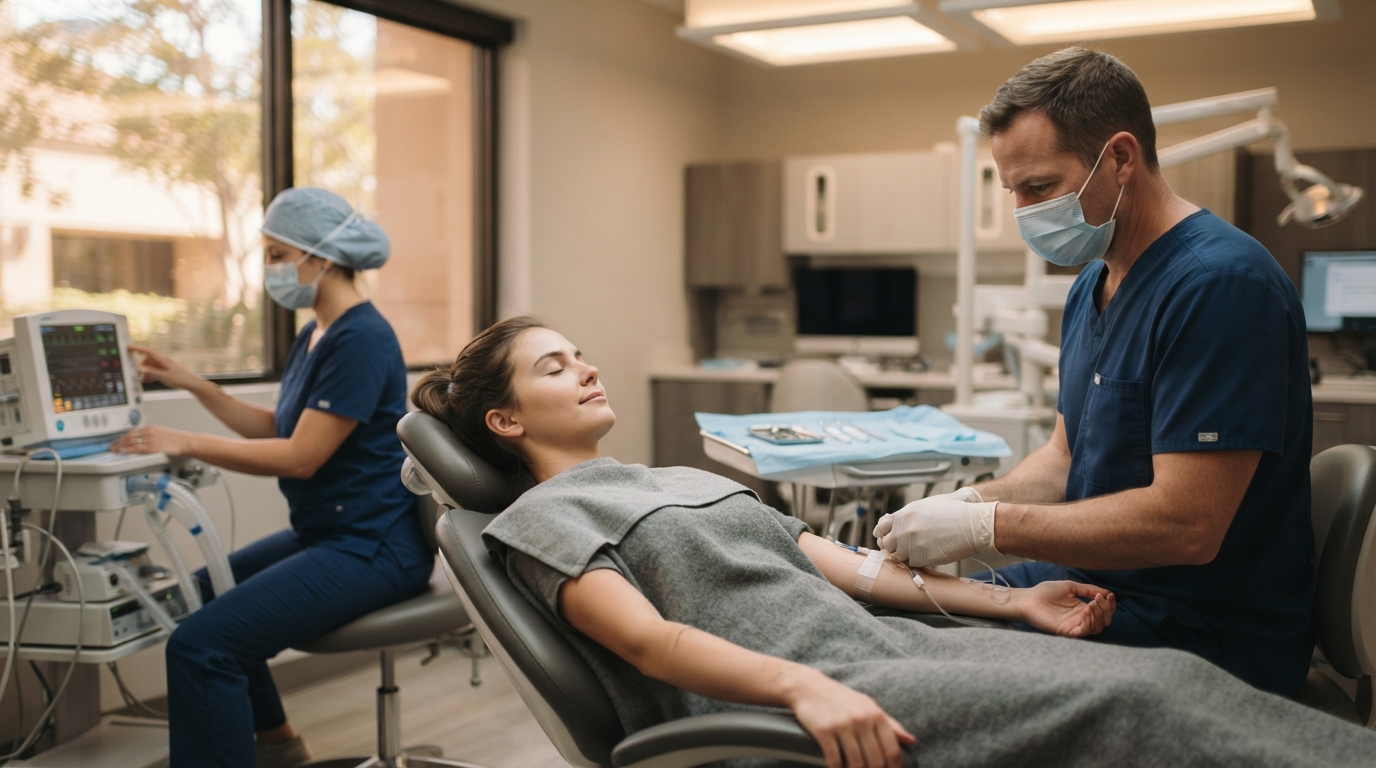
- An IV line is placed, typically in the hand or arm, and sedative medication is introduced gradually.
- Vital signs, including heart rate and oxygen levels, are monitored throughout the procedure.
- The patient remains in a relaxed, sleep-like state but can usually respond to verbal cues if needed.
- Local anesthetic is still used at the treatment site, since IV sedation manages anxiety and awareness rather than pain directly.
According to the American Dental Association, dentists who administer moderate or deep sedation are expected to complete additional training and certification beyond general dental licensure, reflecting the added complexity of monitoring a sedated patient safely.
Recovery, Safety, and Who Should Consider It
Because IV sedation produces a deeper level of relaxation than nitrous oxide or oral sedatives, recovery requires some planning.
- Patients cannot drive themselves home and need a responsible adult to provide transportation.
- Grogginess and reduced coordination can last several hours after the appointment.
- Eating and drinking guidelines before the procedure are typically provided in advance and should be followed closely.
- Most patients resume normal activity within a day, though specific timelines depend on the medication used and the length of the procedure.
This sedation method is generally suited to adults with diagnosed dental anxiety, a strong gag reflex, or those undergoing extensive treatment that would otherwise require multiple shorter visits. Patients with certain cardiovascular or respiratory conditions may need additional evaluation before being cleared for IV sedation, which is why a thorough medical history review is a standard part of the screening process.
Frequently Asked Questions
Is dental IV sedation the same as general anesthesia? No. IV sedation keeps patients in a relaxed, semi-conscious state where they can often respond to verbal prompts, while general anesthesia produces complete unconsciousness.
How long does the sedation effect last? Patients may feel drowsy for several hours after the appointment, which is why arranging transportation home is necessary before the procedure begins.
Does IV sedation eliminate pain during treatment? IV sedation manages anxiety and awareness, but local anesthetic is still administered at the treatment site to control pain directly.
Who is not a good candidate for IV sedation? Patients with certain heart, lung, or other significant medical conditions may require additional medical clearance, so a complete health history review is typically required beforehand.
Business Information and Next Steps
Based in the USA, High Point Smile Dentistry serves patients throughout High Point, NC. For additional information about the practice’s location and available procedures, readers can Get More Information About High Point Smile Dentistry.
Patients weighing sedation options are encouraged to discuss their full medical history and anxiety level with a licensed dentist before scheduling any procedure involving IV sedation. A pre-appointment consultation typically clarifies dosing, monitoring protocols, and recovery expectations specific to the individual case.