Summary first:
- Dining room window treatments balance light control, privacy, and style, with fabric weight and mount type affecting daily function.
- Layered options such as drapery paired with blinds or shades offer more flexibility than a single treatment alone.
- Room orientation, table placement, and glare during meals are practical factors that should guide the final selection.
Choosing window coverings for a dining space comes down to matching light control and privacy needs with the room’s daily use, since this space often transitions from bright breakfast light to softer evening ambiance. The right combination depends on window size, sun exposure, and how formal or casual the room feels.
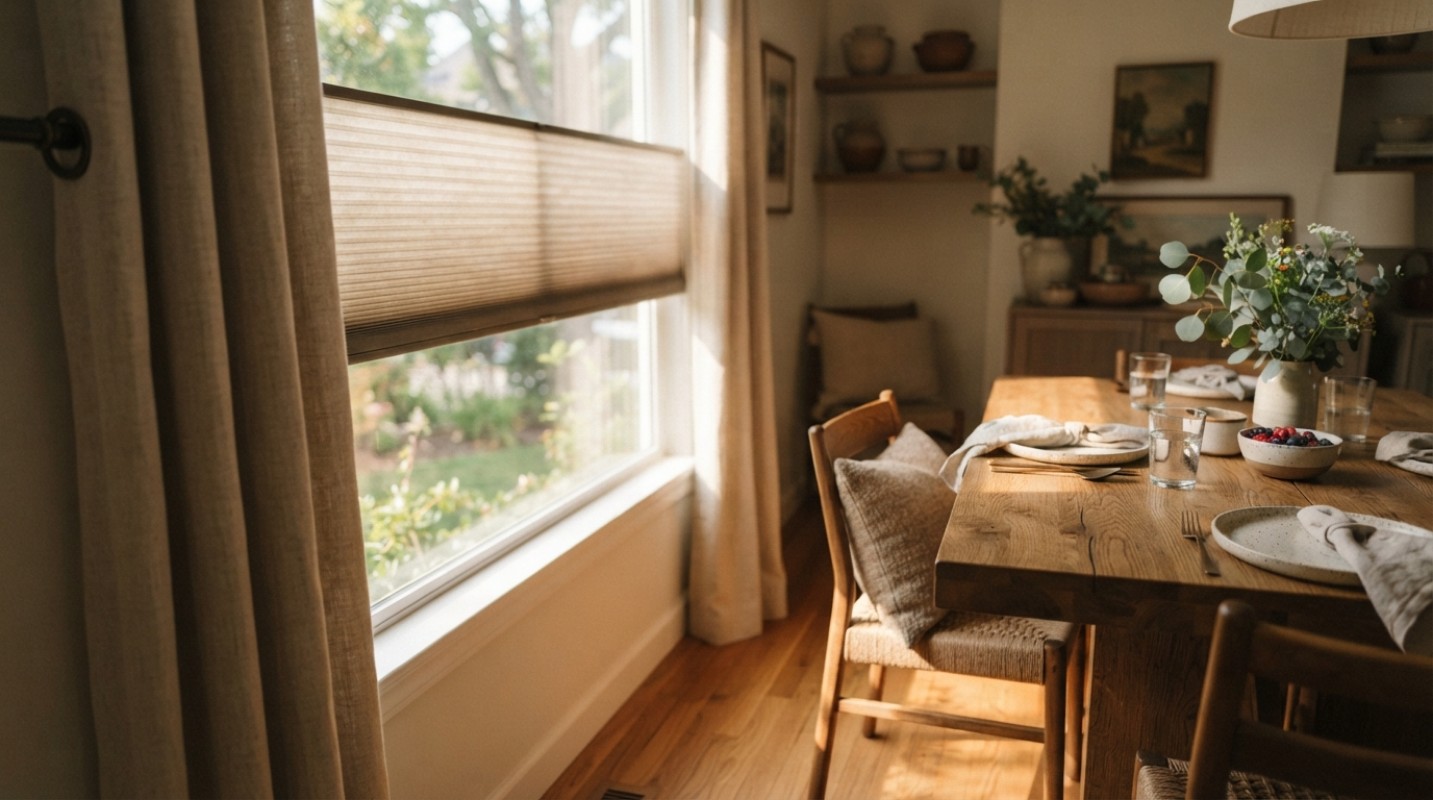
Homeowners researching Dining Room Window Treatments typically want options that reduce glare during meals while still allowing natural light during the day. Fabric weight, mount style, and opacity level all play a role in how a treatment performs in a room that sees frequent use at varying times of day. Getting these details right before purchase helps avoid costly reselection later.
- Factors That Affect the Right Window Treatment Choice
Dining rooms have specific lighting and privacy demands that differ from bedrooms or living spaces. A few practical considerations shape which treatment type works best.
- Sun exposure: East-facing windows receive strong morning light, while west-facing rooms get intense afternoon glare.
- Table proximity: Treatments near a dining table should avoid trailing fabric that could catch on chairs.
- Formality level: Layered drapery suits formal dining rooms, while simple shades fit casual eat-in spaces.
- Cleaning frequency: Fabric near food-prep-adjacent areas may need more frequent dusting or washing than other rooms.
Window orientation also affects fading risk for fabric treatments over time. According to the U.S. Department of Energy, window coverings can help manage solar heat gain and light levels depending on their material and installation.
- Common Treatment Types and How They Compare
Different window treatment categories offer distinct trade-offs between privacy, light control, and maintenance. The table below outlines common choices for dining spaces.
| Treatment Type | Light Control | Privacy Level | Maintenance |
|---|---|---|---|
| Sheer curtains | Low to moderate | Low | Light dusting, occasional wash |
| Cellular/honeycomb shades | High | High | Low, occasional wipe-down |
| Wood or faux-wood blinds | Adjustable | Adjustable | Moderate, periodic dusting |
| Layered drapery with shades | High | High | Higher, fabric care needed |
Cellular shades and blinds offer precise light adjustment throughout the day, which suits dining rooms with changing sun angles. Layered approaches, such as pairing sheer curtains with blackout-lined drapery, give more control but require more upkeep.
- Practical Steps Before Making a Selection
A clear process before purchasing helps avoid mismatched proportions or impractical fabric choices.
- Measure window width and height, including any trim, to confirm accurate sizing.
- Identify the room’s primary light direction and note peak glare times during meals.
- Decide between inside-mount or outside-mount installation based on window depth and frame style.
- Consider fabric opacity needed for evening privacy versus daytime brightness.
- Account for nearby heat sources, such as vents, that could affect fabric longevity.
Mount type affects both appearance and function. Inside-mount treatments create a cleaner, built-in look, while outside-mount options can make a window appear larger and allow more complete light blockage.
- Business Info
Desyne Store operates as a window treatment provider serving customers across the USA, offering a range of drapery, shades, and blind options suited to different room types and lighting needs.
- Frequently Asked Questions
What window treatment works best for a dining room with heavy morning sun? Cellular shades or lined drapery panels tend to manage strong morning light more effectively than sheer-only options, since denser materials reduce glare without blocking the window entirely.
Should dining room curtains touch the floor? Floor-length panels are common for formal dining rooms, but shorter sill-length or apron-length styles may suit casual spaces better, particularly if chairs are positioned close to the window.
How often should dining room window treatments be cleaned? Fabric treatments near dining areas may need more frequent dusting or occasional washing compared to other rooms, due to proximity to food preparation and dining activity.
Is layering shades with curtains necessary for every dining room? Layering is optional and depends on how much light control and privacy a specific room requires; single treatments like blinds or cellular shades can suffice in many cases.
- Final Notes
Selecting window coverings for a dining space works best when light exposure, table placement, and maintenance expectations are weighed together rather than choosing based on appearance alone. Practical measurement and mount decisions made early tend to prevent costly adjustments after installation.
Current product listings for Desyne Store are published for reference by homeowners researching available options.