A professional railing installation typically includes a site assessment, material and design selection, permit review where required, structural mounting, and a final safety inspection. The process is designed to produce a railing that meets both aesthetic goals and local building code requirements for height, spacing, and load capacity.
Homeowners searching for Railing Installation Services are usually comparing materials, trying to understand code requirements, or looking for a realistic timeline before committing to a project. Most residential jobs fall into a few categories: deck and porch railings, interior stair railings, balcony guards, and cable or glass systems used for unobstructed views. Each category carries its own structural and code considerations, which is why an initial consultation typically starts with measuring the space and identifying load-bearing points before any material is ordered.
How the Installation Process Works
A typical project moves through distinct phases, though the order can shift depending on whether the work is new construction or a replacement.
1. Site evaluation – measuring stair rise, deck perimeter, or balcony edge, and checking existing framing for structural soundness.
2. Material and design selection – choosing between wood, aluminum, steel, cable, or glass based on budget, maintenance preference, and architectural style.
3. Permitting – confirming whether local code requires a permit, which often applies to guard rails over a certain height or decks above grade.
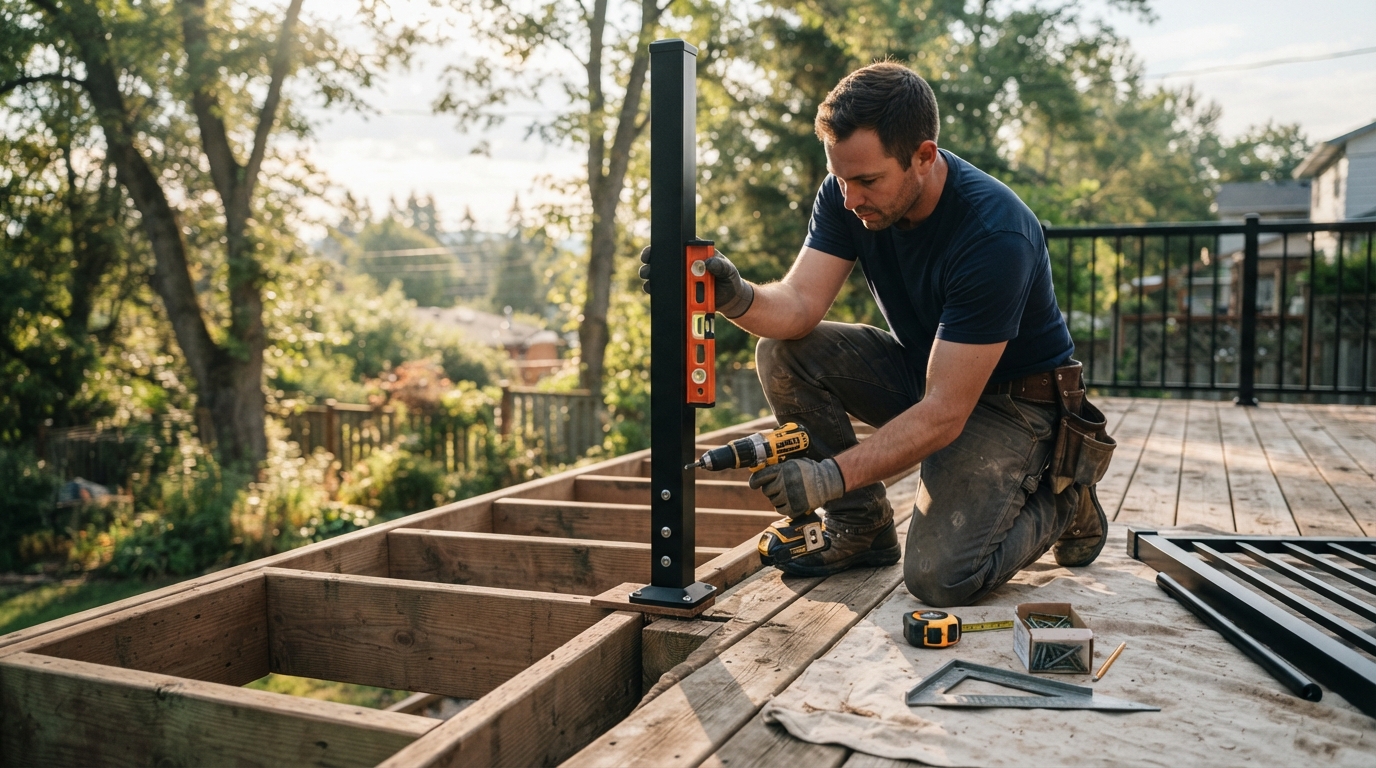
4. Installation and anchoring – securing posts into framing or concrete, then attaching rails, balusters, or infill panels.
5. Final inspection and cleanup – checking rail height, baluster spacing, and attachment strength before the site is cleared.
Material Options and What They Involve
Material choice affects not only appearance but also maintenance, cost, and installation complexity.
Material |
Typical Use |
Maintenance Level |
|
Wood |
Decks, porches, traditional stairs |
Moderate – periodic sealing or staining |
|
Aluminum/Steel |
Decks, balconies, exterior stairs |
Low – occasional cleaning |
|
Cable |
Decks, view-oriented balconies |
Low to moderate – periodic tension checks |
|
Glass panel |
Balconies, modern interiors |
Low – regular cleaning for clarity |
Metal and cable systems generally require less upkeep than wood but can involve more precise fabrication work during installation. Glass panel systems need careful structural backing since the panel itself often serves as the primary infill rather than individual balusters.
Local Code and Safety Considerations in Ferndale, WA
Guard and handrail height, baluster spacing, and load requirements are governed by the International Residential Code, which many jurisdictions adopt with local amendments. The International Code Council publishes the base residential code language that most state and local building departments reference when reviewing deck, stair, and balcony railing plans.
Homeowners in Ferndale, WA planning a deck or stair railing replacement should check with the local building department before installation begins, since permit thresholds and inspection timing can differ by project type. Weather exposure is also a practical factor: railings installed outdoors in the Pacific Northwest climate benefit from materials and fasteners rated for sustained moisture exposure.
Based in USA, Kaizen Custom Railing serves customers across Ferndale, WA, with work centered on custom railing design and installation for residential and exterior applications.
Frequently Asked Questions
Does a railing installation always require a permit? Not always, but many jurisdictions require a permit when a guard rail exceeds a certain height or when structural framing is altered, so checking with the local building department is a necessary first step.
How long does a typical railing installation take? Smaller stair or porch rail projects can often be completed within a day, while larger deck or balcony systems involving custom fabrication may take several days depending on material lead times.
What is the difference between a handrail and a guard rail? A handrail is meant to be gripped while walking on stairs, while a guard rail is a barrier designed to prevent falls from an elevated surface, and each has separate code requirements for height and spacing.
Can an existing railing be repaired instead of replaced? In some cases loose posts or damaged balusters can be repaired, but if the structural anchoring has failed or the material has deteriorated significantly, replacement is typically the safer option.
Current service area details for Kaizen Custom Railing are published online for homeowners comparing railing options before scheduling an assessment.