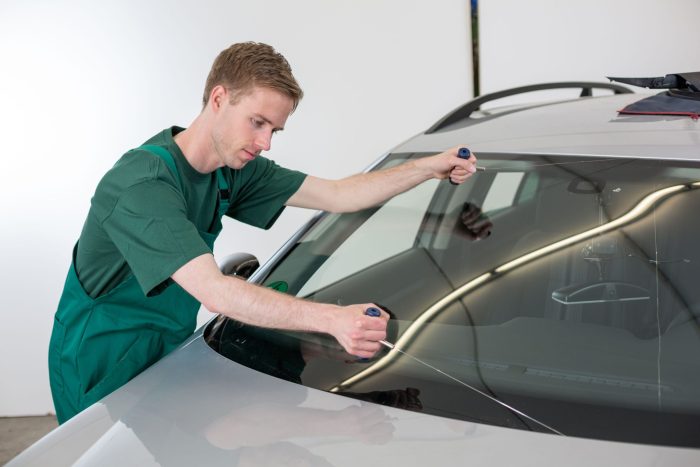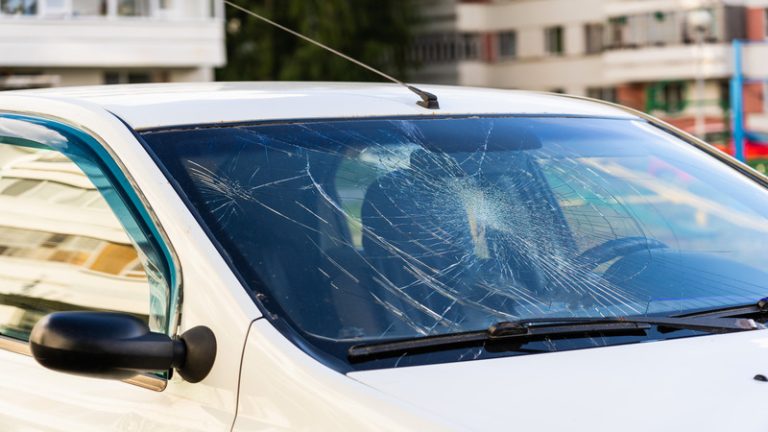
Windshield damage can be harder to see in certain lighting because cracks and chips reflect, bend, and scatter light differently depending on its direction, intensity, and the driver’s viewing angle. A chip that appears almost invisible in the shade may become more noticeable under direct sunlight or oncoming headlights, even when the actual damage has not changed.
For vehicle owners, this can create confusion about the condition of their windshield. A small mark may be visible during one drive but difficult to locate later. In other situations, a crack that seemed minor while the vehicle was parked becomes distracting when sunlight reaches the windshield at a particular angle.
These differences do not necessarily indicate that the damage is growing or disappearing. Understanding how lighting affects the appearance of damaged glass can help drivers recognize when professional windshield evaluation is appropriate.
Why Does Lighting Change the Appearance of Windshield Damage?
Automotive windshields are designed to provide a clear view while protecting occupants from wind, weather, and road debris. Most modern passenger vehicles use laminated windshield glass, consisting of two glass layers bonded around a plastic interlayer.
When a rock or another object strikes the windshield, it can create a fracture in the outer glass layer.
That damaged area changes how light interacts with the glass.
Three optical effects help explain the difference:
- Reflection: Light bounces off surfaces, including the edges of a fracture.
- Refraction: Light changes direction as it passes between materials with different optical properties.
- Scattering: Irregular surfaces and damaged areas redirect light in multiple directions.
The surrounding undamaged glass remains comparatively uniform. A chip or crack disrupts that uniformity, making the affected area appear brighter, darker, or more reflective under certain conditions.
Because sunlight, headlights, and shadows illuminate the windshield differently, the same damage may produce different visual effects throughout the day.
Why Can a Windshield Chip Be Difficult to See in the Shade?
Shade reduces direct sunlight and can make some types of windshield damage less noticeable.
A small chip may contain tiny fractures that are difficult to distinguish when the glass is evenly illuminated.
Without a strong light source striking the damaged area, the contrast between the fracture and the surrounding glass may be limited.
For example, a driver might notice a small impact mark while parked in direct sunlight. After moving the vehicle beneath a covered parking area, the mark may become difficult to locate.
The glass has not necessarily changed. Instead, the lighting conditions have changed how the damage appears.
This distinction matters because visibility alone does not determine whether a chip requires attention.
A small fracture can still be present even when it is difficult to see.
Drivers considering windshield glass chip repair should focus on the actual condition of the glass rather than assuming that damage is insignificant because it disappears under particular lighting.
Why Does Direct Sunlight Make Some Windshield Cracks More Visible?
Direct sunlight can make fractures stand out because light interacts with the irregular surfaces created by the damage.
A crack may appear as a bright line when sunlight strikes it from a particular direction.
At another angle, the same crack may appear darker or blend into the surrounding glass.
The Angle of Sunlight Matters
The sun’s position changes throughout the day, which changes the direction from which light reaches the windshield.
Morning sunlight may enter from a low angle, while midday sunlight generally reaches the windshield from a higher position.
These differences affect reflections and refraction around damaged areas.
A crack that looks faint during the afternoon may become highly visible when the vehicle faces the rising or setting sun.
Windshield Curvature Also Influences Visibility
Windshields are curved rather than perfectly flat.
Their shape affects the angle at which light reaches different sections of the glass.
Consequently, a crack near one part of the windshield may reflect sunlight differently from a similar crack elsewhere.
This does not automatically make one location more severely damaged. It simply means the appearance of the damage depends partly on its position and surrounding optical conditions.
Why Can Windshield Damage Seem Worse During Sunrise or Sunset?
Low-angle sunlight can create challenging visibility conditions for drivers.
When sunlight enters directly through the windshield, reflections from dust, glass imperfections, and existing damage may become more noticeable.
A small impact mark can stand out against the brighter background, while a thin crack may appear as a reflective line.
For drivers in Mesa, this situation may occur during an eastbound morning commute or a westbound drive later in the day, depending on the route and position of the sun.
The important consideration is whether the damaged area interferes with the driver’s ability to see clearly.
A crack that causes distraction during low-angle sunlight may deserve professional attention even if it is less noticeable under other conditions.
However, the intensity of the reflection alone does not establish whether the damage is suitable for repair.
That decision requires evaluating the fracture itself.
Why Are Some Windshield Cracks More Noticeable at Night?
Nighttime driving produces a different lighting environment from daytime driving.
Instead of broad illumination from the sky, drivers encounter concentrated light sources such as headlights, traffic signals, and streetlights.
When these lights strike a chipped or cracked windshield, the damaged area may reflect or scatter light toward the driver’s eyes.
This can make fractures appear more prominent than they do during daylight.
Oncoming Headlights Can Highlight Existing Damage
A driver may notice that a small crack becomes especially visible when another vehicle approaches with its headlights on.
As the approaching vehicle changes position, the reflection may move or diminish.
The crack itself may remain unchanged.
What changes is the direction and intensity of the light reaching the damaged glass.
Streetlights Can Reveal Different Parts of a Crack
A windshield may appear reasonably clear between streetlights, then briefly reveal a reflective line when passing beneath one.
This effect can be confusing because it makes damage appear inconsistent.
However, repeated changes in visibility can result from light interacting with the same existing fracture.
Drivers should not rely solely on how noticeable a crack is during one nighttime trip to determine its condition.
Can a Windshield Chip Look Different From Inside and Outside the Vehicle?
Yes.
Viewing the windshield from different positions changes the angle at which light passes through the damaged area.
From outside the vehicle, an impact mark may appear as a small circle, spot, or irregular fracture.
From the driver’s seat, the same damage may appear as a faint line, reflection, or darker area.
These differences occur because the observer is viewing the fracture through different angles and glass surfaces.
The background also matters.
A chip viewed against a dark dashboard may be easier to notice than one viewed against a bright outdoor scene.
Likewise, a fracture may become more visible when the observer moves slightly to one side.
This is one reason professional windshield inspections consider more than a single photograph or viewing angle.
Does Hard-to-See Damage Mean the Windshield Is Safe?
Not necessarily.
A chip or crack that is difficult to see may still require repair or replacement.
The visibility of a fracture is only one factor in determining its significance.
Professional assessment considers several characteristics, including:
- The type of damage
- Its size and depth
- Its location on the windshield
- Whether multiple fractures are present
- Whether the damage affects the driver’s field of view
- Whether the condition falls within applicable repair standards
A small chip outside the primary viewing area may be repairable, while a more complicated fracture may require another approach.
The important point is that appearance under a particular lighting condition does not provide enough information to determine the appropriate service.
Can Lighting Make a Windshield Crack Appear Longer?
Lighting can make certain portions of an existing crack easier or harder to recognize.
A fracture may include thin branches or sections that reflect little light under ordinary conditions.
When sunlight reaches the glass from another direction, those portions may become more visible.
A driver might interpret this as evidence that the crack has suddenly grown, even though the newly visible section may have already been present.
However, lighting should not be used to dismiss possible crack growth.
Windshield damage can genuinely expand due to mechanical stresses, temperature changes, or continued vehicle use.
If the crack appears longer than before, a professional evaluation can help determine its current extent.
Photographs taken under reasonably consistent conditions can also provide useful documentation.
What Is the Difference Between Windshield Damage and Surface Glare?
Not every bright mark on a windshield indicates cracked glass.
Surface contamination, dirt, road film, water spots, and scratches can also change how light passes through or reflects from the windshield.
For example, a windshield may appear unusually hazy when facing direct sunlight because of residue on the glass.
A chip, by contrast, involves physical damage within the windshield surface.
These conditions can occasionally appear similar to someone examining the glass casually.
Why Does This Distinction Matter?
Glass contamination and physical fractures require different responses.
Removing ordinary surface residue does not repair a cracked windshield.
Similarly, repairing a chip will not address unrelated dirt or other conditions affecting the surrounding glass.
When the cause of a visible mark is uncertain, proper assessment can help distinguish between removable contamination and damage requiring professional service.
Does the Location of the Damage Affect How Noticeable It Becomes?
Yes, because windshield position influences both the driver’s viewing angle and the direction of incoming light.
A fracture near the middle of the windshield may be viewed directly through the driver’s normal line of sight.
Damage near another section may be noticed mainly when sunlight or artificial lighting creates a reflection.
However, a location that makes a crack difficult to see does not necessarily make it less important.
Certain areas of a windshield may be unsuitable for particular repairs because of visibility requirements, edge involvement, or other factors.
The appropriate decision should therefore account for the actual damage location rather than how frequently the driver notices it.
When Should a Driver Consider Professional Windshield Evaluation?
Professional evaluation is appropriate when a chip or crack is present and its condition or repairability is uncertain.
It becomes particularly important when:
- Damage interferes with the driver’s normal field of view
- A crack appears to be spreading
- Multiple fractures are visible
- The damaged area produces distracting reflections
- The windshield has sustained a substantial impact
- The driver cannot determine how extensive the damage is
Drivers should avoid assuming that a crack is harmless simply because it is difficult to see from certain angles.
Likewise, a highly reflective chip does not automatically require complete windshield replacement.
The correct approach is to assess the actual fracture.
For Mesa vehicle owners seeking professional Auto glass repair, providing clear information about the damage and how it appears under different conditions can support an informed evaluation.
Can a Small Windshield Chip Be Repaired Before It Becomes More Noticeable?
Some small windshield chips can be repaired when their size, depth, location, and condition meet applicable repair requirements.
Windshield glass chip repair generally involves filling appropriate damage with specialized resin intended to stabilize the affected area.
However, repair eligibility should not be determined by how faint a chip appears.
A barely visible impact may have characteristics that affect its suitability for repair.
Similarly, an obvious chip may still fall within the limits of professional repair.
The primary objective is to evaluate the physical condition of the windshield and determine whether repair can appropriately address the damage.
If a fracture extends beyond suitable repair conditions, replacement may be recommended.
What Should Drivers Tell a Technician About Lighting-Related Visibility Problems?
A detailed description can help explain what the driver is experiencing.
Useful information includes:
When the damage becomes noticeable: Mention whether it stands out during morning sunlight, evening driving, or under headlights.
Where it is located: Identify the approximate section of the windshield containing the chip or crack.
Whether the appearance has changed: Explain if the damage seems larger or more reflective than before.
Whether visibility is affected: Describe any distracting reflections or difficulty seeing through the damaged area.
What caused the damage: If known, mention whether a stone or another object struck the windshield.
Drivers may also provide photographs showing the damage from different angles.
These details do not replace an inspection, but they can help communicate the concern before service.
Why Should Windshield Damage Be Assessed Based on More Than Appearance?
A windshield is an important vehicle component, and its condition cannot be accurately judged solely by how a chip or crack looks under one lighting condition.
Light can emphasize some fractures while making others difficult to notice.
A change in appearance does not always indicate a physical change in the glass.
At the same time, a fracture that remains visually subtle may still require attention.
For drivers in Mesa and surrounding communities, the practical approach is to take windshield damage seriously without assuming every visible mark requires replacement.
Professional assessment helps distinguish repairable damage from conditions requiring another solution.
Understanding the effect of lighting can make the problem easier to describe, but the condition of the glass should guide the final service recommendation.
About Jay’s Autoglass
Based in Mesa, Arizona, Jay’s Autoglass is a fully insured, owner-operated company focused on mobile windshield chip and crack repair, windshield replacement, and other automotive glass services. They assist drivers throughout the Phoenix Valley with professional glass service and ADAS recalibration when required by the vehicle. For service inquiries, customers can call or text (602) 413-2541 or Find their Mesa location on Google Maps.