Simply put:
• Commercial concrete drilling uses diamond core bits to cut precise, clean holes through slabs, walls, or foundations for utilities, anchors, or inspections.
• Precision depends on equipment calibration, dust control, and accurate layout before the bit ever touches the surface.
• Contractors serving Lincoln, NE work from a base in Council Bluffs, IA and schedule projects around local building and safety requirements.
Precise holes in structural concrete require diamond-tipped coring equipment, careful layout marking, and strict adherence to dust-control standards to avoid cracking, rebar damage, or exposure hazards. Commercial concrete drilling differs from general construction drilling because it targets load-bearing slabs, walls, and foundations where a misplaced or oversized hole can compromise structural integrity.
A technician working with National Concrete Cutting or any established concrete contractor typically begins each job with a site assessment to locate rebar, conduit, and post-tension cables before coring starts. This step matters because commercial buildings often have denser reinforcement than residential structures, and hitting embedded steel can damage equipment or weaken the surrounding concrete.
How Precision Drilling Works in Commercial Settings
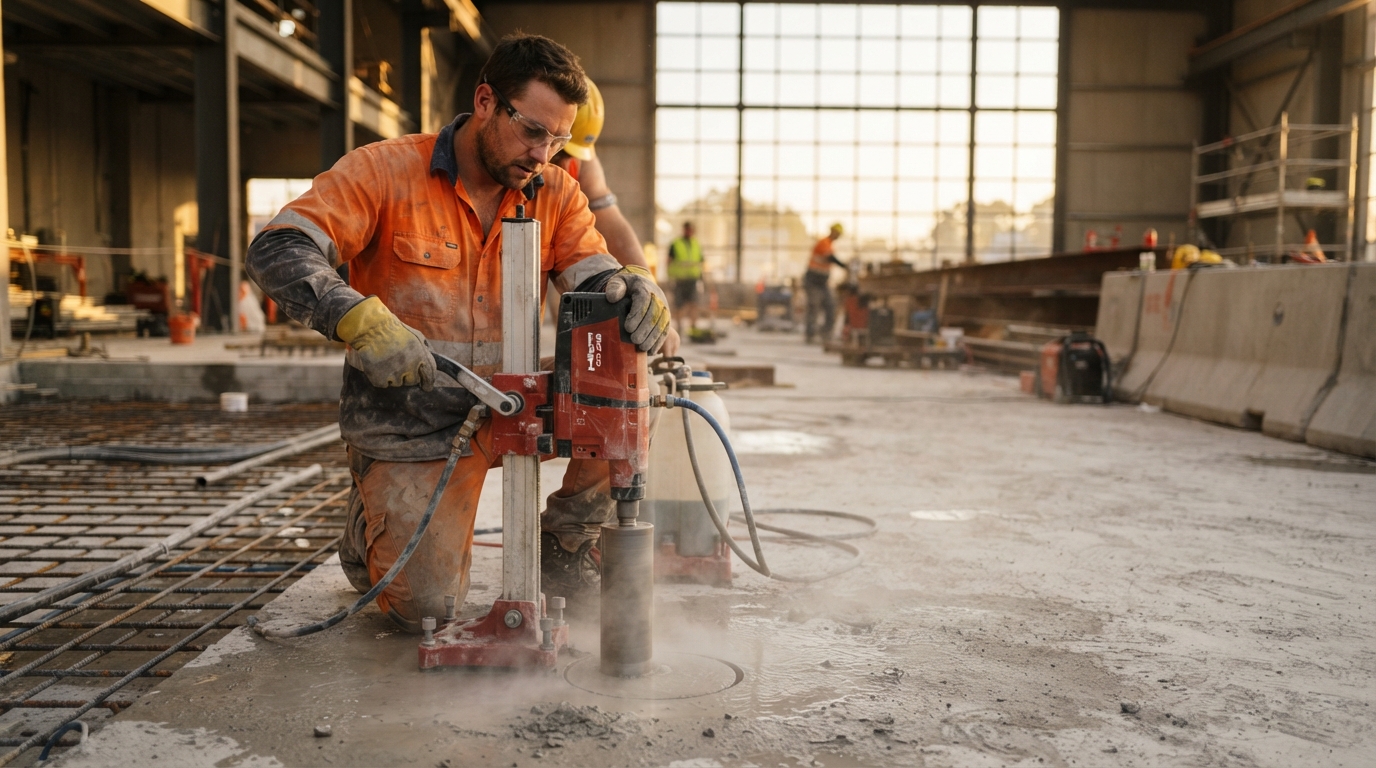
Commercial concrete drilling relies on rotary coring rigs fitted with diamond segment bits that cut through aggregate without the vibration associated with hammer drilling. The process generally follows a sequence:
1. Scanning the slab with ground-penetrating radar or rebar locators to map obstructions.
2. Marking exact hole diameters and depths based on engineering specifications.
3. Mounting the core rig and stabilizing it with a vacuum base or anchor bolts.
4. Drilling with water or dust-extraction systems to control debris.
5. Removing the core sample and inspecting the hole for cleanliness and accuracy.
Each step reduces the risk of chipping, over-drilling, or leaving jagged edges that could interfere with pipe fittings, bolts, or sensors installed afterward.
Why Dust Control Matters
Dry drilling in concrete generates respirable crystalline silica, a fine dust linked to lung damage when inhaled repeatedly over time. The OSHA respirable crystalline silica standard requires contractors using handheld or stand-mounted drills to operate equipment with a shroud and dust collection system that meets specific filtration efficiency. Compliance with this standard is not optional on most commercial job sites, and crews are expected to document the controls used during drilling tasks.
Common Applications for Commercial Projects
Precision drilling supports a range of commercial and industrial needs beyond simple hole-making. Typical uses include:
• Installing plumbing, electrical conduit, or HVAC lines through existing slabs
• Creating anchor points for structural supports, railings, or machinery
• Taking core samples for concrete strength testing or inspection
• Preparing openings for elevator shafts, stairwells, or utility chases
Each application demands different bit diameters and depth tolerances, which is why layout accuracy before drilling begins is treated as a separate planning phase rather than a quick measurement.
Choosing a Drilling Method for the Job
| Method | Best Use Case | Typical Limitation |
| Handheld core drilling | Small to mid-size holes for conduit or anchors | Limited to shallower depths without a stand |
| Stand-mounted core drilling | Larger diameter holes requiring stability | Needs more setup time and clearance |
| Wet coring | Reducing airborne dust and bit wear | Requires water management or containment |
| Dry coring with vacuum extraction | Indoor sites where water use is restricted | Needs a HEPA-rated dust collection system |
Selecting the right method depends on slab thickness, access constraints, and whether the site allows water-based cutting without drainage concerns.
Local Considerations for Lincoln, NE Projects
Commercial properties in Lincoln, NE often involve slab-on-grade construction common to the region’s retail centers, warehouses, and municipal buildings, which can affect how deep a core bit needs to travel before reaching soil or a vapor barrier. Winter freeze-thaw cycles typical of Nebraska can also stress existing concrete, making pre-drilling inspection for cracks or spalling a practical step before new holes are added. Based in Council Bluffs, IA, contractors handling this type of work coordinate scheduling and equipment logistics to serve commercial sites across the Lincoln, NE area.
Frequently Asked Questions
How deep can a commercial core drill go? Depth depends on the rig and bit length, but stand-mounted systems can typically core through slabs well beyond what handheld drills manage, especially on thicker foundation walls.
Does drilling always require water? No. Dry coring is common indoors or where water drainage is restricted, provided the equipment includes a vacuum dust collection system that meets filtration standards.
Can drilling weaken a structural slab? Improperly placed holes near rebar or post-tension cables can reduce structural capacity, which is why pre-drilling scans and engineering review are standard practice on commercial sites.
How long does a typical commercial drilling job take? Timelines vary with hole count, diameter, and site access, ranging from a few hours for isolated anchor holes to multiple days for utility installations across a large slab.
Looking Into Local Scheduling
Current service area details for National Concrete Cutting are published for commercial sites in the region.