Summary first:
• Demolition Land Clearing Services prepare raw or built-up property for new construction by removing structures, trees, and debris.
• Proper clearing addresses Lincoln, NE soil, drainage, and permitting conditions before grading or foundation work begins.
• Equipment choice and site assessment determine cost, timeline, and environmental impact.
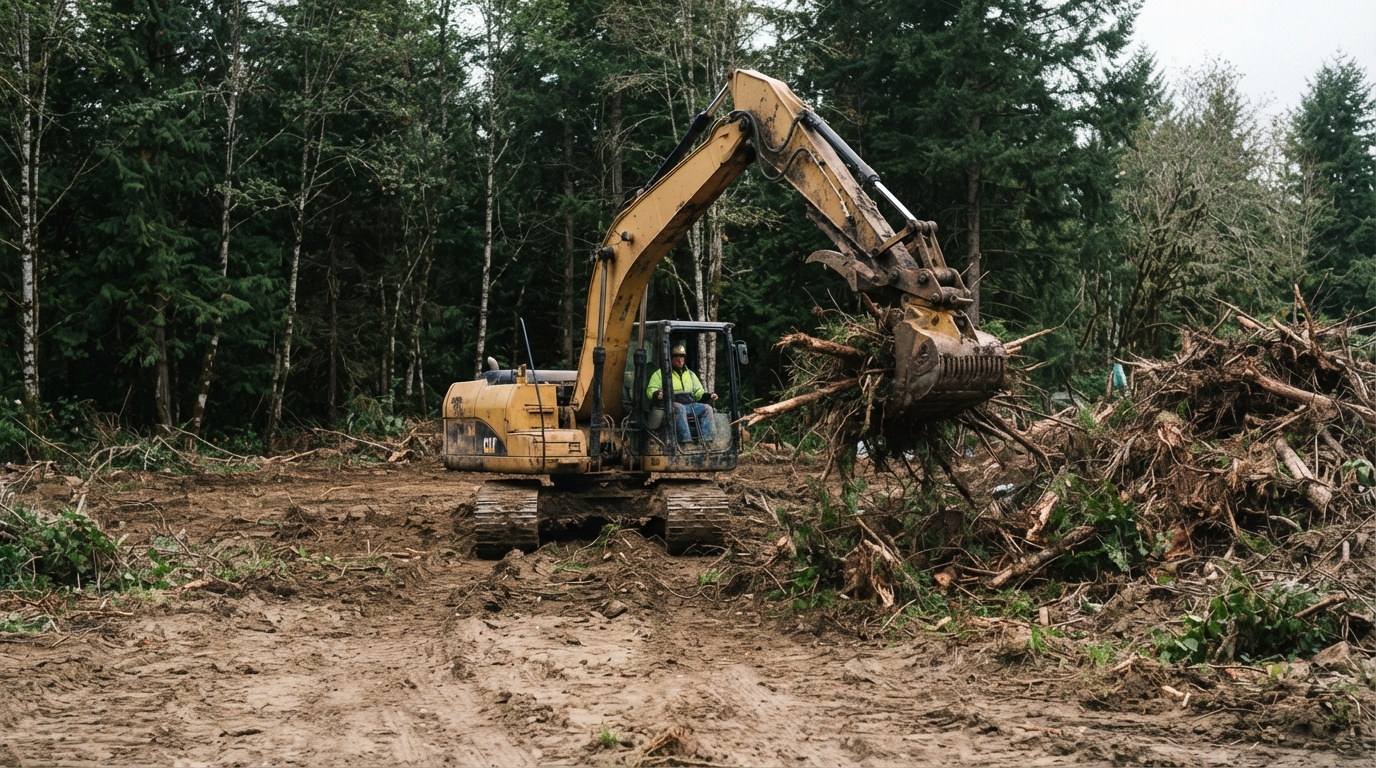
Demolition Land Clearing Services remove existing structures, vegetation, and obstructions from a property so it can be regraded, developed, or restored to usable land. The process typically combines selective demolition, tree and brush removal, and debris hauling into a single coordinated project.
Property owners in Lincoln, NE often need this work before building additions, installing driveways, or converting overgrown lots into usable space. Demolition Land Clearing Services Lincoln NE generally start with a site walk-through to identify utility lines, drainage patterns, and any structures requiring permits before equipment moves in. That assessment shapes the sequence of work and helps avoid costly delays once clearing begins.
What the Clearing Process Typically Involves
Land clearing is rarely a single-step task. Most projects move through a predictable sequence, even though the scale varies by lot size and site conditions.
• Site evaluation for slope, soil type, and existing vegetation density
• Removal of trees, stumps, brush, and undergrowth
• Demolition of sheds, fences, or deteriorated structures
• Grading to prepare a level base for future construction
• Hauling and disposal of cleared material from the site
Each step depends on the one before it. Skipping grading after debris removal, for example, can leave uneven ground that complicates foundation work later.
Matching Equipment to the Job
Heavy equipment selection affects both the speed and the precision of a clearing project. Smaller lots with tight access may call for compact machinery, while larger acreage benefits from higher-capacity excavators and loaders.
| Equipment Type | Best Suited For | Limitation |
| Compact excavator | Residential lots, tight access | Slower on large acreage |
| Skid steer with brush cutter | Brush and small tree removal | Limited for large structures |
| Full-size excavator | Structure demolition, grading | Requires wider site access |
| Dump trucks | Debris and soil hauling | Needs road access for loading |
Choosing undersized equipment for a large lot can extend project timelines, while oversized machinery on a small residential parcel may cause unnecessary ground disturbance.
Local Considerations for Lincoln, NE Properties
Lincoln, NE sits in a region with clay-heavy soils and seasonal freeze-thaw cycles, both of which influence how land clearing and grading are sequenced. Standing water after heavy rain or spring thaw can delay equipment access, so timing clearing work around drier conditions often reduces rutting and compaction issues.
Local building and zoning rules also affect what can be removed and how debris must be handled. The Nebraska Department of Environment and Energy outlines requirements for construction and demolition debris disposal that property owners and contractors must follow before a site is cleared. Checking local permit requirements before work begins helps avoid stop-work orders mid-project.
Tree removal in particular may require separate review depending on species and size, since some municipalities regulate removal of mature trees on residential lots. Confirming these rules early prevents rework and keeps a clearing timeline realistic.
Planning a Clearing Project Step by Step
A structured approach reduces surprises once equipment arrives on site.
1. Confirm property boundaries and utility locations before any digging.
2. Secure required permits for demolition, tree removal, or debris hauling.
3. Schedule work around seasonal weather patterns common to Lincoln, NE.
4. Select equipment sized appropriately for lot dimensions and access points.
5. Arrange debris disposal in line with state environmental guidelines.
Following this order helps keep a project on schedule and avoids the common pitfall of starting demolition before permits or utility checks are complete.
Frequently Asked Questions
How long does a typical land clearing project take? Timelines vary by lot size, vegetation density, and whether structures require demolition, but most residential clearing projects are measured in days rather than weeks once permits are secured.
Do all tree removals require a permit? Permit requirements depend on tree size, species, and local zoning rules, so checking with municipal authorities before removal is the safest approach.
What happens to debris after clearing? Debris is typically hauled to approved disposal or recycling facilities in accordance with state environmental guidelines.
Is grading included in land clearing? Grading is often a separate but connected step that follows clearing, preparing the site for foundation work or landscaping.
Next Steps for Property Owners
Based in USA, A Miracle Trucking & Excavating serves customers across Lincoln, NE.
Click Here for property owners evaluating a clearing project.