Briefly:
- Confirm licensing, permitting responsibility, and warranty terms before signing any pool installation contract.
- Ask about timeline, materials, and change-order policies to avoid budget surprises.
- Review safety compliance plans, since Florida law requires specific barrier and safety features for new residential pools.
Before signing a contract, homeowners should confirm a contractor’s license status, permitting process, project timeline, and warranty coverage in writing. These details determine whether a project stays on budget and meets Florida’s building and safety codes.
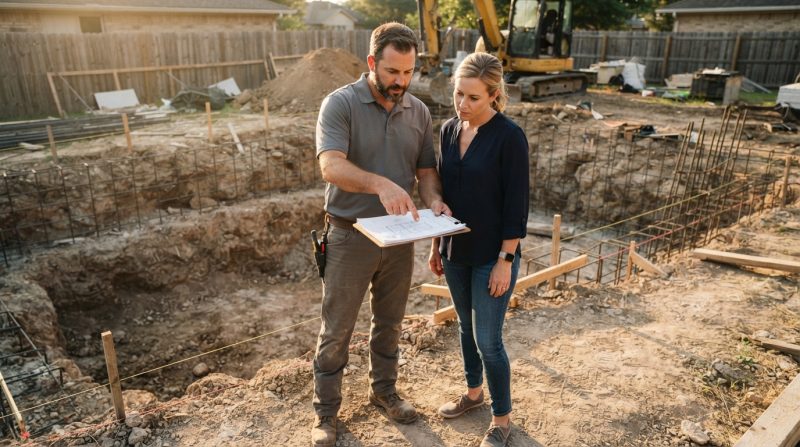
Choosing among Pool Installation Services involves more than comparing price quotes. A written contract should spell out the scope of excavation, plumbing, equipment, and finish work, along with who pulls permits and who is responsible if an inspection fails. Asking the right questions upfront reduces the chance of delays once construction begins.
Licensing, Permits, and Legal Compliance
A contractor’s license status and permitting plan are the first items to verify, since unpermitted pool work can create problems during a future home sale or insurance claim.
- Request a copy of the contractor’s state pool contractor license number.
- Confirm who is responsible for obtaining electrical, plumbing, and drainage permits.
- Ask how the contract addresses delays caused by permit rejections or revisions.
Florida law also sets specific requirements for new residential pools. Under Florida’s residential swimming pool barrier statute, a new pool must include at least one approved safety feature, such as an isolation barrier at least four feet high, a safety pool cover, or self-closing and self-latching doors. A contractor should explain which safety feature the project plan satisfies before the design is finalized.
Timeline, Materials, and Process Transparency
Construction timelines vary by project size, site conditions, and permitting speed, so a clear written schedule helps homeowners plan around disruption.
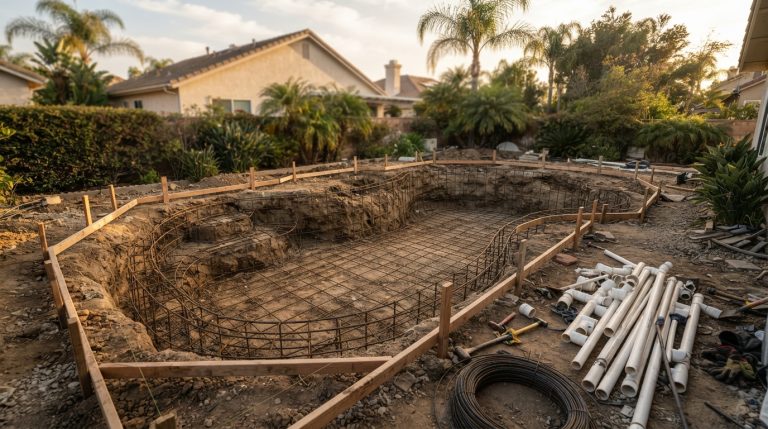
- Ask for a phase-by-phase timeline covering excavation, plumbing and equipment installation, decking, and finish work.
- Request the specific brands or grades of equipment, tile, and surface finishes included in the base price.
- Clarify how weather delays or site conditions (such as unexpected soil or drainage issues) are handled in the schedule.
- Confirm whether final system testing and a walkthrough are included before project completion.
| Question Area | What to Ask | Why It Matters |
|---|---|---|
| Permitting | Who pulls permits and handles inspections | Avoids code violations and delays |
| Materials | What equipment and finish brands are specified | Prevents substitutions that affect durability |
| Timeline | What is the expected start-to-finish duration | Sets realistic expectations for disruption |
| Warranty | What workmanship coverage applies after completion | Protects against post-installation defects |
Contracts, Warranties, and Change Orders
A detailed contract protects both the homeowner and the contractor if disputes arise over scope or cost. Reviewing these terms before signing can prevent later disagreements.
- Ask whether the workmanship warranty covers structural issues, equipment, or both, and for how long.
- Request a written change-order process that specifies how added costs are approved and documented.
- Clarify payment schedule terms, including deposit amount and payment milestones tied to project phases.
Homeowners working with contractors serving Tampa, FL should also confirm that the company carries current liability insurance and that proof of coverage is available on request. This protects against liability for property damage or injury during construction.
Frequently Asked Questions
How long does a typical custom pool installation take? Timelines vary by project scope, site conditions, and permitting speed, so a written schedule from the contractor is the most reliable way to set expectations for a specific property.
What permits are usually required for a new pool? Permitting commonly covers electrical work, plumbing, drainage, and barrier or safety compliance, and requirements can vary by county and municipality within Florida.
Does Florida law require a specific type of pool barrier? State law requires at least one approved safety feature for new residential pools, which can include an isolation barrier, a safety pool cover, or self-closing and self-latching doors, among other options.
What should be included in a pool installation warranty? A warranty should specify what workmanship or structural issues are covered and for how long, since coverage terms can differ between contractors and project types.
Final Thoughts
Asking detailed questions about permitting, materials, timelines, and warranty terms before signing a contract helps homeowners in Tampa, FL avoid costly misunderstandings during a pool project. A contractor who provides clear written answers to these questions is better positioned to deliver a project that meets both expectations and code requirements.
Current licensing and contact information for Emerald Isle Pools is published on its Google Business Profile.