Short version:
- A safe hot tub installation depends on a stable, code-rated surface, a dedicated GFCI-protected electrical circuit, and correct clearance from structures and water sources.
- Full-size spas typically need a 240V circuit sized by the equipment data plate, while compact plug-in models often run on a dedicated 120V GFCI outlet.
- Planning site access, drainage, and permitting before delivery reduces the risk of delays or failed inspections.
A hot tub installation involves more than placing a unit in the backyard. The process generally includes site evaluation, surface preparation, electrical hookup, and a final equipment check before the spa is filled and started for the first time.
Homeowners researching hot tub installation in Corpus Christi, TX often start by confirming whether their property’s electrical panel, outdoor space, and ground surface can support the equipment’s weight and power needs. These early checks determine whether a project moves forward on schedule or requires additional prep work.
Assessing the Site Before Delivery
A level, load-bearing surface is one of the most overlooked requirements in spa placement. Concrete pads, reinforced decks, or compacted gravel bases are common choices because a filled spa with occupants can weigh several thousand pounds once water and people are added.
Key site factors to confirm before delivery include:
- Surface load capacity and levelness
- Clear access path wide enough for equipment or crane placement
- Distance from doors, windows, and property lines per local setback rules
- Drainage so water runoff does not pool near the foundation
Electrical Requirements and Code Compliance
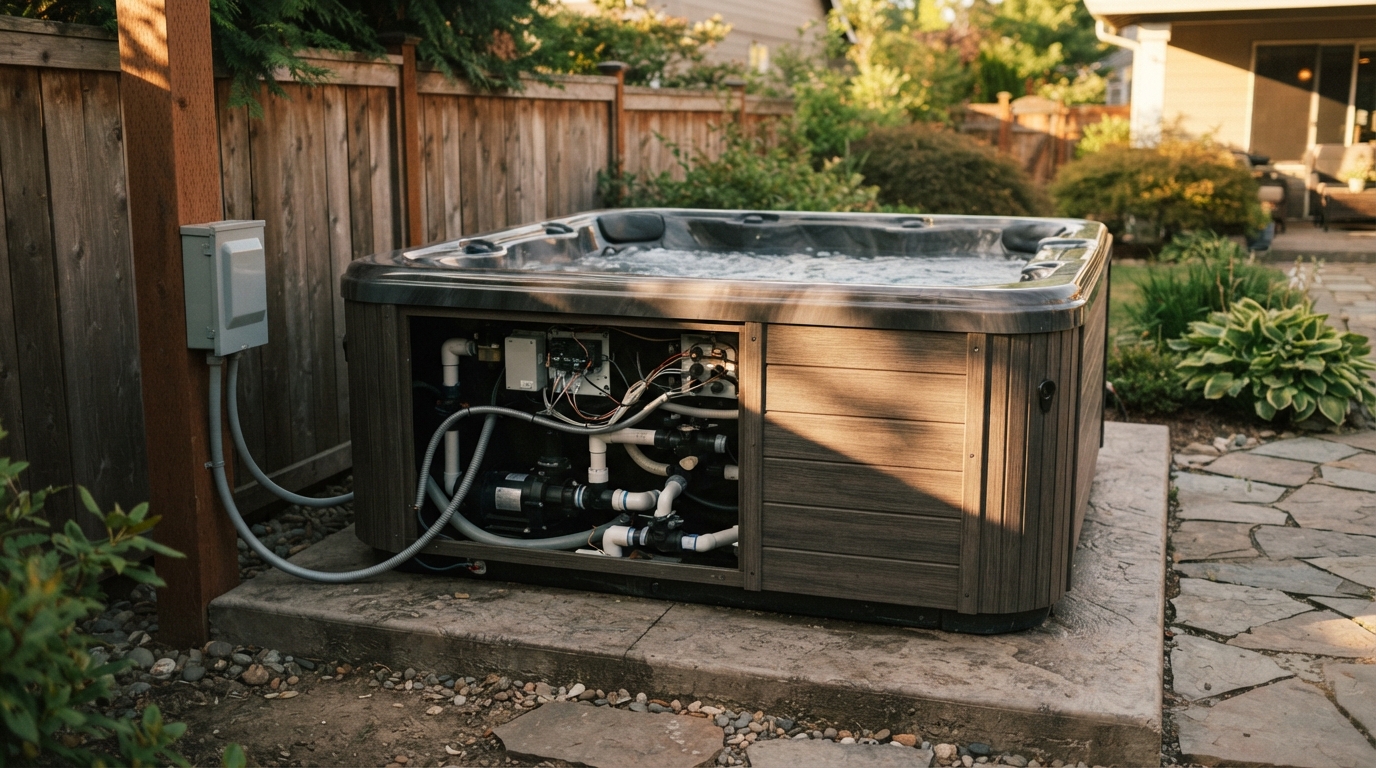
Electrical hookup is where most installation delays happen, since spa equipment has specific voltage and breaker requirements that vary by model. Full-size hardwired spas commonly need a dedicated 240-volt circuit, while smaller plug-and-play units typically run on a standard 120-volt GFCI-protected outlet.
- 240V hardwired spas generally require a dedicated circuit with breaker sizing that matches the unit’s data plate, commonly in the 40 to 60 amp range.
- 120V plug-and-play spas connect to a dedicated GFCI receptacle rated for the unit’s amperage draw.
- A readily accessible disconnect is required within sight of the spa, positioned at least 5 feet from its inside walls unless a permanent barrier separates them, according to NEC Article 680 guidance summarized by industry electrical sources.
Matching the breaker and wire gauge to the exact equipment specifications, rather than estimating from a similar model, prevents nuisance trips and failed inspections.
Permits, Inspections, and Timeline Planning
Most municipalities require an electrical permit for hardwired spa circuits, and some require a general installation permit depending on local building codes. Scheduling inspections early in the project timeline avoids last-minute scheduling conflicts with the installation crew.
| Planning Step | Typical Timing | Common Pitfall |
| Site survey and surface prep | 1-3 weeks before delivery | Uneven or undersized pad |
| Electrical permit and rough-in | 1-2 weeks before delivery | Wrong breaker size for model |
| Final inspection | Before or at startup | Disconnect placed too close to spa |
| Equipment startup and water test | Day of or after delivery | Skipping water chemistry balance |
A documented timeline also helps when coordinating a licensed electrician, since dedicated circuits for spa equipment are specialized work that most general contractors subcontract out. Confirming permit requirements with the local building department in Corpus Christi, TX before any trenching or concrete work begins avoids rework if setback or GFCI rules differ from the manufacturer’s generic installation guide.
Frequently Asked Questions
Does every hot tub need a 240-volt circuit? No. Compact plug-and-play models are designed for a dedicated 120-volt GFCI outlet, while most full-size six- and seven-person spas require a hardwired 240-volt circuit sized to the heater and pump load.
How far does the electrical disconnect need to be from the spa? Code generally requires the disconnect to be within sight of the spa and at least 5 feet from its inside walls, unless a permanent barrier separates the two.
Can a hot tub be placed directly on grass or soil? A stable, level, load-rated surface such as reinforced concrete or a properly compacted base is recommended, since unsupported ground can shift or settle under the combined weight of water and occupants.
How long does a typical installation take from delivery to startup? Timelines vary by site conditions and permitting, but most projects move from delivery to equipment startup within the same week once the pad and electrical circuit are already in place.
Business Information and Next Steps
Copano Pools and Spas is a pool and spa company based in Corpus Christi, TX, serving the surrounding area.
Additional background on the company’s service history and project types is available, and readers can Learn more about Copano Pools and Spas for published details on its Corpus Christi, TX service area.