Briefly:
- Professional tree removal follows a defined sequence: inspection, risk assessment, permitting check, controlled felling or rigging, and full debris cleanup.
- Removal is typically warranted when a tree shows trunk damage, extensive rot, storm injury, or root/structural conflicts with a home.
- Homeowners in Ankeny, IA can expect a safety-first approach, since large tree work near structures or power lines requires trained crews and specific equipment.
A homeowner searching for Residential Tree Removal Services usually wants to know one thing: how a dead, damaged, or hazardous tree gets safely taken down without harming the house, yard, or neighboring property. The short answer is that licensed crews follow a structured process built around inspection, risk assessment, and controlled dismantling rather than simply cutting a tree down.
Homeowners in Ankeny, IA dealing with an aging ash, storm-split maple, or a tree leaning toward a roofline often find the decision confusing. Understanding each stage of the process makes it easier to evaluate quotes, ask informed questions, and know what to expect on removal day.
How Professionals Decide a Tree Needs Removal
Not every damaged or unattractive tree needs to come down. Arborist-aligned guidance points to a handful of warning signs that typically justify removal over pruning or treatment.
- Trunk damage or hollowing: a guide used by industry professionals suggests that if roughly one-third of the trunk interior is hollow or rotten, removal is usually recommended.
- Extensive branch loss: if a majority of the canopy is damaged, the tree is less likely to recover.
- Conflicts near power lines: branches growing into utility lines create electrical risk and are never considered a do-it-yourself job.
- Structural lean toward a home, driveway, or walkway.
According to ISA Rocky Mountain Chapter guidance, trees should be inspected annually and after storms, since poor placement, inadequate growing space, or conflicts with buildings, roadways, or utility services can require removal. The same source notes that a tree should never be removed alone, and experienced professionals should be hired to handle the work.
The Step-by-Step Removal Process
Professional removals generally follow a consistent sequence, regardless of tree size:
- On-site inspection – crew evaluates trunk condition, lean, root health, and proximity to structures or utility lines.
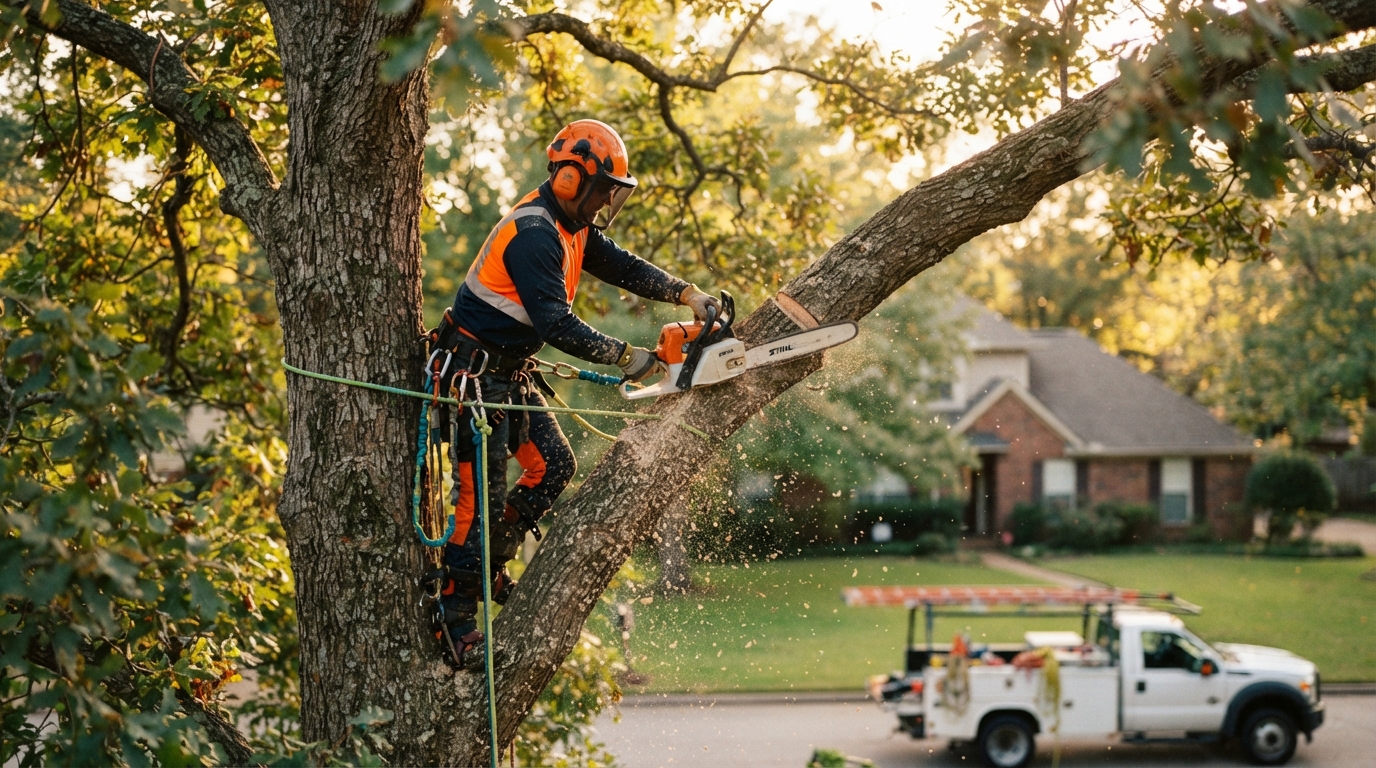
- Risk and access assessment – determines whether the tree can be felled in open space or requires rigging, roping, or a crane due to tight clearance.
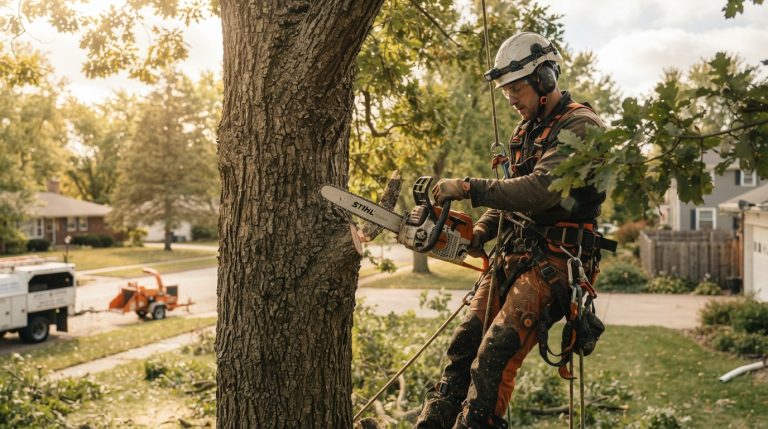
- Equipment setup – includes chainsaws, rigging lines, and in some cases bucket trucks or cranes for larger or hard-to-reach trees.
- Controlled cutting and lowering – limbs and sections are removed in a planned sequence to avoid damage to the house, fencing, or landscaping.
- Stump handling – stump grinding or removal, depending on homeowner preference.
- Site cleanup – branches, logs, and debris are cleared from the property.
Removal Methods Compared
| Method | Best For | Typical Equipment |
|---|---|---|
| Open felling | Trees with clear drop zones away from structures | Chainsaw, wedges |
| Rigging/roping | Trees close to a house, fence, or power line | Ropes, rigging blocks, harnesses |
| Crane-assisted removal | Very large trees or extremely tight urban lots | Crane, chainsaw, rigging gear |
| Stump grinding | Post-removal stump elimination | Stump grinder |
What Affects Timing and Complexity in Ankeny, IA
Several factors specific to residential properties change how long a removal takes and what equipment is needed. Mature shade trees common in established Ankeny, IA neighborhoods often have wide canopies that overhang roofs, garages, or shared property lines, which can require rigging rather than open felling.
Storm season also plays a role, since wind-damaged limbs or split trunks may need urgent attention before they fail further. Seasonal timing matters too: leafless winter trees are often easier to assess structurally, while summer storm cleanup tends to be reactive rather than planned.
Frequently Asked Questions
How long does a typical residential tree removal take? Timing depends on tree size, access, and whether rigging or a crane is required; smaller trees with clear access may take a few hours, while large or tightly positioned trees take longer.
Does removal include stump handling? Stump grinding or removal is typically offered as a separate or add-on step after the tree itself is taken down.
Is a permit required to remove a tree at a home? Permit requirements vary by municipality and property type, so homeowners should confirm local rules before scheduling work.
What happens to the wood and debris after removal? Full cleanup, including limbs, logs, and wood chips, is standard practice for most residential crews.
Final Thoughts and Local Service Information
Operating from Huxley, IA, Pitts Lawn & Tree Service works with customers located in Ankeny, IA.
Current availability details for Click Here are published for the local service area.