The gist:
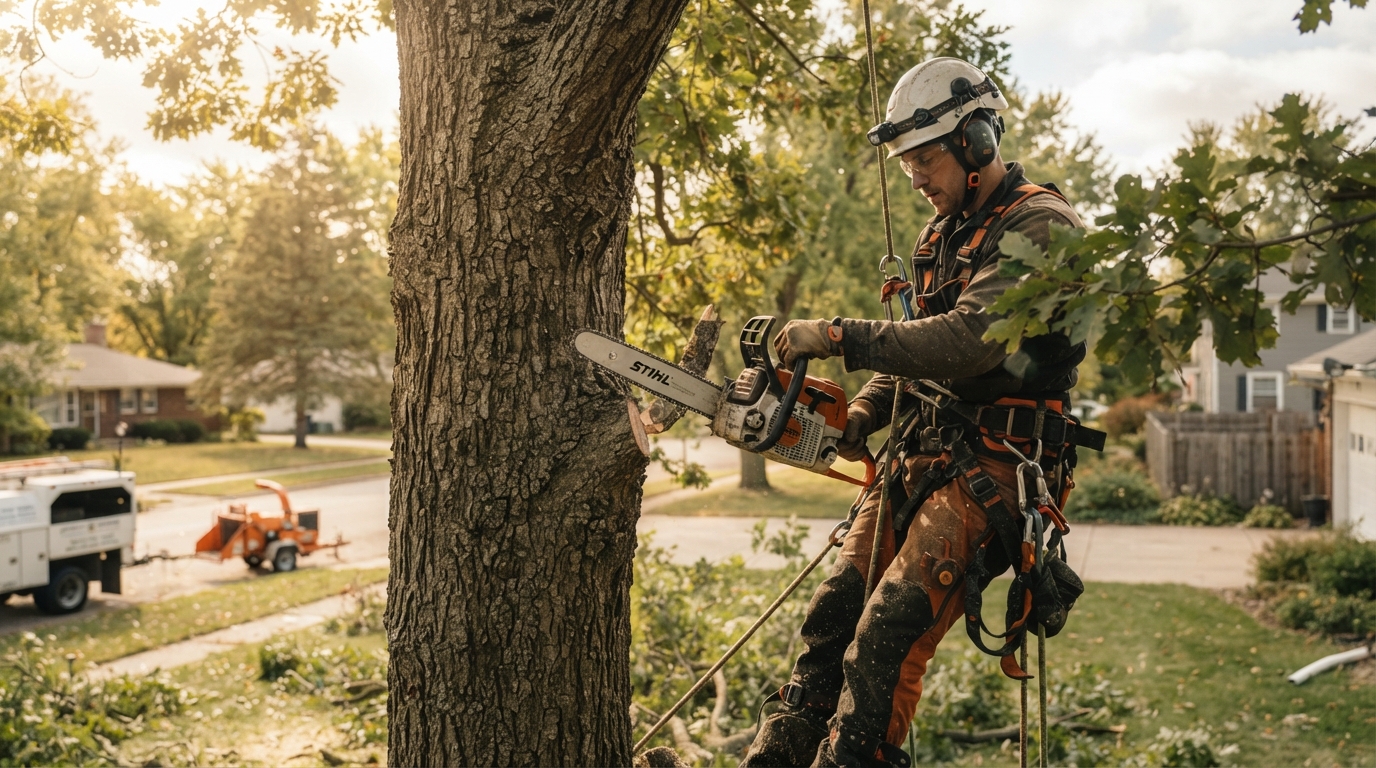
- Professional tree care in Rockford typically includes trimming, removal, stump grinding, and storm cleanup performed by trained crews with proper equipment.
- Expect an on-site assessment, a written estimate, and a cleanup plan before any cutting begins.
- ISA-certified arborists follow pruning standards designed to protect tree health and reduce safety risks on residential and commercial properties.
Homeowners searching for a reliable Tree Care Service in Rockford, IL generally want a provider who can assess tree health, handle removals or trimming safely, and leave the property clean when the job is finished.
Rockford’s mix of mature shade trees and seasonal storms means most properties eventually need some combination of pruning, removal, or debris cleanup. Knowing what a typical service visit looks like helps property owners set realistic expectations and avoid hiring someone unqualified for the job.
How a Typical Tree Care Visit Works
A professional visit usually follows a predictable sequence, regardless of whether the job is a simple trim or a full removal.
- Initial assessment – A technician walks the property, examines the tree’s condition, and identifies any hazards such as dead limbs or disease.
- Written estimate – The crew provides a cost breakdown before work begins, so there are no surprises.
- Equipment staging – Bucket trucks, chippers, and stump grinders are positioned to minimize impact on lawns and landscaping.
- The work itself – Crews perform trimming, removal, or grinding based on the agreed scope.
- Cleanup – Branches, debris, and sawdust are cleared from the site before the crew leaves.
This structured approach matters because tree work involves real safety risks. According to the Occupational Safety and Health Administration, tree care operations involve hazards from falls, equipment, and falling limbs that require trained personnel and proper protective procedures.
Core Services Homeowners Should Expect
Most Rockford tree care providers offer a consistent set of core services built around maintaining tree health and property safety.
| Service | What It Involves | Typical Use Case |
| Tree trimming | Selective pruning of branches to shape canopy and remove weak growth | Routine upkeep, clearance from structures |
| Tree removal | Full removal of dead, diseased, or hazardous trees | Storm-damaged or dying trees |
| Stump grinding | Mechanical grinding of remaining stump below grade | After removal, to reclaim yard space |
| Storm cleanup | Debris removal and hazard assessment after severe weather | Post-storm property recovery |
Pruning quality matters more than many property owners realize. The Pacific Northwest ISA notes that pruning can be the most significant tree care practice because of its cost and long-term impact, and can extend a tree’s useful life for decades when done correctly. Incorrect cuts, by contrast, can damage trees and create safety risks for years afterward.
What Separates a Qualified Provider From a General Contractor
Not every landscaping company has the training or equipment for large-scale tree work. A few distinctions are worth checking before hiring:
- Certification – Look for crews trained through the International Society of Arboriculture, which sets widely recognized pruning and safety standards.
- Insurance – Tree removal near structures or power lines carries liability risk; proper coverage protects the property owner.
- Equipment – Bucket trucks, log loaders, and commercial-grade chippers allow safer handling of larger trees than consumer-grade tools.
- Cleanup practices – Thorough debris removal, including stump grinding and hauling, should be part of the standard service, not an upsell.
Preparing Your Property Before the Crew Arrives
A short preparation checklist helps the job go faster and more smoothly:
- Clear vehicles, furniture, and loose items from the work area.
- Note any underground utilities, irrigation lines, or septic systems near the tree.
- Confirm access points for trucks and equipment, especially in tighter residential lots.
- Ask whether the estimate includes full cleanup, including branch chipping and stump removal.
These steps reduce delays and help the crew focus on the actual tree work rather than site logistics.
Frequently Asked Questions
How often should trees be trimmed? Most established trees benefit from trimming every few years, though young trees often need more frequent shaping to establish strong structure as they grow.
Is stump grinding necessary after a tree is removed? Grinding is not mandatory, but it removes tripping hazards, prevents regrowth, and allows the area to be reclaimed for lawn, landscaping, or other use.
What should be included in a tree removal estimate? A thorough estimate should cover the removal itself, debris hauling, and cleanup, so property owners know the full cost upfront rather than facing added charges later.
Can storm-damaged trees be saved? It depends on the extent of the damage; a trained arborist can assess whether a damaged tree is stable enough to keep or should be removed for safety.
Finding Dependable Tree Care Close to Home
Property owners weighing tree work options can benefit from comparing local providers on certification, equipment, and cleanup practices before scheduling a job. Flying W Tree Service is a Rockford-based tree care provider known for trimming, removal, stump grinding, and storm cleanup work for residential and commercial properties. For details on services, scheduling, or a project estimate, Visit Website.


