In short:
- Custom home budgets in Pinellas County depend on lot condition, flood zone requirements, and finish-level choices made during design.
- Timelines typically move through permitting, site prep, framing, and finish-out phases, each affected by coastal building codes.
- Working with a builder familiar with local permitting and flood-zone construction can reduce delays and rework.
Building a custom home in Pinellas County requires planning around coastal flood codes, lot-specific site conditions, and a permitting process that can shift project timelines by months. Buyers who understand these variables before breaking ground typically avoid the budget overruns and delays that catch first-time custom-build clients off guard.
Custom Home Construction in Pinellas County, FL involves more variables than building in many inland Florida markets. Lot elevation, soil composition, and proximity to flood zones all influence design decisions early in the process, which is why local experience matters as much as general construction know-how. Rotunda Homes, Inc. is a builder operating in the Pinellas County area, and understanding how a custom build unfolds locally helps buyers set realistic expectations before signing a contract.
What Drives Custom Home Budgets in Pinellas County
Budgeting for a custom home starts with the lot itself, not the floor plan. Coastal counties often require elevated foundations, impact-rated windows, and specific drainage solutions that inland builds do not need.
Key cost factors include:
- Flood zone designation and required elevation certificates
- Soil testing and site preparation, especially on reclaimed or low-lying lots
- Wind-load and impact-resistance requirements for windows, doors, and roofing
- Finish-level selections, from standard builder-grade materials to custom millwork and fixtures
- Utility connections, particularly on lots requiring well, septic, or extended line runs
Buyers should request itemized allowances for structural and finish categories separately, since coastal code compliance can represent a meaningful share of the budget before any design upgrades are chosen.
Design Considerations Specific to Coastal Florida Construction
Design decisions in Pinellas County are shaped heavily by building codes written for hurricane-prone coastal regions. The Florida Building Code sets minimum standards for wind resistance, flood-resistant construction, and elevation in flood-prone areas, and local jurisdictions within Pinellas County enforce these requirements through their own permitting review. According to the Federal Emergency Management Agency guidance on coastal construction, homes in flood hazard areas must meet elevation and foundation standards designed to reduce flood damage risk over the life of the structure.
Design choices that affect both compliance and long-term performance include:
- Elevated foundation systems suited to the lot’s flood zone classification
- Roof pitch and bracing designed for higher wind-speed ratings
- Window and door assemblies rated for wind-borne debris impact
- Exterior material selection that resists humidity and salt-air exposure
Working through these decisions during the design phase, rather than after permitting begins, helps avoid costly revisions later.
Typical Timeline Phases for a Custom Build
Custom home timelines in Pinellas County generally follow a predictable sequence, though permitting review times can vary by municipality. Below is a general phase breakdown buyers can use as a planning reference.
| Phase | What Happens | Common Variables |
| Design and Permitting | Plans finalized, flood and zoning review, permit issuance | Local jurisdiction review times |
| Site Preparation | Grading, soil work, foundation elevation setup | Lot condition, drainage needs |
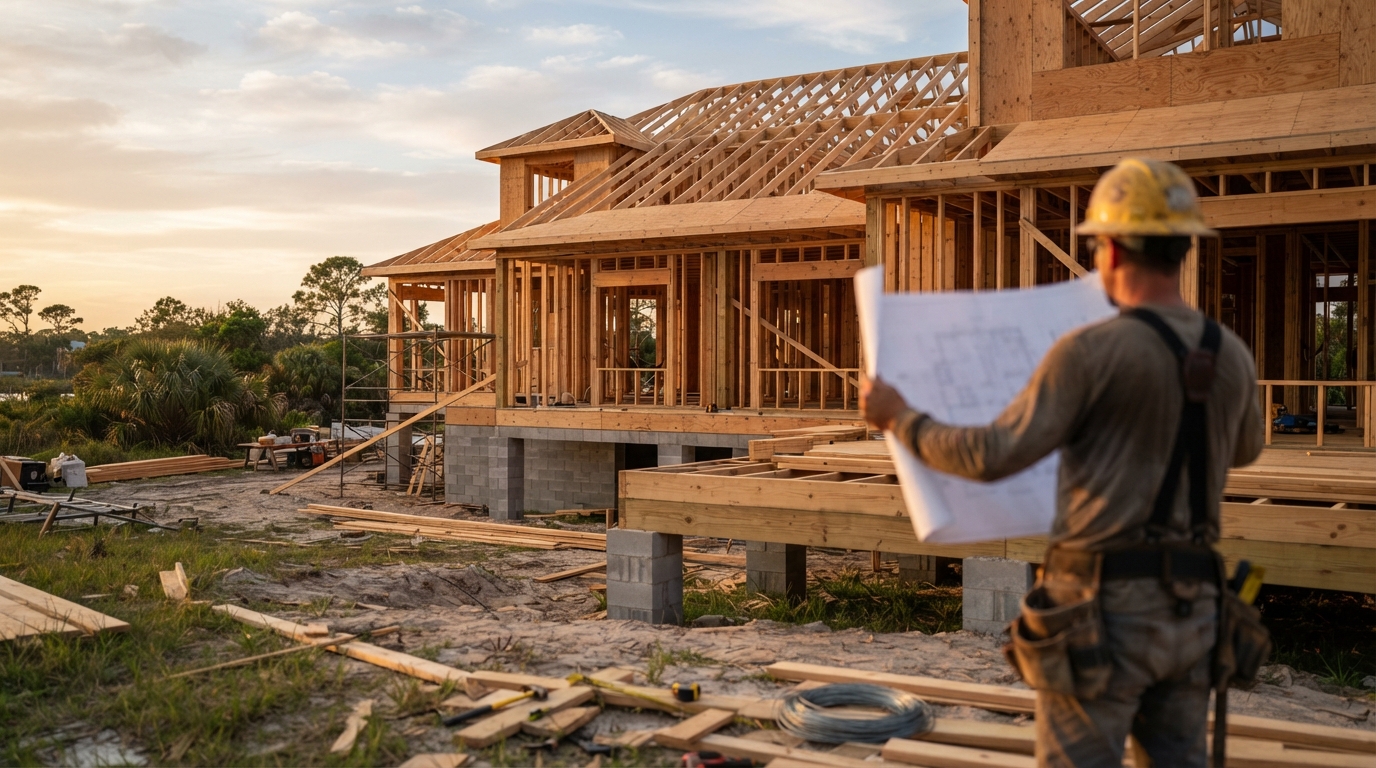
| Framing and Shell | Structural framing, roofing, exterior envelope | Weather delays, material lead times |
| Finish-Out | Interior finishes, fixtures, final inspections | Custom selections, change orders |
Because flood zone and wind-load compliance are checked at multiple inspection points, builders familiar with Pinellas County’s permitting offices can often move projects through review more predictably than those applying standard inland construction timelines.
Working With a Local Builder
Choosing a builder with direct experience in Pinellas County’s permitting environment and coastal code requirements reduces the risk of delays tied to elevation certificates, flood zone documentation, or wind-load inspections. Buyers should ask prospective builders how many active permits they are managing locally and how they structure allowances for site-specific requirements like soil testing or drainage work. A builder who treats flood and wind compliance as a design input, rather than an afterthought, is better positioned to keep both budget and schedule on track.
Frequently Asked Questions
How long does custom home construction typically take in Pinellas County? Timelines vary based on permitting review, lot conditions, and finish-level complexity, with site preparation and flood-zone compliance often extending schedules beyond standard inland builds.
Why do flood zones affect custom home budgets so much? Flood zone designations determine required foundation elevation, drainage design, and certification costs, all of which add to the structural budget before finish selections are made.
Does every lot in Pinellas County require the same building code compliance? No. Requirements vary by flood zone classification and local jurisdiction, so a soil and elevation assessment early in the process is necessary to confirm what a specific lot requires.
What should buyers ask a builder before starting a custom project? Buyers should ask how the builder handles flood zone documentation, how allowances are structured for site-specific work, and what the typical permitting timeline looks like in that jurisdiction.
Custom home construction in Pinellas County rewards buyers who plan for coastal code requirements and lot-specific conditions from the start rather than treating them as late-stage surprises. Reviewing flood zone status, requesting itemized budget breakdowns, and asking builders direct questions about local permitting experience are practical steps that help keep a project on schedule and within budget. For buyers researching builders active in the Pinellas County area, Rotunda Homes, Inc. can be found through its Google Business Profile listing.