Quick take:
- Wood and faux wood blinds suit living rooms and bedrooms, while vinyl and aluminum hold up better in kitchens and bathrooms exposed to moisture.
- Slat material affects light control, insulation, noise, and cleaning requirements, so room function should guide the choice.
- Window coverings can reduce solar heat gain and help manage energy loss, making material selection relevant to utility costs as well as style.
Choosing the right material for window blinds in Spokane Valley, WA comes down to matching slat composition to a room’s humidity, light needs, and daily wear. Wood works for low-moisture living spaces, faux wood and vinyl handle kitchens and bathrooms, and aluminum offers a durable, low-maintenance option for high-traffic areas.
Homeowners comparing window blinds in Spokane, WA often focus on price first, but material choice affects long-term performance just as much as upfront cost. Slat composition determines how a blind handles moisture, sunlight, and daily use, which matters most in rooms with specific environmental demands.
Comparing Common Blind Materials by Room Fit
Each material brings distinct strengths and limitations depending on where it’s installed.
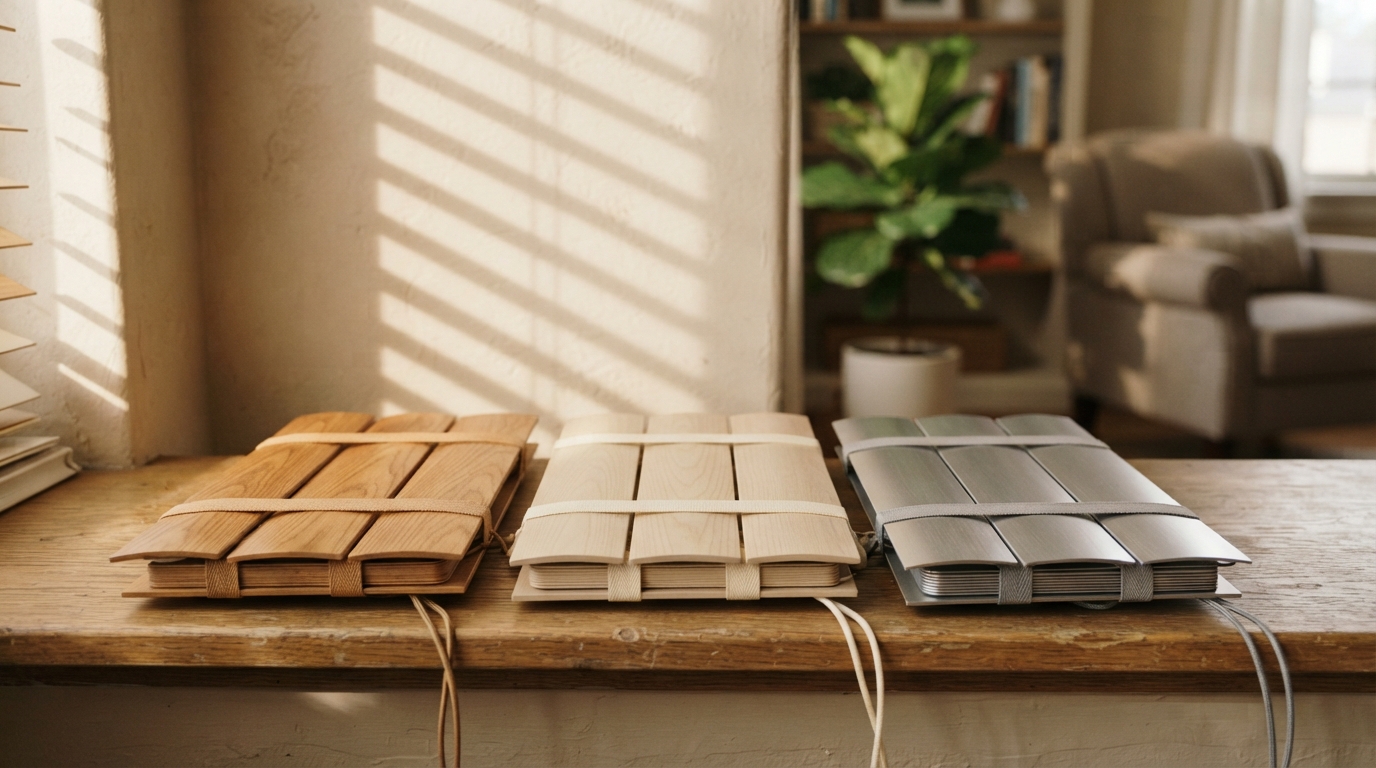
- Wood blinds: Wood slats such as woven wood shades offer a warm, natural look that complements many interior styles, and the material provides natural insulation, helping keep rooms cooler in summer and warmer in winter. Real wood can warp in high humidity, so bathrooms and kitchens are not ideal settings.
- Faux wood blinds: Composite or PVC slats mimic wood’s appearance while resisting warping, moisture, and fading, making them a practical substitute in humid rooms.
- Aluminum blinds: Aluminum is lightweight and rust-resistant, which makes it a fit for humid areas, though metal slats can be noisier when opened or closed.
- Vinyl blinds: Vinyl is budget-friendly, resists moisture, and wipes clean easily, but it offers less thermal insulation than wood or cellular alternatives.
- Fabric or woven blinds: Fabric options come in a wide range of colors, patterns, and textures and work well for softening light in bedrooms or living rooms, though they require more upkeep than hard materials.
| Material | Best Rooms | Moisture Resistance | Maintenance |
| Wood | Living rooms, bedrooms, offices | Low | Occasional polish/refinish |
| Faux wood | Kitchens, bathrooms, basements | High | Wipe clean |
| Aluminum | Kitchens, bathrooms, high-traffic rooms | High | Wipe clean |
| Fabric | Bedrooms, living rooms, dining rooms | Low | Dust/spot clean |
Matching Material to Light Control and Energy Needs
Material choice also shapes how much light and heat a blind manages. According to the U.S. Department of Energy, about 30 percent of a home’s heating energy is lost through windows, and roughly 76 percent of sunlight falling on standard double-pane windows becomes heat during cooling seasons. Window coverings help offset this by regulating temperature and reducing energy bills, though the degree of benefit depends on the attachment type, climate, and how consistently it is used.
- Horizontal slat blinds in wood, faux wood, aluminum, or vinyl suit most standard windows and give adjustable light and privacy control.
- Vertical blinds in fabric or vinyl are a practical fit for sliding doors and wide or tall windows.
- Light-colored slats reflect more sunlight than dark ones, which can help reduce heat buildup in south-facing rooms.
Rooms that face direct afternoon sun, common in many Spokane Valley, WA homes during summer months, may benefit from lighter faux wood or aluminum slats that resist fading and reflect heat more effectively than darker fabric options.
Practical Factors Beyond Material Type
Beyond moisture and insulation, a few other factors influence which material performs best long-term.
- Slat width: Wider slats generally suit larger windows, while narrower slats fit smaller or more detailed openings.
- Noise levels: Metal blinds can clank against window frames when doors open or close, which may matter in bedrooms or nurseries.
- Cleaning frequency: Vinyl and faux wood wipe clean with a damp cloth, while fabric blinds often need dusting or occasional spot cleaning.
- Child and pet safety: Thicker, more durable materials like aluminum or faux wood tend to hold up better in households with pets or young children who may pull on blinds.
Matching these practical details to how a room is actually used, rather than style alone, tends to produce a longer-lasting result.
Frequently Asked Questions
Which blind material is best for a bathroom? Faux wood and vinyl are generally recommended for bathrooms because they resist warping and moisture better than real wood.
Do wood blinds help with insulation? Wood provides some natural insulation compared to thin metal or vinyl slats, though it is not as insulating as cellular shades.
Are aluminum blinds a good fit for a kitchen? Aluminum resists moisture and is easy to clean, which makes it a common choice for kitchens, though it can be noisier than other materials.
What should I consider first when picking a blind material for Spokane Valley, WA? Start with the room’s moisture level and sun exposure, then weigh maintenance effort and noise tolerance before selecting a final material.
Selecting a blind material is ultimately a practical decision shaped by a room’s moisture, light exposure, and daily use rather than appearance alone. Weighing these factors room by room tends to produce results that hold up over time.
Local Resource
Budget Blinds of Spokane Valley offers sales and professional installation of custom window treatments, including blinds, shades, and shutters, for homeowners in the Spokane Valley, WA area. Homeowners can explore available styles, product options, and consultation details to determine the best window treatment solutions for their needs. To learn more about current offerings and schedule a consultation, Click Here.