At glance:
• Slipping gears, burnt odor, and fluid leaks are the clearest signs a transmission needs inspection.
• Catching symptoms early often costs less than waiting until a transmission fails completely.
• Drivers in Kenosha, WI can expect seasonal temperature swings to accelerate wear on aging transmission fluid.
A transmission showing delayed shifts, grinding noises, or dark fluid is signaling internal wear that typically requires prompt inspection rather than a simple fluid top-off. Recognizing these symptoms early can prevent a minor fluid or sensor issue from becoming a full rebuild.
Most drivers never think about their transmission until it stops shifting correctly. By then, the underlying issue has often been building for weeks or months. Scheduling transmission repair in Kenosha WI as soon as warning signs appear gives a technician the chance to diagnose a problem while repair options are still limited and less invasive.
Early Symptoms That Signal Transmission Trouble
Transmission problems rarely appear without warning. The fluid and hydraulic systems inside a transmission tend to show measurable changes before a complete failure occurs.
• Slipping gears, where the engine revs but the vehicle does not accelerate at a matching pace
• Delayed or hesitant engagement when shifting from park into drive or reverse
• Rough, jerky, or clunking shifts between gears
• A burnt odor coming from the fluid or from underneath the vehicle
• Grinding, whining, or humming noises while driving
• Fluid spots on the ground, often reddish or brown in color
Any one of these symptoms on its own may seem minor. Combined, they usually point to fluid breakdown, a failing sensor, or early mechanical wear that benefits from prompt inspection.
Fluid Condition as an Early Warning Indicator
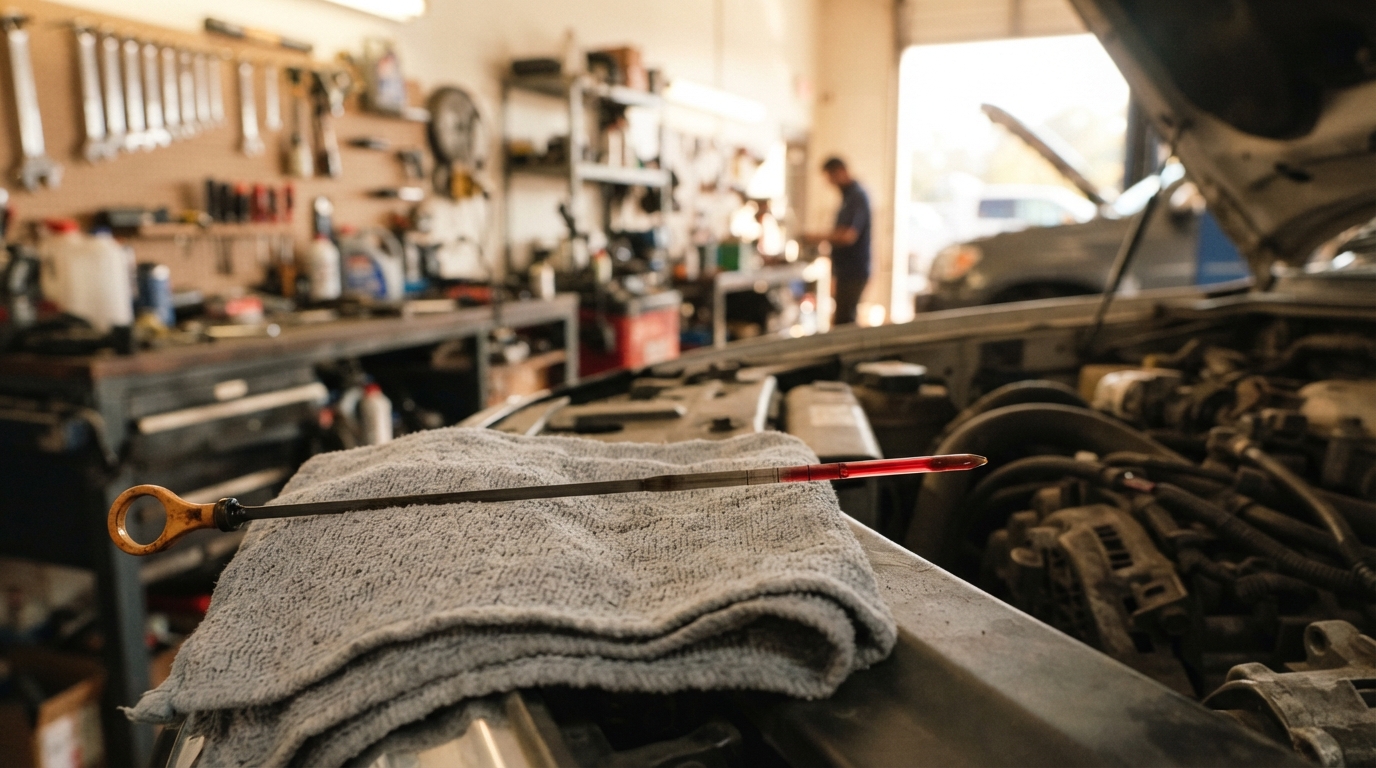
Transmission fluid condition is one of the most reliable ways to judge the health of the system. Fresh fluid is typically bright red and free of debris, while degraded fluid darkens and develops a burnt smell as it loses its ability to lubricate and cool moving parts.
A dipstick check can reveal a lot in under a minute:
1. Dark brown or black fluid usually indicates heat damage or contamination.
2. A burnt smell suggests the fluid has broken down and is no longer protecting internal components.
3. Low fluid levels combined with a dashboard warning light may point to a leak rather than normal consumption.
Drivers who notice any of these fluid changes should avoid long trips or towing until the vehicle has been checked, since continued driving on degraded fluid accelerates wear on clutch packs and gears.
When to Seek Inspection Versus Monitor the Issue
Not every symptom requires an emergency visit, but some warrant immediate attention. The National Highway Traffic Safety Administration maintains vehicle safety recall information that can help drivers confirm whether a transmission-related issue is tied to a known manufacturer defect before assuming it is routine wear.
| Symptom | Urgency Level | Recommended Action |
| Slipping gears or sudden power loss | High | Schedule inspection within days |
| Burnt smell from fluid | High | Avoid driving; seek service promptly |
| Rough or delayed shifting | Medium | Book service within one to two weeks |
| Minor fluid spots, fluid otherwise clean | Low | Monitor and recheck fluid level soon |
Seasonal temperature extremes common in Kenosha, WI can intensify these symptoms, since cold starts and summer heat both place extra strain on transmission fluid viscosity and seals.
Diagnostic Steps a Technician Typically Follows
A proper transmission evaluation goes beyond a visual fluid check. Technicians generally rely on a sequence of diagnostic steps to isolate whether the cause is fluid-related or mechanical.
• Scanning onboard computer codes tied to shift timing and solenoid function
• Inspecting fluid color, smell, and level against manufacturer specifications
• Road testing to confirm shift quality under load and at varying speeds
• Checking for external leaks at seals, pans, and cooler lines
This structured approach helps separate problems that a fluid service can resolve from those requiring deeper mechanical repair, such as worn clutch packs or a failing valve body.
How do I know if a transmission problem is serious? Slipping gears, burnt-smelling fluid, or grinding noises are considered higher-urgency symptoms that typically call for inspection within days rather than weeks.
Can a fluid change fix every transmission issue? No. Fresh fluid can resolve problems caused by contamination or low fluid levels, but it will not repair worn clutch packs, damaged gears, or electrical faults.
Does cold weather in Kenosha, WI affect transmission performance? Cold starts can thicken transmission fluid temporarily, which may make shifts feel stiffer until the vehicle warms up, while prolonged heat exposure in summer accelerates fluid breakdown.
Is it normal for a transmission to make noise occasionally? Occasional noise is not typical. Grinding, whining, or humming sounds generally indicate wear and should be evaluated rather than ignored.
Final Thoughts and Local Service Note
Addressing transmission symptoms early is one of the more practical ways to avoid a costly rebuild later. Fluid checks, prompt attention to unusual noises, and awareness of seasonal driving conditions in Kenosha, WI all contribute to a transmission lasting longer between major repairs.
Dave’s American Discount Muffler is an automotive repair shop located in Kenosha, WI that provides diagnostic and mechanical services for passenger vehicles. Additional service details are available after a Visit Website.