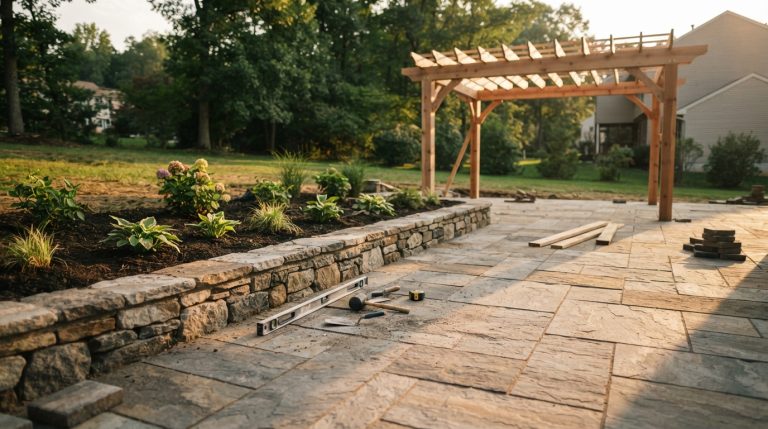
Installing durable outdoor surfaces starts with understanding how base preparation, material selection, and local climate conditions affect long-term performance. Getting these fundamentals right before placing a single paver prevents the shifting, cracking, and drainage problems that account for most hardscape failures.
Hardscape pavers are modular units made of concrete, brick, or natural stone used to build patios, walkways, and driveways without mortar joints, relying instead on a compacted base and interlocking edge restraints for stability. The installation process and material choice both depend on local soil conditions and seasonal freeze-thaw patterns, which is why regional guidance matters as much as general product specs.
Why Base Preparation Matters More Than the Pavers Themselves
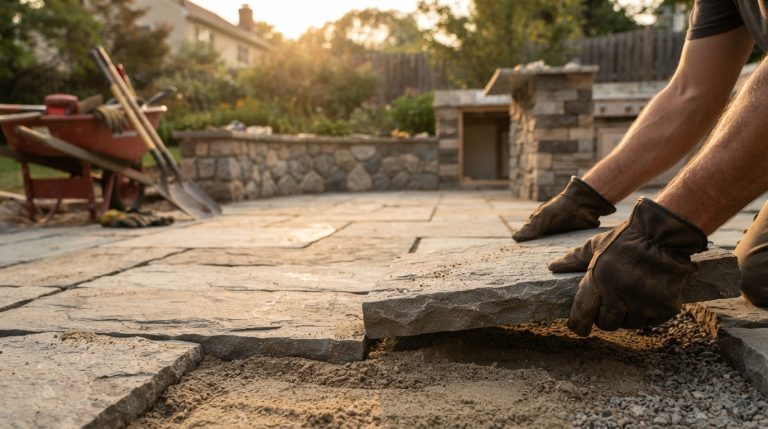
Most paver failures trace back to inadequate excavation or compaction rather than the paver units. A proper base typically includes:
• Excavation to a depth that accounts for both the paver thickness and a compacted aggregate layer
• A crushed stone sub-base, compacted in layers rather than all at once
• A thin leveling layer of coarse sand or screenings beneath the pavers
• Edge restraints anchored into the sub-base to prevent lateral spreading
Skipping any of these steps increases the likelihood of settling, uneven surfaces, or heaving within the first few freeze-thaw cycles.
Climate Considerations for Spokane Valley, WA
Eastern Washington experiences cold winters with repeated freezing and thawing, conditions that put added stress on any hardscape installation. According to the National Weather Service, freeze-thaw cycles occur when ground temperatures oscillate above and below 32°F, causing moisture in soil to expand and contract repeatedly. This cycle can push improperly based pavers upward or create voids beneath the surface if drainage is inadequate.
Local installations benefit from:
• A deeper gravel base than frost-free regions typically require
• Permeable paver options or added drainage channels to move water away from the base
• Polymeric sand in joints to resist erosion from rain and snowmelt
Comparing Common Paver Materials
Material choice affects cost, maintenance, and how a surface responds to temperature swings. The table below outlines general differences buyers commonly weigh.
Material |
Typical Durability |
Maintenance Needs |
Relative Cost |
|
Concrete pavers |
High, resists cracking when properly based |
Occasional resealing |
Moderate |
|
Clay brick pavers |
High, naturally fade-resistant |
Low, may need joint sand refresh |
Moderate to higher |
|
Natural stone |
Very high, varies by stone type |
Periodic sealing depending on stone |
Higher |
|
Permeable pavers |
High, reduces surface pooling |
Periodic joint cleaning for drainage |
Moderate to higher |
Permeable options are increasingly specified in areas with heavy snowmelt because they reduce standing water at the surface, which lowers slip risk during freeze-thaw transitions.
Planning the Installation Footprint
Before ordering materials, measuring the intended area and accounting for slope is a practical first step. A slight grade, generally sloping away from structures, helps direct water off the surface rather than pooling against foundations.
1. Mark the perimeter and calculate total square footage, adding roughly 5 to 10 percent for cuts and waste.
2. Check for buried utility lines before excavating.
3. Confirm whether local permitting applies for larger patios, driveways, or structures near property lines.
4. Select edge restraint type based on expected load, foot traffic versus vehicle traffic.
Based in USA, Broadway Landscape Supply LLC serves customers across Spokane Valley, WA, supplying base and paver materials suited to regional soil and climate conditions.
Frequently Asked Questions
How deep should the base be for a paver patio? Base depth depends on soil type and intended use, but pedestrian patios generally need a compacted aggregate base several inches deep, while driveways require a thicker base to support vehicle loads.
Can pavers be installed over an existing concrete slab? In some cases, with proper drainage considerations and a sand or mortar setting bed, but existing cracks and slope issues in the slab need addressing first.
How long do properly installed pavers typically last? With adequate base preparation and drainage, paver surfaces commonly last several decades, though joint sand and sealing may need periodic attention.
Do permeable pavers need special maintenance? Permeable joints benefit from periodic cleaning to prevent sediment buildup, which helps maintain the drainage function that distinguishes them from standard pavers.
Materials and sourcing details for outdoor hardscaping projects, including base aggregate and paver supply, fall under the offerings associated with Broadway Landscape Supply LLC, a supplier serving the regional landscaping and hardscaping trade.
Current product and service details for Broadway Landscape Supply LLC are available for those sourcing hardscape materials in the region.