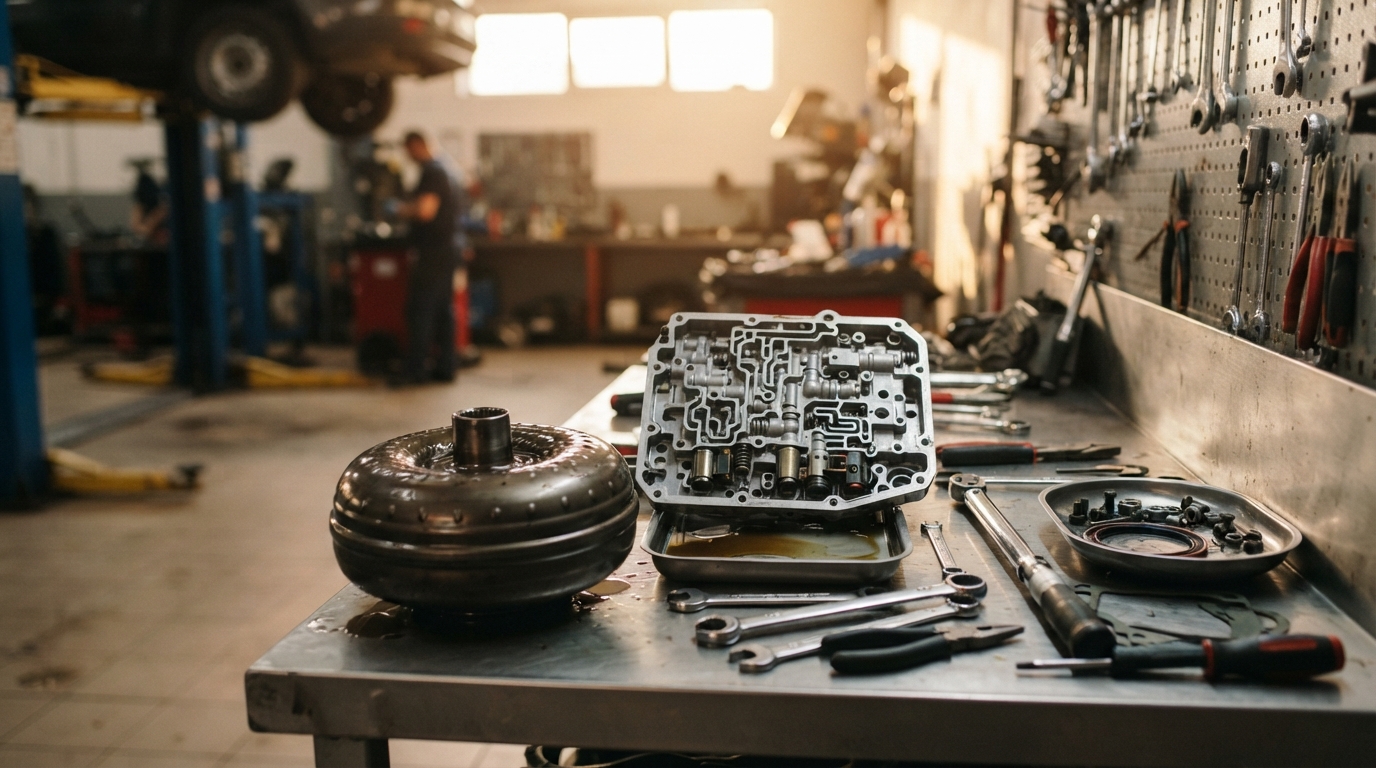
Quick summary:
• Transmission repair follows a defined sequence: diagnosis, fluid and component inspection, repair or rebuild, and a road test before return.
• Warning signs such as slipping gears, delayed shifts, fluid leaks, or dashboard alerts typically prompt a shop visit.
• Drivers in Monroe, LA can expect a similar multi-step process regardless of vehicle make or transmission type.
Transmission repair refers to the diagnostic and mechanical process used to identify and correct problems inside a vehicle’s automatic or manual transmission, ranging from a fluid change to a full rebuild. Most shops follow a consistent sequence of steps once a vehicle arrives, starting with symptom review and ending with a verification drive.
Drivers searching for Transmission Repair In Monroe LA often arrive at that decision after noticing a specific symptom rather than scheduling routine service in advance. Recognizing those early signals matters because transmission issues rarely resolve on their own and tend to compound with continued driving.
Common Signs a Transmission Needs Attention
Before any repair begins, a vehicle usually shows one or more symptoms that prompt the visit. These signs are consistent across most makes and models:
• Slipping gears or a delay between pressing the accelerator and the vehicle responding
• Grinding, whining, or clunking noises during shifts
• Fluid spots underneath the vehicle, often reddish in color
• A transmission or check engine warning light on the dashboard
• Rough or jerky shifting, particularly in stop-and-go traffic
Ignoring these symptoms allows small issues such as worn clutch plates or low fluid pressure to develop into larger mechanical failures.
The Diagnostic Stage
A technician typically begins with a scan tool to pull any stored diagnostic trouble codes, followed by a review of fluid condition, level, and color. This step narrows down whether the issue stems from electronic sensors, fluid-related wear, or a mechanical fault inside the transmission housing.
• Code retrieval and symptom confirmation through a test drive
• Visual inspection for leaks at seals, pans, and cooler lines
• Fluid condition check for burnt odor, discoloration, or metal particles
The diagnostic results determine whether the fix is a simple fluid and filter service or a more involved teardown. Drivers in Monroe, LA dealing with persistent shifting problems benefit from this stage because it prevents guesswork and unnecessary part replacement.
Repair, Rebuild, or Replacement
Once the cause is identified, the shop outlines which of three paths applies. Each option differs in scope, cost, and expected outcome.
| Repair Type | Typical Scope | When It Applies |
| Fluid and filter service | Drain, refill, filter replacement | Early slipping, minor shift delay |
| Component repair | Solenoid, seal, or sensor replacement | Isolated part failure confirmed by diagnostics |
| Full rebuild or replacement | Internal gears, clutches, torque converter | Extensive wear or metal contamination in fluid |
Technicians disassemble the unit only when diagnostics confirm internal wear, since this step requires the most labor and time. According to the National Highway traffic safety administration, transmission-related defects are tracked through technical service bulletins that help identify known failure patterns tied to specific models and production years.
Final Testing and Return to Service
After repairs are completed, the vehicle goes through a road test to confirm shifting is smooth across gear ranges and that no warning lights return. Fluid levels are rechecked, and any leaks from the repair area are inspected before the vehicle is cleared for pickup. This final verification step confirms the repair addressed the original symptom rather than masking it temporarily.
Frequently Asked Questions
How long does a typical transmission repair take? Timing depends on the repair type. A fluid service may take under an hour, while a full rebuild can take several days depending on parts availability and the extent of internal wear.
Can a transmission be repaired instead of replaced? In many cases, yes. If diagnostics show the issue is isolated to a solenoid, seal, or sensor, a targeted repair is usually possible without replacing the entire unit.
What happens if transmission fluid is ignored for too long? Degraded or low fluid accelerates wear on internal components, which can turn a minor repair into a full rebuild or replacement situation.
Is a warning light always a sign of transmission failure? Not always. A warning light can indicate a sensor fault or a more serious mechanical issue, which is why a diagnostic scan is the standard first step.
Business Information and Next Steps
Twin City Transmission Service is based in the USA and serves customers across Monroe, LA. BBB records identify the business under transmission repair services in the Monroe area. Drivers can review available repair options and service information through the service details page.