Short answer:
• Lanai screening options range from standard insect mesh to heavier Super Screen and solar/pet-resistant mesh, with mesh density and frame gauge driving durability and airflow.
• In Cape Coral, FL, screened lanai structures must meet Florida Building Code wind load requirements and typically require a county building permit.
• Material choice should match exposure to storms, pets, pool proximity, and desired privacy or sun control.
Choosing a screen for a lanai is mostly a question of matching mesh type and frame strength to local weather exposure and household needs. Homeowners researching Lanai Screening in Cape Coral FL options typically compare standard fiberglass mesh, heavier-gauge pet and storm screens, and solar screens that reduce glare and heat before settling on a configuration for their outdoor space.
A lanai is only as functional as the screen system protecting it, and in a canal-heavy, storm-prone market, that decision affects comfort, maintenance, and how the structure performs during seasonal weather.
What Lanai Screening Actually Involves
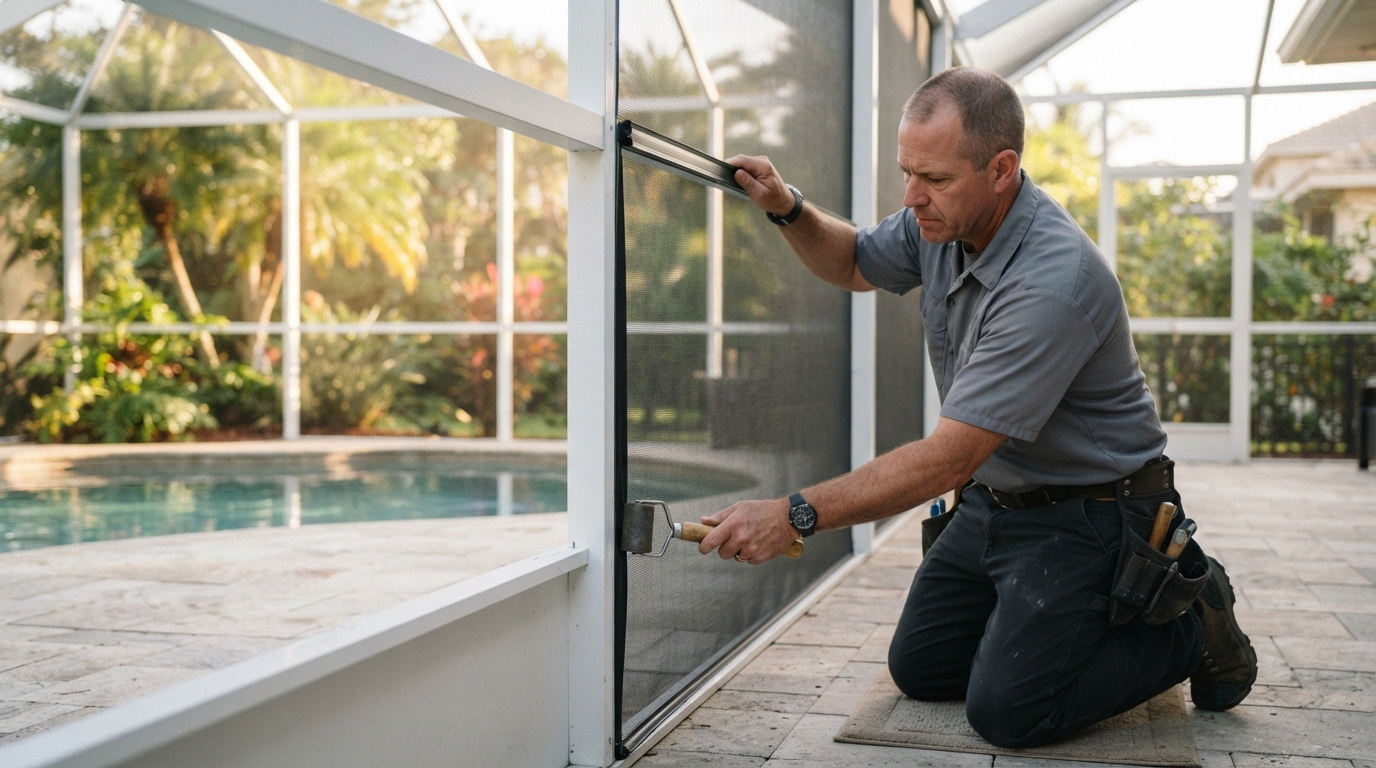
Lanai screening refers to the mesh and framing system installed around an existing or new lanai structure to keep out insects, debris, and excess sun while preserving airflow and views. The screen itself attaches to an aluminum frame, and the two components work together to determine how the enclosure holds up over time.
Common elements include:
• Mesh panels stretched and secured into aluminum channel framing
• Spline or vinyl cord that locks the mesh into the frame track
• Support bracing, such as cables or K-braces, for taller or wider openings
Comparing Common Mesh Types
Mesh selection affects visibility, airflow, sun control, and resistance to tearing from pets or storm debris. The table below outlines the general tradeoffs among the most common options used in residential lanai projects.
| Mesh Type | Typical Use | Key Tradeoff |
| Standard fiberglass (18×14) | General insect control | Lightweight but less tear-resistant |
| Super Screen / heavy gauge | Pet owners, high-traffic lanais | Thicker weave, reduced visibility |
| Solar screen | Sun and glare reduction | Cuts heat but limits natural light |
| Pet-resistant screen | Homes with dogs or cats | Reinforced strands resist clawing |
Local Code and Structural Considerations in Cape Coral, FL
Screen enclosures in Cape Coral, FL are not purely cosmetic installations. Because the area sits within a high design wind speed zone, enclosure framing and screening components must satisfy Florida Building Code wind load provisions rather than relying on standard off-the-shelf hardware.
Key factors that shape a compliant project include:
1. Wind load design – Framing and fasteners must be engineered for the applicable wind speed designation for the property’s exact location and exposure category, a requirement documented under the Florida Building Code.
2. Permitting – Most screened structures attached to a home, or those exceeding a minimum size, require a building permit reviewed by the local building department before installation begins.
3. Flood zone status – Lanais intended to remain open-air rather than conditioned space may be classified as non-conversion structures, which carries separate compliance implications in flood-prone zones.
Older screen panels that have gone slack, discolored, or developed small tears are common after repeated storm seasons in this part of Florida, and replacing mesh on existing framing is frequently less disruptive than a full enclosure rebuild.
Maintenance and Lifespan Expectations
Screen mesh is a wear item, not a permanent fixture, and its service life depends heavily on sun exposure, salt air proximity, and how often panels face wind-driven debris.
• Inspect spline tracks yearly for cracking or UV brittleness that loosens mesh tension
• Rinse mesh periodically to remove salt residue and organic buildup near canals
• Replace individual panels rather than full frames when only the screen has failed
• Confirm any replacement mesh still matches the enclosure’s original engineered wind rating
Frequently Asked Questions
How long does lanai screen mesh typically last in Florida? Lifespan varies by mesh grade and sun exposure, with heavier-gauge and solar screens generally outlasting standard fiberglass mesh in coastal conditions, though exact figures depend on installation quality and maintenance.
Does rescreening a lanai require a building permit in Cape Coral, FL? Permit requirements depend on the scope of work and whether structural framing is altered, so homeowners should confirm specifics with the local building department before starting a project.
Can pet owners use standard insect screen on a lanai? Standard fiberglass mesh is prone to tearing from claws, so pet-resistant or heavier-gauge screen is generally better suited to households with active dogs or cats.
Is a screened lanai considered hurricane protection? No. Screen mesh and framing are not rated as opening protection on wind mitigation inspection forms, so homeowners should not rely on screening alone for storm protection of adjacent doors or windows.
Final Notes and Business Information
Based in USA, the company serves customers across Cape Coral, FL.
Current service area details for Precision Aluminum & Remodeling, Inc. are published for homeowners evaluating lanai screening options.