Takeaway:
• Routine tile and grout cleaning removes trapped soil and bacteria that mopping alone cannot reach.
• Grout is porous and absorbs moisture, which makes it prone to discoloration and mildew over time.
• Professional hot water extraction methods typically clean more thoroughly than consumer-grade scrubbing tools.
Tile floors look clean on the surface long after the grout lines underneath have collected dirt, grease, and moisture. Regular Tile And Grout Cleaning addresses this gap by lifting embedded soil from porous grout rather than just polishing the tile face. Homeowners in Algonquin, IL often notice grout discoloration before any visible buildup appears on the tile itself, which is usually the first sign that deeper cleaning is overdue.
Grout is a cement-based material full of tiny pores, so it behaves differently than glazed tile. Dirt, spilled liquids, and foot traffic push particles into those pores, and standard mopping only moves surface grime around without reaching what’s trapped below. Over months, this buildup can darken grout lines and create a permanent shadow effect even after a thorough surface wipe-down.
Why Grout Gets Dirty Faster Than Tile
Grout’s texture is rougher than glazed ceramic or porcelain, which gives dirt more surface area to cling to. Kitchens and bathrooms are especially vulnerable because of grease, soap residue, and standing moisture.
• Food and grease particles settle into grout lines near cooking areas.
• Soap scum and hard water minerals build up in bathroom grout.
• Foot traffic tracks in outdoor dirt that works into porous seams.
• Humidity encourages mildew growth in poorly ventilated spaces.
Because grout sits lower than the tile surface, it also traps moisture longer, which creates favorable conditions for mold and mildew. The Environmental Protection Agency’s mold guidance notes that mold grows where moisture is present on porous surfaces, which includes grout in bathrooms and kitchens with limited airflow.
Signs It Is Time for Deep Cleaning
Not every grout line needs professional attention right away, but certain signs indicate that routine mopping is no longer sufficient.
1. Grout color has visibly darkened despite regular cleaning.
2. Musty odors persist near tile floors or walls.
3. Scrubbing with household cleaners produces little to no change.
4. Discoloration appears in patterns following foot traffic paths.
5. Grout feels gritty or damp even after mopping.
Residents in Algonquin, IL dealing with older tile installations may notice these signs sooner, particularly in homes with hard water or heavy household traffic.
DIY Methods Versus Professional Cleaning
Household remedies can manage light grime, but they have limits when soil has penetrated deep into the grout structure. The table below compares common approaches.
| Method | Effectiveness on Light Soil | Effectiveness on Deep Stains | Equipment Needed |
| Mopping with cleaner | Moderate | Low | Mop, bucket |
| Baking soda and vinegar scrub | Moderate | Low to moderate | Brush, household items |
| Steam mop | Moderate | Moderate | Steam mop unit |
| Hot water extraction (professional) | High | High | Specialized extraction equipment |
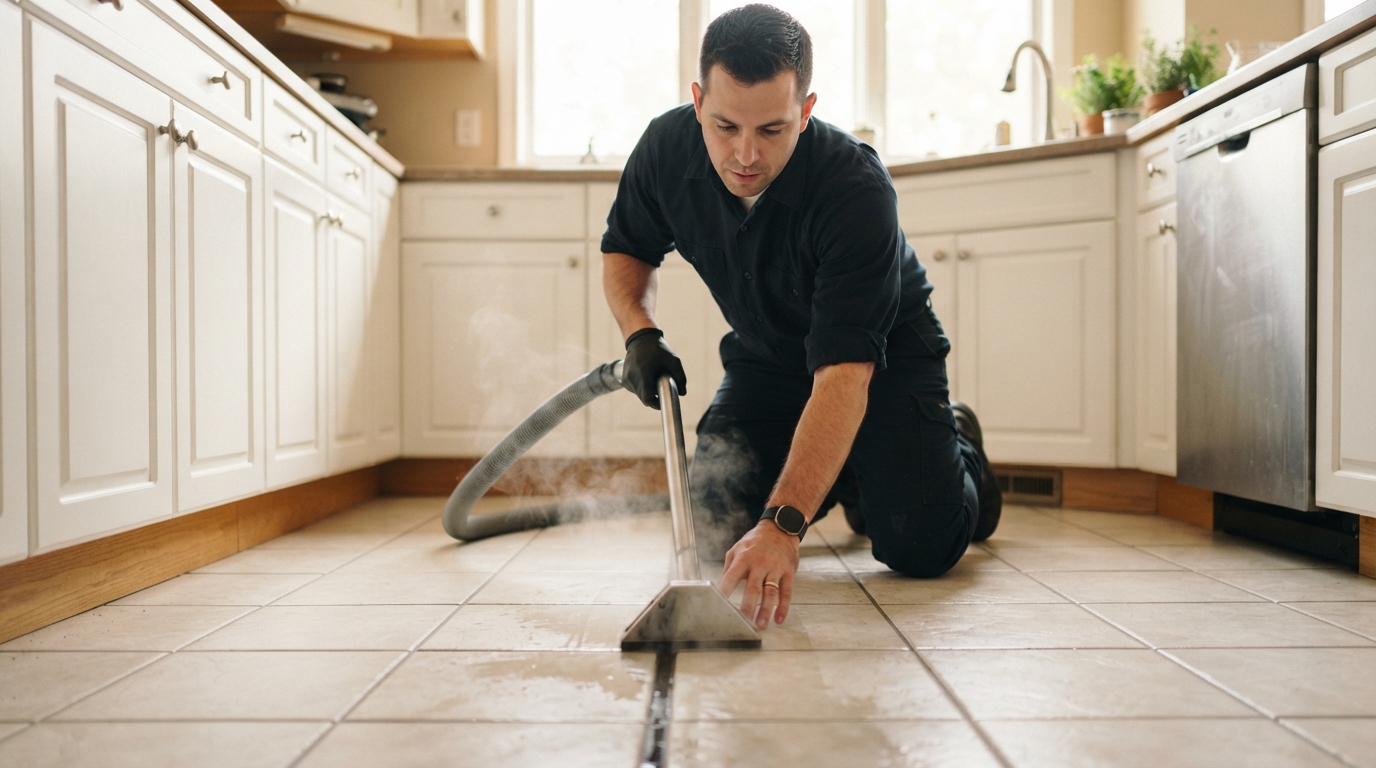
Hot water extraction uses pressurized hot water combined with suction to pull dissolved soil out of grout pores rather than pushing it around. This method is commonly used in professional floor cleaning because it reaches below the surface layer that scrubbing tools cannot access.
Maintaining Results Between Cleanings
Extending the life of a deep clean depends on consistent, light maintenance rather than infrequent heavy scrubbing.
• Sweep or vacuum tile floors several times a week to prevent grit buildup.
• Wipe up spills immediately, especially in kitchens.
• Use a pH-neutral cleaner for routine mopping to avoid damaging grout sealant.
• Reapply grout sealant periodically, since sealant wears down with foot traffic and cleaning chemicals.
• Improve bathroom ventilation to reduce moisture retention in grout lines.
These habits do not replace periodic deep cleaning, but they slow the rate at which grout reabsorbs dirt and moisture after a thorough treatment. Operating from Northern Illinois, cleaning providers serving this region generally recommend scheduling deep grout cleaning on a seasonal basis for homes with heavy foot traffic.
How often should tile and grout be professionally cleaned? Most homes benefit from professional cleaning every twelve to eighteen months, though high-traffic kitchens and bathrooms may need attention sooner.
Can grout sealant be applied after a deep clean? Yes, sealant is typically applied once grout is fully dry and free of embedded soil, which helps slow future staining.
Does hot water extraction damage tile? When used correctly on sealed, properly installed tile, hot water extraction is designed to clean without damaging the tile surface or grout structure.
Is DIY grout cleaning ever sufficient? Light, recent soiling can often be managed with household methods, but deeply set stains usually require equipment capable of deeper extraction.
Based in Northern Illinois, we serve customers across Algonquin, IL.
Additional published information about Read More About Heaven’s Best Carpet Cleaning outlines the cleaning process and local coverage area.