Key takeaway:
• Lint buildup in dryer ducts is the leading cause of residential dryer fires, and annual inspection and cleaning address it directly.
• NFPA 211 calls for yearly inspection of dryer exhaust systems, with cleaning performed as needed based on lint accumulation.
• Dryer Duct Cleaning Buffalo NY addresses both fire risk and energy efficiency tied to restricted airflow in older housing stock.
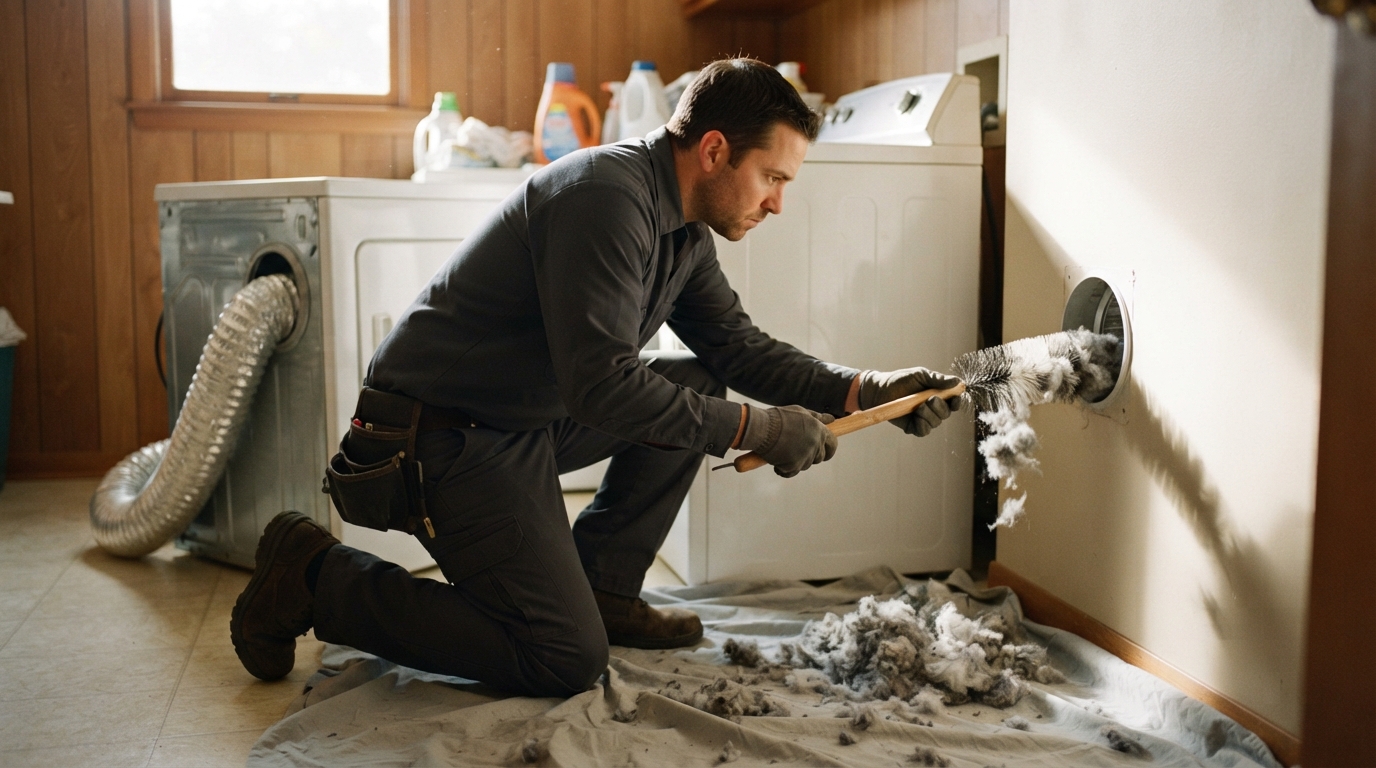
A clogged dryer vent restricts airflow, forces the appliance to overheat, and creates one of the most preventable fire risks in a home. Scheduling professional Dryer Duct Cleaning Buffalo NY removes accumulated lint from the full duct run, not just the trap, reducing that risk at its source.
National fire data backs up why this matters. Every year, dryers cause roughly 15,970 home fires, and the damage adds up to hundreds of millions of dollars in property losses, according to NFPA research on clothes dryer fires. Failure to clean is the leading cause, responsible for 32% of dryer fires, according to the NFPA’s most current dryer fire data. Separately, the Fire Administration reports an estimated 2,900 home clothes dryer fires annually, with failure to clean behind roughly one-third of them.
What Drives Lint Buildup in Buffalo, NY Homes
Buffalo’s housing stock includes a large share of older single-family homes, many with longer vent runs or multiple bends between the dryer and the exterior wall. That layout slows airflow and gives lint more surfaces to collect on. Seasonal humidity swings compound the problem, since damp lint clings to duct walls rather than exhausting cleanly.
Common warning signs that a vent needs attention include:
• Clothes taking more than one cycle to dry fully
• A burning smell during or after a cycle
• The dryer cabinet feeling unusually hot to the touch
• Little or no airflow felt at the exterior vent hood when the dryer runs
Inspection Standards That Apply to Dryer Vents
Residential dryer vents fall under NFPA 211, the National Fire Protection Association’s standard governing chimneys, fireplaces, vents, and solid fuel burning appliances, which includes requirements for clothes dryer exhaust systems. That standard requires dryer exhaust systems to be inspected at least annually and cleaned as necessary. NFPA 211 also sets the maximum length of a clothes dryer exhaust duct at 35 feet from the dryer connection to the exterior termination point, which matters for longer runs common in two-story homes. Full details on the standard are available through the National Fire Protection Association.
A typical professional cleaning addresses more than the visible lint trap:
• Disconnecting the dryer from the vent connection
• Clearing the full duct run with brush or air-whip equipment
• Removing lint and debris from the blower fan and cabinet interior
• Inspecting the exterior termination cap for blockages, nests, or stuck flaps
Dryer Vent Cleaning Compared to Other Home Maintenance Tasks
Maintenance Task |
Typical Frequency |
Primary Risk If Skipped |
|
Dryer vent cleaning |
Annually (condition-based per NFPA 211) |
Fire, overheating, longer dry times |
|
Air duct cleaning |
Every 3-5 years |
Reduced indoor air quality |
|
Furnace filter replacement |
Every 1-3 months |
Reduced HVAC efficiency |
|
HVAC system inspection |
Annually |
Breakdown, higher energy use |
Dryer vent service stands out on this list because the consequence of neglect is fire risk rather than only comfort or efficiency loss.
Based in Niagara Falls, NY, Pure Air Care serves customers across Buffalo, NY, providing dryer vent and duct cleaning for area homes. Service work follows the inspection-and-cleaning approach outlined under NFPA 211 for dryer exhaust systems.
Frequently Asked Questions
How often should a dryer vent be cleaned? Most residential systems benefit from annual cleaning, though homes with longer duct runs, heavy dryer use, or visible warning signs may need more frequent service.
Can a dirty dryer vent actually cause a fire? Yes. Lint builds up in the transition duct and vent run, restricting airflow and accumulating dry, fibrous fuel right next to the dryer’s heat source.
Is dryer vent cleaning different from air duct cleaning? Yes. Dryer vent cleaning targets the single exhaust line running from the dryer to the exterior, while air duct cleaning addresses the broader HVAC supply and return system.
What signs suggest a dryer vent is blocked? Longer drying times, a hot dryer cabinet, a burning odor, and weak or absent airflow at the exterior vent hood are common indicators that cleaning is due.
Dryer vent maintenance is a straightforward task with outsized safety value, particularly in homes with older venting layouts common across Buffalo, NY. Scheduling details for Pure Air Care are available for residents evaluating annual inspection and cleaning options.