Key takeaway:
- A healthy Florida lawn depends on matching mowing, fertilization, and pest control to the region’s warm-season growing cycle.
- Fertilizer timing matters most: applying nutrients during dormancy wastes money and can harm local waterways.
- Professional lawn care Wesley Chapel programs typically combine mowing, weed control, fertilization, and pest management on a seasonal schedule.
A thriving lawn in Pasco County depends less on how often grass gets cut and more on whether mowing, fertilization, and pest control are timed to Florida’s subtropical growing season. Homeowners researching Lawn Care Wesley Chapel FL options are typically trying to solve one of three problems: thinning turf, recurring weeds, or a lawn that looks patchy despite regular mowing.
Warm-season grasses common in Central Florida, including St. Augustine and bahiagrass, grow actively from spring through early fall and slow down or go dormant in cooler months. Fertilizing outside that active growth window does little for the lawn and can contribute to nutrient runoff, according to UF/IFAS Extension Pasco County.
Matching Lawn Care Tasks to the Growing Season
Lawn health in Chapel area yards tracks closely with Florida’s two basic growing periods: an active growth phase and a dormant or slow-growth phase.
- Spring through early fall: weekly or biweekly mowing, regular fertilization, and weed control support active turf growth.
- Mid-fall through winter: reduced mowing frequency and no fertilization, since dormant turf cannot absorb nutrients.
- Year-round: pest monitoring, since insects and fungal issues can appear even when grass growth slows.
Skipping seasonal adjustments is one of the most common reasons lawns in the region look uneven or stressed despite consistent upkeep.
Core Lawn Maintenance Practices That Support Turf Health
Routine maintenance covers more than cutting grass. The following tasks address the specific stresses Florida lawns face from heat, sandy soil, and seasonal rainfall.
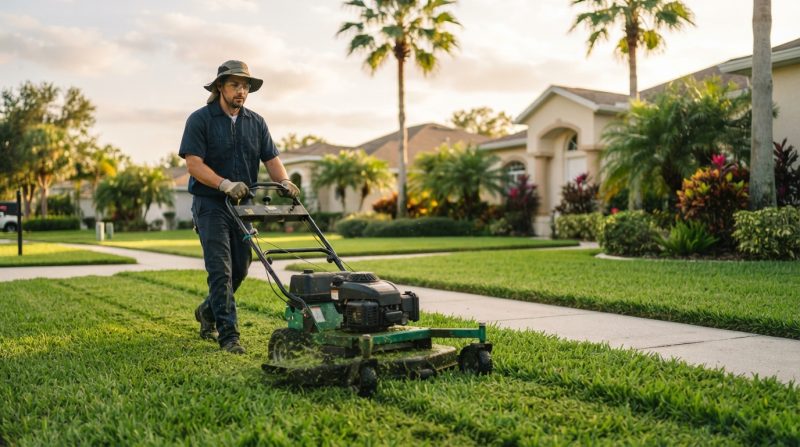
- Mowing at the correct height prevents scalping and reduces weed pressure by shading out competing seedlings.
- Edging and trimming keep turf from spreading into sidewalks, driveways, and planting beds.
- Fertilization during active growth replaces nutrients that leach out of sandy Florida soils after heavy rain.
- Weed and pest monitoring catches problems like fire ants or fungal disease before they spread across a yard.
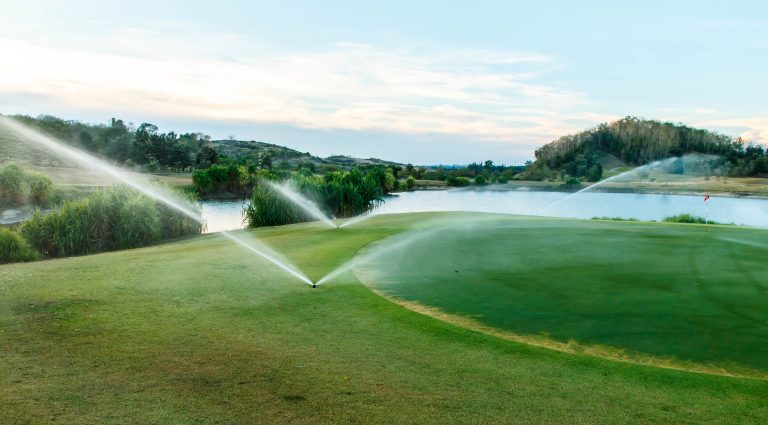
- Irrigation checks confirm sprinkler coverage matches the lawn’s actual water needs rather than a fixed schedule.
Slow-release, low-phosphorus fertilizer is generally recommended for Florida turf because sandy soils already retain adequate phosphorus and because slow-release formulas reduce the risk of nutrient runoff into local waterways, per UF/IFAS Gardening Solutions.
Comparing Lawn Care Approaches
| Approach | Typical Frequency | Best Suited For |
|---|---|---|
| DIY mowing and fertilizing | Weekly mowing, seasonal fertilizer | Homeowners with time for consistent upkeep |
| Scheduled maintenance program | Weekly/biweekly visits, adjusted seasonally | Properties needing consistent appearance and HOA compliance |
| Combined treatment and pest program | Recurring treatments plus routine mowing | Lawns with recurring weed, insect, or disease issues |
Each approach can produce a healthy lawn, but consistency and seasonal timing matter more than which option a homeowner chooses.
Addressing Common Lawn Stressors in Chapel Yards
Local turf faces specific pressures tied to Florida’s climate and soil type. Addressing them directly helps prevent recurring problems.
- Sandy soil drains quickly, so nutrients and water need more frequent, smaller applications rather than infrequent heavy ones.
- Seasonal rain can wash fertilizer off lawns onto pavement, which is why spreaders with deflector shields are recommended near sidewalks and driveways.
- Fire ants and lawn-damaging insects remain active in warm months and require monitoring even on well-maintained turf.
- HOA landscaping standards in many Pasco County communities require consistent mowing height and edge maintenance.
Based in Land O Lakes, FL, lawn care services extend to homeowners throughout Chapel as part of a broader Pasco County service footprint. Residential and commercial lawn care, fertilization, pest control, and irrigation support are among the offerings documented for properties in the area, including McGuire’s Beautiful Outdoors Inc.
Frequently Asked Questions
How often should a Florida lawn be mowed during the growing season? Weekly mowing is common during spring and summer active growth, shifting to biweekly during cooler months when grass growth slows.
When is the best time to fertilize a lawn in Central Florida? Fertilizer should only be applied when turf is actively growing, generally from spring through early fall, since it is best practice to apply fertilizer to turfgrass only when it is actively growing, and turf will not absorb any fertilizer when it is dormant.
Does HOA landscaping compliance affect lawn care scheduling? Many Pasco County communities set mowing height and edging standards, so maintenance schedules often need to meet those requirements alongside seasonal turf needs.
What causes patchy or thinning grass despite regular mowing? Thinning turf is often linked to incorrect fertilizer timing, pest damage, or inconsistent irrigation rather than mowing frequency alone.
Scheduling details and service area information for McGuire’s Beautiful Outdoors Inc. are available for homeowners comparing local lawn care options.