Summary first:
• Metal, asphalt shingle, and composite materials each offer different lifespans, costs, and maintenance needs for Millersburg, OH homes.
• Climate, roof pitch, and budget are the main factors that determine the best material choice.
• Professional evaluation helps match material selection to local weather patterns and structural requirements.
The right roofing material depends on climate durability, budget, and how long a homeowner expects to stay in the property, with metal and asphalt shingles remaining the two most common choices for Ohio homes. Comparing lifespan, upfront cost, and maintenance needs against local weather conditions narrows the decision quickly.
Selecting a roof installation material is one of the more consequential decisions a homeowner makes, since the choice affects energy costs, storm resistance, and how often the roof needs attention over its service life. Ohio’s mix of snow, wind, and summer storms makes material selection especially relevant for anyone planning a replacement in the near future.
Comparing Common Roofing Materials
Each material brings tradeoffs in cost, longevity, and performance under regional weather stress. A side-by-side comparison helps frame the decision before a contractor walkthrough.
| Material | Typical Lifespan | Relative Cost | Best Suited For |
| Asphalt Shingles | 15-30 years | Lower upfront | Budget-conscious projects, standard pitch roofs |
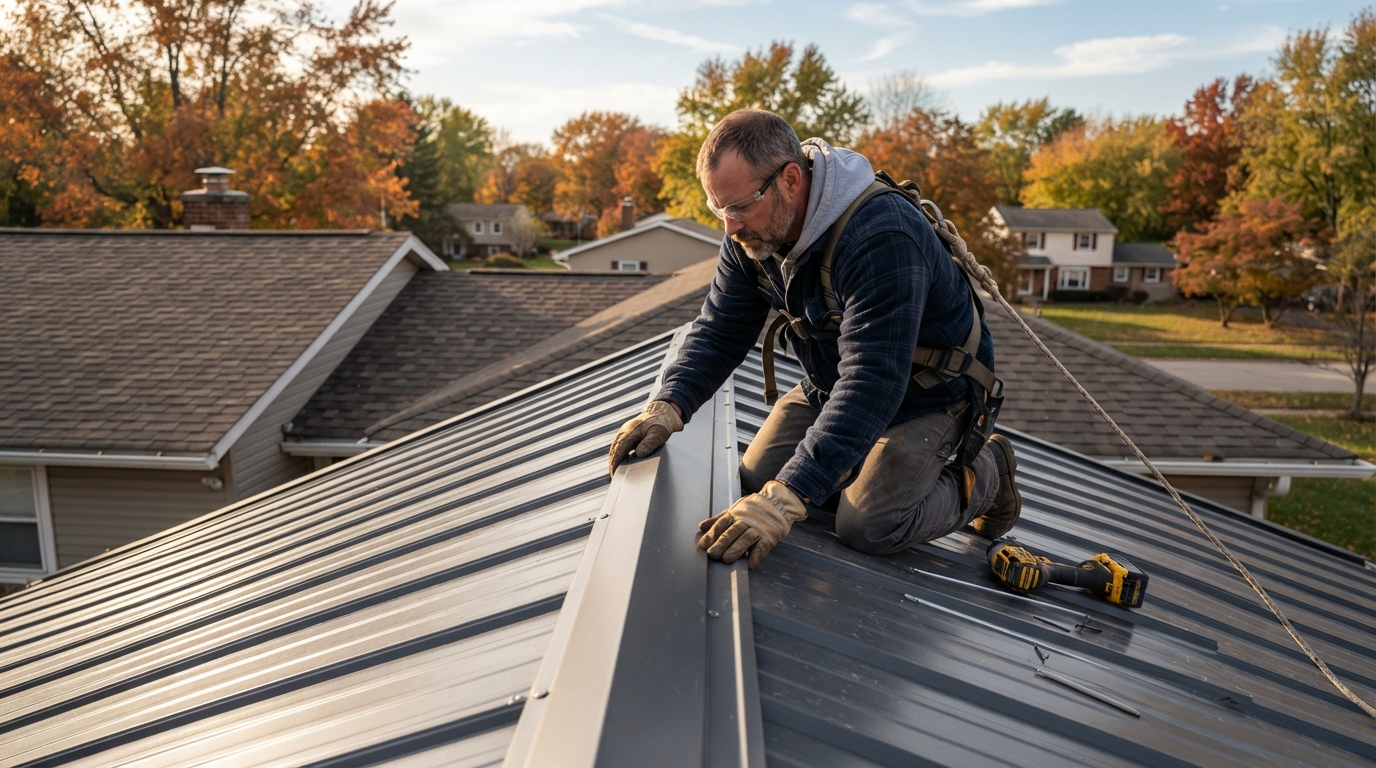
| Metal (Standing Seam) | 40-70 years | Higher upfront | Snow shedding, long-term durability, energy efficiency |
| Architectural/Composite Shingles | 25-40 years | Mid-range | Wind resistance, varied aesthetic styles |
Asphalt remains the most widely installed option nationally because of lower material and labor costs, while metal roofing has gained traction for its longevity and ability to shed snow more efficiently in colder climates.
Factors That Influence Material Selection
Several practical considerations narrow the field beyond price alone. Homeowners weighing options should factor in:
• Roof pitch and structure : Steeper roofs shed water and snow faster, which can reduce the urgency for premium waterproofing in some material choices.
• Local climate exposure : Freeze-thaw cycles and seasonal storms common to Ohio winters affect how materials expand, contract, and wear over time.
• Energy performance : Reflective metal roofing can reduce attic heat gain compared to darker asphalt shingles, according to the U.S. Department of Energy .
• Resale and warranty considerations : Longer-lasting materials often carry extended manufacturer warranties, which can factor into home value calculations.
Matching Materials to Ohio Weather Patterns
Millersburg, OH experiences cold winters with regular snowfall and warm, humid summers, conditions that place real demands on roofing materials. Snow load capacity and ice dam resistance are particularly relevant for homes in this region.
Metal roofing’s smooth surface allows snow to slide off more readily than textured shingle surfaces, reducing the risk of ice dam formation along eaves. Asphalt shingles, while less expensive initially, may require more frequent inspection after heavy snow years to check for granule loss or wind-lifted edges.
Homeowners replacing a roof after storm damage should also confirm whether local permitting requirements apply before work begins, since Ohio townships can vary in inspection and permit rules for residential roofing projects.
Business Info
Based in Apple Creek, OH, Troyer Roofing & Construction serves customers across Millersburg, OH, with metal roof installation among its listed offerings.
Frequently Asked Questions
How long does a metal roof last compared to asphalt shingles? Standing seam metal roofing typically lasts 40 to 70 years, while asphalt shingles generally last 15 to 30 years depending on climate exposure and installation quality.
Does roofing material affect home energy costs? Reflective metal roofing can lower attic heat gain during summer months compared to standard asphalt shingles, which may reduce cooling costs in warmer seasons.
What roofing material handles snow best in Ohio winters? Metal roofing’s smooth surface sheds snow more effectively than textured shingles, reducing the likelihood of ice dam buildup along roof edges.
Is a permit required for a roof replacement in Ohio? Permit requirements vary by township and county, so homeowners should confirm local rules before scheduling a material change or full roof replacement.
Next Steps for Roofing Material Decisions
Material selection for a roof replacement benefits from matching product specifications against actual regional weather data rather than cost alone. Current service area and project information for Troyer Roofing & Construction is published for homeowners researching options in the region.