Summary first:
• A qualified foundation repair contractor diagnoses the cause of movement, not just the symptoms, before recommending a repair method.
• San Antonio, TX homes commonly face settlement and cracking tied to expansive clay soil and seasonal moisture swings.
• Look for documented inspection processes, warranty terms, and licensing when comparing contractors.
A qualified foundation repair contractor identifies the root cause of foundation movement through inspection and measurement before proposing a fix, rather than offering a one-size-fits-all solution. This distinction matters because the wrong repair method can fail within a few years, while an accurate diagnosis supports a longer-lasting outcome.
Homeowners searching for a Foundation Repair Contractor are usually responding to visible warning signs: cracked walls, sticking doors, or sloping floors. These symptoms often point to differential settlement, a condition where sections of a slab shift at different rates. Selecting a contractor who can explain why this is happening, not just how they plan to lift the structure, is the first step toward a repair that holds up over time.
Why Foundation Movement Is Common in San Antonio, TX
San Antonio, TX sits on soil that shifts seasonally with rainfall and drought cycles, which puts ongoing stress on slab foundations. Homes built on clay-heavy lots are particularly prone to uneven settling as the ground beneath them expands when wet and contracts when dry.
Signs that a property may need professional evaluation include:
• Cracks in drywall near doors and windows
• Doors or windows that stick or no longer latch properly
• Visible gaps between walls and ceilings or floors
• Sloping or uneven floors noticeable when walking across a room
• Cracks in exterior brick or the foundation slab itself
Any of these signs on their own may not indicate a serious problem, but a cluster of them over a short period usually warrants an inspection.
What a Thorough Inspection Should Include
A credible evaluation goes beyond a visual walkthrough. Contractors who take elevation measurements across the slab, check plumbing lines, and assess soil conditions are better positioned to recommend a repair method matched to the actual cause of movement rather than a generic solution.
A detailed inspection typically covers:
1. Elevation readings taken at multiple points across the foundation
2. Assessment of soil composition and moisture conditions around the structure
3. Review of plumbing lines for leaks that may be contributing to soil movement
4. Documentation of existing cracks, their width, and their pattern
5. A written estimate outlining the scope and method of repair
Comparing Common Foundation Repair Methods
Several repair approaches exist, and the right choice depends on soil depth, home weight distribution, and the severity of movement already present.
| Method | Best suited for | General consideration |
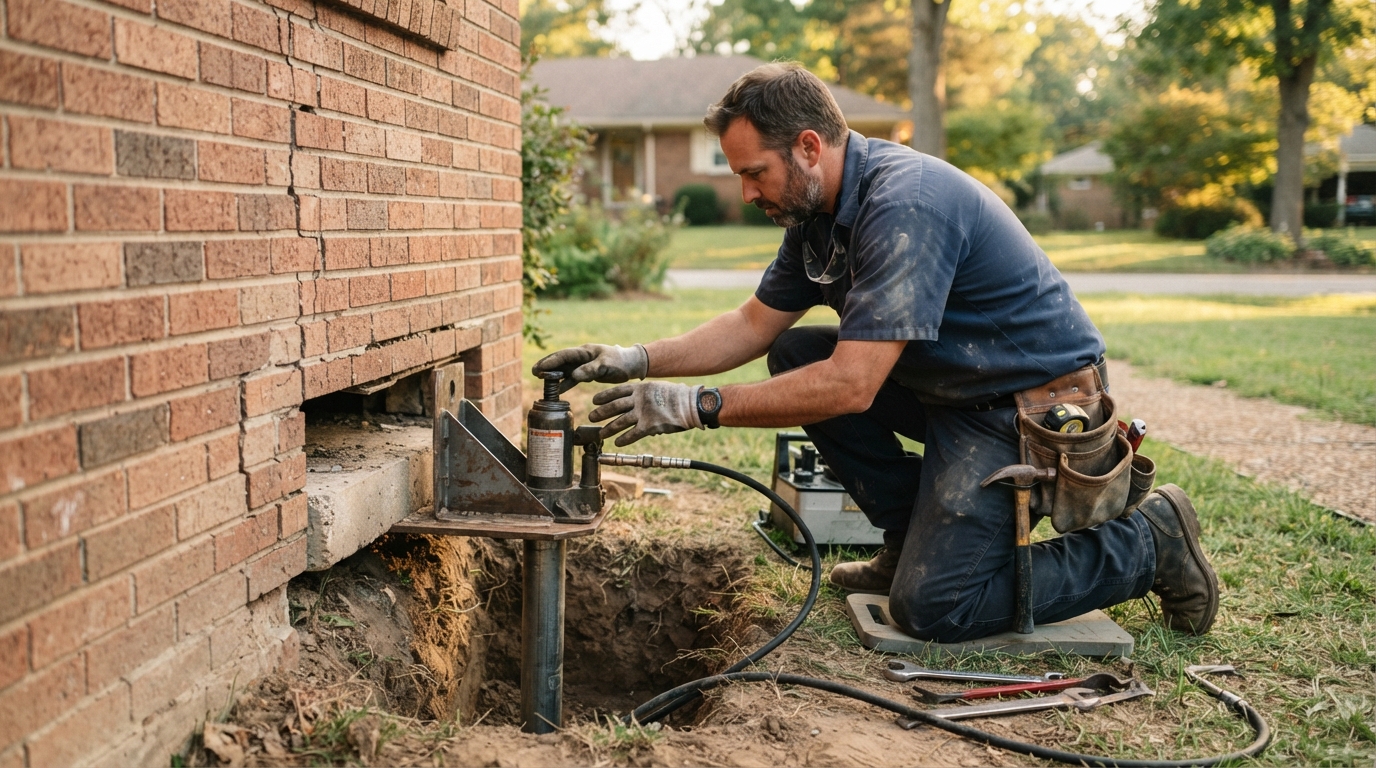
| Steel push piers | Homes with significant settlement needing support to stable soil or bedrock | Often paired with lifetime transferable warranties |
| Helical piers | Lighter structures or additions | Screwed into soil, useful where access is limited |
| Concrete pilings | Budget-conscious repairs | May shift again in highly reactive clay soils |
| Slab leveling/mudjacking | Minor, localized settling | Typically a shorter-term fix than pier systems |
Warranty terms and the contractor’s licensing status are worth confirming before work begins, since repair methods vary widely in long-term durability.
Questions to Ask Before Hiring
A short conversation can reveal whether a contractor’s process matches the complexity of the job. Useful questions include:
• Is the company licensed as a general contractor in the state and municipality where the work will take place?
• Does the inspection include written documentation of findings and measurements?
• What warranty is offered, and is it transferable if the home is sold?
• Are repairs performed by an in-house crew or subcontracted out?
Clear, specific answers to these questions are generally a better indicator of reliability than marketing claims alone.
Frequently Asked Questions
How much does foundation repair typically cost? Costs vary significantly based on the extent of damage, the size of the home, and the repair method selected, so a site-specific written estimate is the most reliable way to understand pricing for a given property.
How long does a foundation repair last? Repairs using steel pier systems driven to stable soil or bedrock are generally designed for long-term stability, while some lower-cost methods may require follow-up work sooner, particularly in areas with reactive clay soil.
Can foundation problems get worse if ignored? Yes. Small cracks and minor unevenness tend to progress over time as seasonal soil movement continues, which is why early inspection is typically recommended over a wait-and-see approach.
Is a free inspection a reliable way to start the process? A free inspection can be a useful first step, provided it includes measurable documentation rather than only a verbal assessment, so the findings can be compared across multiple contractor quotes.
Final Notes on Hiring a Contractor
Based in USA, Risen Foundation Solutions serves customers across San Antonio, TX.
Current service area information for Read More about Risen Foundation Solutions is available for review.