Briefly:
- Coil tubing intervention services use continuous-reel tubing to perform cleanouts, scale removal, and stimulation work without pulling the full production string.
- These operations typically reduce rig-up time and downtime compared to heavier workover methods.
- Visit Cudd Pressure Control operates coiled tubing units supporting onshore and offshore well projects across the USA.
Coil tubing intervention services improve wellbore efficiency by allowing operators to clean, stimulate, or service a live well without stopping production or removing the full tubing string, which cuts non-productive time compared to conventional workover rigs. This approach relies on a continuous reel of tubing rather than jointed pipe, so crews avoid repeated makeup and breakout of connections during the job.
Cudd Pressure Control is among the oilfield service providers offering this type of work. The Cudd Pressure Control coiled tubing division supports completion, production, and workover projects through services that include logging, plug setting, perforating, cleanouts, scale removal, and stimulation. These capabilities are documented on the company’s coiled tubing service page and reflect verified offerings rather than generalized industry claims.
What Coiled Tubing Intervention Involves
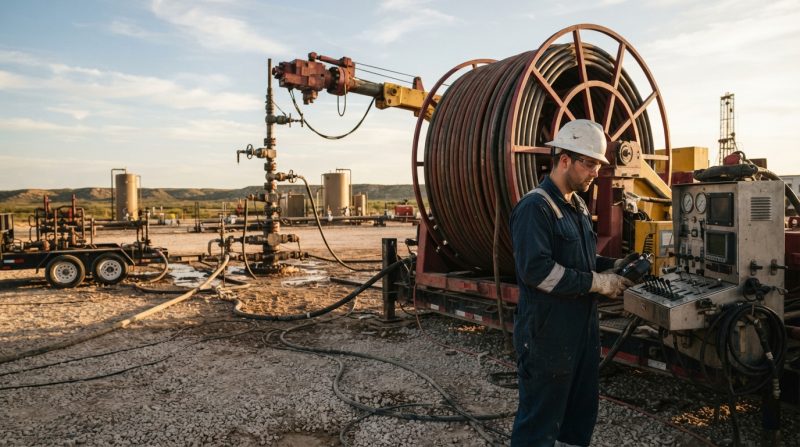
Coiled tubing intervention is a well-servicing method that inserts continuous tubing into a live well to perform targeted downhole work. Unlike traditional workover rigs that require tongs, slips, and elevators to run jointed pipe section by section, coiled tubing unspools directly from a reel, which shortens rig-up time on location.
Common intervention tasks include:
- Wellbore cleanouts to remove sand, debris, or scale buildup
- Scale and paraffin removal that restricts flow
- Chemical treatments and acid stimulation jobs
- Plug setting and retrieval
- Logging runs to assess downhole conditions
A documented coiled tubing provider typically accounts for tubing size, well depth, pressure profile, fluid type, and temperature before mobilizing equipment, since these variables affect job design and the control systems required on site.
Why Intervention Reduces Downtime
Pulling a full tubing string with a conventional rig takes substantially longer than running a coiled tubing unit, because the well often stays live and under pressure control throughout a coiled tubing job. This matters for operators managing production schedules, since extended shutdowns directly reduce output and revenue during the servicing window.
Federal workplace safety guidance for well servicing operations outlines pressure-control and pinch-point precautions specific to coiled tubing work, including keeping hands clear of the injector head and tubing spool during operations, as described in the OSHA oil and gas well servicing eTool. Following these controls supports both crew safety and consistent job execution, which in turn protects the efficiency gains the method is meant to deliver.
| Method | Typical Rig-Up Time | Well Status During Job | Common Use Case |
|---|---|---|---|
| Coiled tubing intervention | Hours | Often remains live | Cleanouts, stimulation, plug setting |
| Conventional workover rig | Longer, multi-day setup possible | Usually shut in | Major mechanical repairs |
| Wireline service | Short | Can remain live | Logging, light mechanical work |
Equipment and Planning Factors That Affect Results
The condition and availability of coiled tubing equipment influence how reliably a job stays on schedule. An extensive equipment inventory reduces the chance that a unit is unavailable or mismatched to well conditions when a job needs to move quickly.
Planning steps that typically precede a job include:
- Reviewing well depth, pressure, and fluid characteristics
- Selecting the appropriate tubing size and injector head
- Confirming pressure-control equipment and contingency procedures
- Coordinating mobilization logistics for the specific site
Operators across the USA working in onshore and offshore settings rely on this planning stage to avoid delays once equipment arrives on location.
Frequently Asked Questions
What is coiled tubing intervention used for? It is used for wellbore cleanouts, scale removal, stimulation treatments, plug setting, perforating, and logging runs performed without pulling the full production tubing string.
Does coiled tubing intervention stop well production? Many coiled tubing jobs are performed on a live well, meaning production does not always need to be fully shut in during the service, unlike some conventional workover procedures.
How does coiled tubing intervention compare to a workover rig? Coiled tubing generally sets up faster because it runs from a continuous reel rather than jointed pipe, which reduces the connection time required by tongs, slips, and elevators.
Is coiled tubing intervention used onshore and offshore? Yes, coiled tubing intervention supports both onshore and offshore well operations, with job design adjusted for site-specific pressure and access conditions.
Readers can Visit Cudd Pressure Control for published location and contact details.