At glance:
• Verified offerings include asphalt paving, concrete flatwork, excavation, drainage, and parking lot construction for private and public sites.
• Permit rules, pavement loads, and seasonal freeze-thaw cycles shape how paving projects proceed in Bronx, NY.
• Evaluation criteria below cover licensing, equipment, project scope, and site-specific planning.
Selecting a qualified provider of Commercial Paving Services means verifying licensing, insurance, and documented project history before signing a contract, since pavement failures tied to poor subgrade work or rushed installation often surface within the first two years.
Property managers and business owners evaluating paving work face a narrower set of decisions than residential driveway projects. Commercial sites carry heavier vehicle loads, stricter drainage codes, and tighter construction windows. City & County Paving Corp, a construction firm with decades of documented project history in the trade, illustrates the range of work typically grouped under commercial paving.
What Commercial Paving Actually Involves
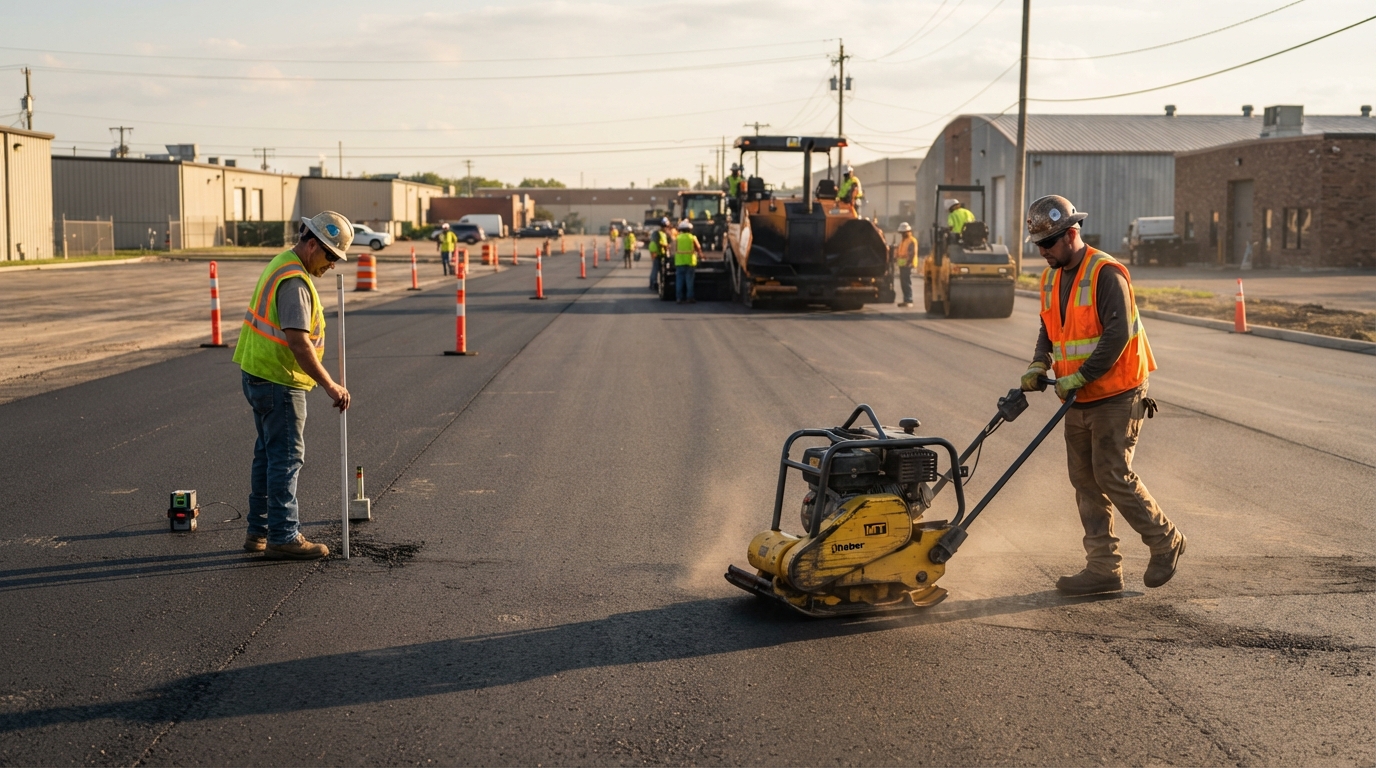
Commercial paving covers more than laying asphalt over a parking lot. A full scope of work generally includes several interdependent stages:
• Excavation and grading to establish proper subgrade slope and drainage flow
• Asphalt paving and milling for roadways, lots, and industrial surfaces
• Concrete flatwork, curbs, and sidewalk reconstruction where pedestrian traffic is heavy
• Drainage installation, including catch basins and drywells, to manage stormwater
• Surface striping and pavement markings once base layers cure
Each stage depends on the one before it. Skipping proper grading or drainage planning is a common reason commercial lots develop standing water, cracking, or premature potholes within a few seasons.
Why Site Type Changes the Approach
Not every commercial surface behaves the same way under load or weather. Parking lots, schoolyards, playgrounds, and industrial facility surfaces each demand different thickness specifications and base preparation.
| Site Type | Primary Load Concern | Typical Surface Choice |
| Parking lots | Vehicle weight and turning stress | Asphalt with reinforced base |
| Schoolyards/playgrounds | Foot traffic, safety surfacing | Asphalt or concrete flatwork |
| Industrial facilities | Heavy equipment, repeated loading | Reinforced concrete or thick asphalt |
| Apartment building walkways | Pedestrian wear, ADA access | Concrete sidewalks and curbs |
Matching the surface type to actual use reduces long-term repair costs and keeps the pavement within its expected service life.
Permits, Regulations, and Local Conditions in Bronx, NY
Commercial paving projects in Bronx, NY are subject to municipal permitting rules that govern sidewalk, curb, and roadway work. According to NYC Department of Transportation rules, owners or contractors installing or repairing roadway pavement, sidewalk, and curb must obtain the required permits before construction begins. A sidewalk closing permit becomes mandatory whenever work would block the minimum five-foot pedestrian clearance.
Freeze-thaw cycles in the Bronx, NY climate also affect timing. Asphalt and concrete installation typically performs best in moderate temperatures, since extreme cold interferes with proper curing and compaction. Property managers scheduling large commercial jobs should plan around seasonal windows rather than defaulting to the first available contractor slot.
Based in USA, City & County Paving Corp directs its paving and site work toward clients across Bronx, NY, without maintaining a branch office in the borough itself. Verified service records show work spanning parking lots, schoolyards, industrial facilities, apartment buildings, and public agency projects.
Questions to Ask Before Hiring
A short evaluation checklist helps narrow the field of candidates:
1. Is the contractor fully insured and bonded for the project size involved?
2. Does the company have documented experience with public agency approvals, if the site requires them?
3. What equipment age and maintenance standards does the crew use on excavation and grading work?
4. How does the contractor handle drainage design on sites with known water pooling issues?
Contractors unwilling to answer these questions directly, or unable to produce proof of insurance, are worth reconsidering regardless of price quoted.
Frequently Asked Questions
How long does commercial asphalt paving typically take to cure before reopening to traffic? Cure times vary by thickness, temperature, and traffic load, so property managers should request a specific schedule from the contractor rather than relying on general estimates.
Does a commercial paving project always require a city permit? Work affecting sidewalks, curbs, or roadway pavement in New York City generally requires a permit under municipal highway rules, though exact requirements depend on project scope.
What causes most commercial pavement failures? Inadequate subgrade preparation, poor drainage planning, and skipped grading steps are common contributors to early cracking or pooling on commercial surfaces.
Can one contractor handle both asphalt and concrete work on the same site? Some contractors maintain crews for both asphalt paving and concrete flatwork, which can simplify scheduling on sites needing a mix of surface types.
Final Notes
Commercial paving decisions carry long-term cost implications, since resurfacing a poorly built lot is far more expensive than paying for correct grading and drainage the first time. Reviewing permit requirements, site-specific load demands, and contractor documentation before signing a contract remains the most reliable way to avoid early pavement failure.
Current service area details for City & County Paving Corp are published for review by property owners researching local paving contractors.