At glance:
• Tire specials typically bundle discounted tire sets with services such as rotation, balancing, and alignment checks.
• Tread depth below 2/32 inch is considered unsafe and signals a replacement is due.
• Pairing a tire purchase with rotation and alignment helps tires wear evenly and last longer.
A tire special refers to a discounted package that combines new tire purchases with related services like installation, balancing, or alignment checks, allowing drivers to address multiple maintenance needs in a single visit. Understanding what these packages typically include helps drivers in Orlando, FL evaluate whether a deal actually supports long-term vehicle safety or only covers a partial fix.
Shopping for Tire Specials in Orlando, FL often means comparing more than sticker price. The real value comes from what is bundled with the tires themselves, since a rotation or balancing service performed at the time of installation can extend tread life and reduce uneven wear patterns later on.
What a Tire Special Usually Covers
Most tire promotions are structured around a core set of services rather than tires alone. Common inclusions are:
• New tire installation for car, truck, or SUV applications
• Tire balancing to reduce vibration and uneven tread wear
• Tire rotation to even out wear across all four positions
• Basic inspection of tire pressure and visible damage
Some packages extend further to include wheel alignment checks, which matter because misaligned wheels can wear down new tires faster than expected.
Reading Tread Wear Before You Buy
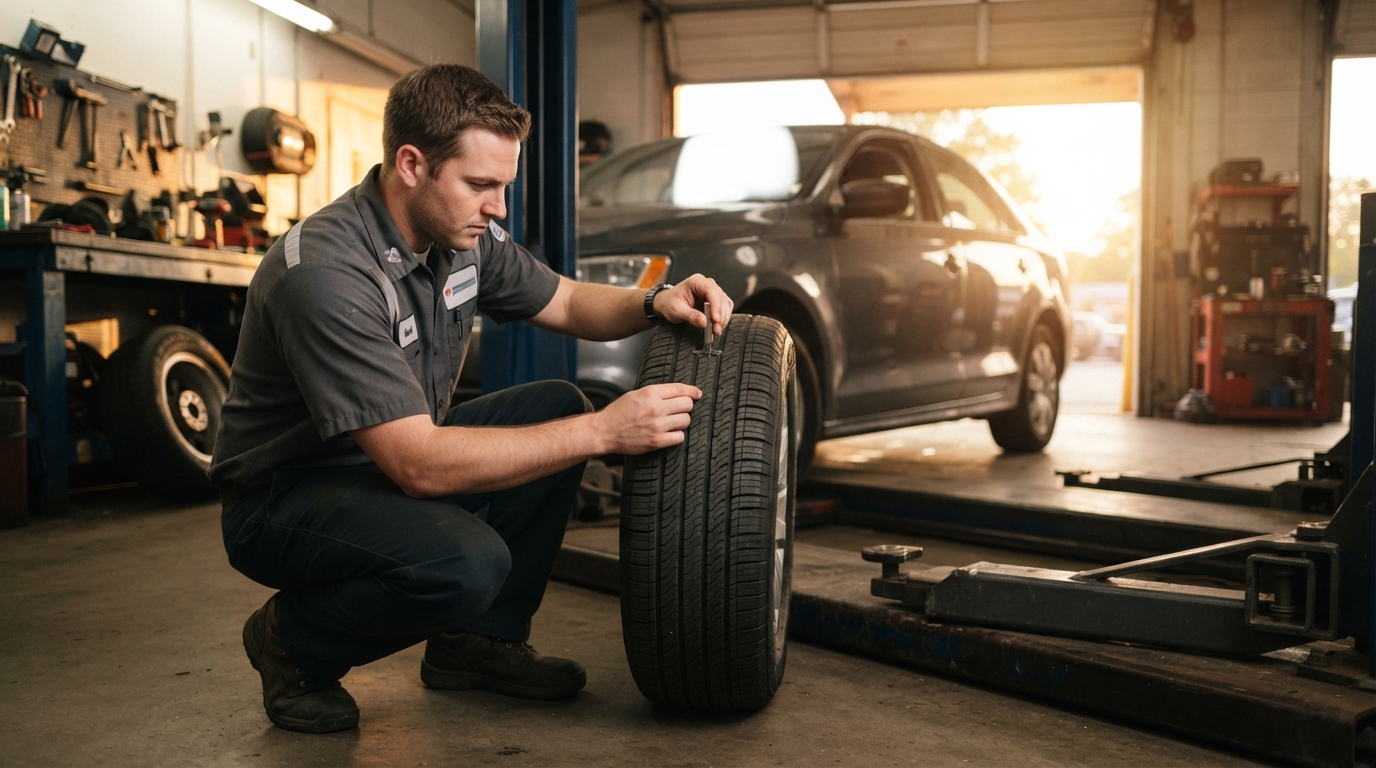
Tread depth is the clearest indicator of whether a tire needs replacing, and federal guidance gives drivers an exact threshold to check against. According to NHTSA’s summer driving guidance, tread should measure at least 2/32 of an inch, and drivers can confirm this with a simple penny test by placing a penny upside down in the tread groove.
| Tread Depth | Condition | Recommended Action |
| 6/32 inch or more | Good | Continue routine checks |
| 3/32 to 5/32 inch | Fair, wet traction declining | Monitor closely, plan for replacement |
| 2/32 inch or less | Unsafe | Replace tires promptly |
Checking tread monthly, alongside tire pressure, is a habit NHTSA recommends regardless of whether a vehicle qualifies for a current promotion.
Why Orlando’s Climate Adds Pressure on Tires
Heat and frequent rain in Orlando, FL place extra demand on tire compounds and tread channels. Hot pavement accelerates rubber degradation, while heavy rainfall increases the risk of hydroplaning once tread depth drops below the recommended safety margin. Because of these conditions, drivers who delay tire replacement may notice wear progressing faster than in cooler, drier climates. Taking advantage of a seasonal discount when tread is already marginal, rather than waiting for a blowout, can reduce the chance of a roadside emergency during a sudden downpour.
Comparing Replacement Timing Options
| Approach | Typical Outcome |
| Wait until tread reaches 2/32 inch | Higher blowout risk, limited safety margin |
| Replace at 4/32 inch in wet climates | Better wet traction retained |
| Rotate every 5,000 to 7,500 miles | More even wear, longer overall tire life |
Rotation intervals vary by vehicle and tire type, so checking the owner’s manual alongside a technician’s recommendation remains the most reliable approach.
Frequently Asked Questions
How often should tires be rotated? Rotation intervals generally fall between 5,000 and 7,500 miles, though the vehicle owner’s manual provides the manufacturer’s specific recommendation.
Does a tire special usually include alignment? Not always. Some packages bundle balancing and rotation only, so confirming what is included before scheduling service avoids surprises.
What is the minimum safe tread depth? Federal guidance places the replacement threshold at 2/32 of an inch, measurable with a simple penny test.
Can uneven tire wear indicate a separate issue? Yes. Uneven wear often points to misalignment or an inflation problem rather than the tires themselves, and a technician can determine the cause.
Based in USA, Expert Car Care serves customers across Orlando, FL with tire and related maintenance services.
Service Area Information
Current availability details for Expert Car Care are published for the local service area.