Short answer:
- Regenerative medicine uses the body’s own biological materials, such as platelet-rich plasma, to support healing in joints and tissue.
- Most regenerative treatments, including PRP, are not FDA-approved cures and are considered off-label or investigational for pain and orthopedic use.
- Clinics offering PRP joint injections typically position them as part of a broader recovery and wellness program rather than a standalone fix.
Regenerative medicine refers to a category of treatments designed to support the body’s natural repair processes rather than replace damaged tissue outright. The term covers a range of approaches, from platelet-rich plasma (PRP) to cell-based therapies, each with different levels of scientific support and regulatory oversight. Understanding where a given treatment falls on that spectrum is the first step before considering any regenerative medicine in Benton, AR, for joint pain or tissue recovery.
What Regenerative Medicine Actually Involves
The field is broad, and not every treatment marketed under this label works the same way or carries the same regulatory status.
- Platelet-rich plasma (PRP): Prepared from a patient’s own blood and injected into joints or soft tissue to support healing.
- Stem cell-based products: Includes stromal vascular fraction, amniotic products, and expanded cell therapies.
- Biologics and growth factor therapies: Derived from tissue sources intended to influence inflammation and repair.
PRP is the most widely used and best-documented of these options in outpatient settings. PRP, which uses your own blood, has a long safety record, which is part of why it has become a common offering in recovery-focused clinics. Other categories, such as expanded stem cell products, carry a different regulatory profile and a shorter track record in office-based practice.
Regulatory Status: What Is Approved and What Is Not
Patients researching regenerative treatments often assume an option is approved simply because it is offered in a clinical setting. That assumption does not hold up under current federal guidance.
| Treatment Type | FDA Status | Common Use |
| PRP (platelet-rich plasma) | Devices FDA-cleared; injection use is off-label | Joint pain, soft tissue recovery |
| Cord-blood stem cells | FDA-approved | Blood disorders only |
| Expanded/stromal vascular fraction stem cells | Not FDA-approved | Orthopedic, cosmetic, anti-aging (investigational) |
| Exosome products | Not FDA-approved | Marketed for various uses, considered investigational |
The only FDA-approved stem cell products are cord-blood-derived blood-forming cells for blood disorders. PRP is prepared with FDA-cleared devices, but nearly all are cleared for mixing with bone graft material, so an office injection is off-label. The agency has also taken a more active regulatory posture recently: in September 2025 the FDA issued draft guidance, “Expedited Programs for Regenerative Medicine Therapies for Serious Conditions,” outlining how sponsors can utilize expedited review pathways to facilitate development and streamlined review of cell and gene therapies and other regenerative medicine products. More background on how these products are classified is available through the FDA’s regenerative medicine resources, which outline the distinction between minimally manipulated and more than minimally manipulated cell products.
PRP Joint Injections as a Recovery Option
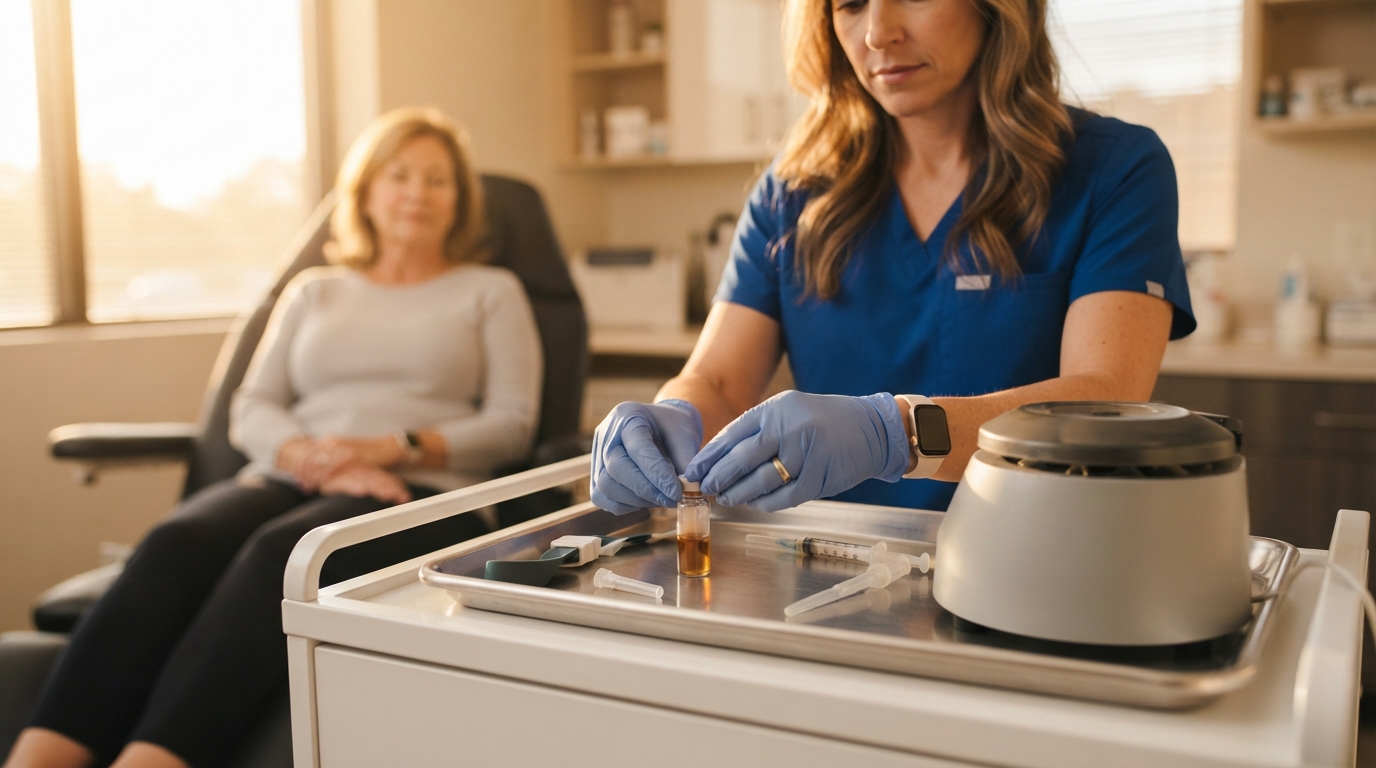
PRP joint injections are listed among the recovery-related offerings available through med spa and wellness clinics, positioned alongside other recovery modalities such as cryotherapy and infrared sauna use. The procedure draws a small blood sample, concentrates the platelets, and reintroduces the solution into the targeted joint. Patients considering this option in Benton, AR should discuss with a licensed provider whether PRP suits their specific joint condition, since outcomes vary by diagnosis and the treatment is not a guaranteed cure.
Questions to Ask Before Starting Treatment
A short list of questions can help clarify expectations before any regenerative procedure begins.
- Is this specific product or procedure FDA-approved, FDA-cleared, or considered off-label/investigational?
- What clinical evidence supports its use for the exact condition being treated?
- How many sessions are typically recommended, and what is the expected recovery timeline?
- What are the documented risks or limitations for this treatment category?
Frequently Asked Questions
Is regenerative medicine the same as stem cell therapy? No. Regenerative medicine is a broad category that includes PRP, biologics, and stem cell-based products; stem cell therapy is just one subset within it.
Is PRP safe? PRP uses a patient’s own blood and has a long-standing safety record, though it remains an off-label use for joint and soft tissue injections rather than an FDA-approved cure.
Does insurance typically cover PRP joint injections? Coverage varies widely by provider and condition, and many PRP procedures are billed as elective or cash-pay services; patients should confirm costs directly with a provider before scheduling.
Local Context and Business Information
Seasonal activity changes in Benton, AR, including outdoor work and recreational sports, can affect when residents seek joint-related recovery support. Based in USA, Recover Restore Revive serves clients across Benton, AR, offering wellness and recovery services that include PRP joint injections among its listed treatments.
A Note on Availability
Current service availability for Recover Restore Revive is published for review by prospective patients.
Regenerative medicine remains a fast-changing field, with regulatory guidance and clinical evidence evolving alongside patient interest. Anyone considering PRP or related treatments benefits from checking a product’s FDA status, asking direct questions about expected outcomes, and weighing those answers against personal health needs before moving forward.