Bottom line:
- Deferred commercial door maintenance often costs more than scheduled service once downtime, emergency labor, and liability exposure are factored in.
- Worn tracks, failing springs, and misaligned sensors are common early warning signs that lead to larger repairs if ignored.
- Facilities in Long Beach, CA face added wear from coastal humidity and salt air, making routine inspection schedules especially relevant.
Skipping routine upkeep on a facility’s rolling steel or overhead doors rarely saves money. It typically shifts cost from a planned service visit to an unplanned repair, a safety incident, or both. A consistent Commercial Door Maintenance schedule is one of the more reliable ways facility managers reduce unplanned downtime and keep equipment operating within manufacturer specifications.
Warehouses, distribution centers, and retail buildings throughout Long Beach, CA rely on overhead and roll-up doors dozens of times a day. Each cycle adds wear to springs, tracks, cables, and sensors, and that wear accelerates when inspections are postponed.
Why Deferred Maintenance Becomes Expensive
A door that seems to be working fine can still be accumulating damage that surfaces later as an emergency call.
- Emergency repair visits are commonly priced higher than scheduled maintenance because they require after-hours labor and expedited parts.
- A stuck or jammed door can halt shipping and receiving, which stops revenue-generating activity for every hour the opening is unusable.
- Replacing a door system outright costs substantially more than servicing worn components before they fail completely.
Facility managers who track service history also gain a practical benefit: documented records make it easier to budget for part replacements before they become urgent.
Safety and Compliance Exposure
Beyond cost, a poorly maintained commercial door is a recognized workplace hazard. Federal rules require that walking-working surfaces and facility access points, including loading dock areas, be kept in good repair, and commercial doors fall within that regulated environment. According to OSHA’s walking-working surfaces standard, employers are responsible for maintaining these areas to reduce slip, trip, and fall hazards.
Overhead doors are also frequently cited under OSHA’s General Duty Clause when entrapment protection is missing or maintenance has been neglected, since crushing and struck-by hazards are considered recognized risks. A facility that skips inspections has fewer documented safeguards to show if an incident investigation occurs.
| Maintenance Approach | Typical Cost Pattern | Downtime Risk | Safety Documentation |
| Scheduled preventive service | Lower, predictable | Minimal | Strong paper trail |
| Reactive repair after failure | Higher, variable | Moderate to severe | Limited |
| No maintenance until breakdown | Highest, includes possible replacement | Severe | Little to none |
What a Maintenance Visit Typically Covers
A thorough inspection generally addresses the mechanical and safety components most prone to wear in high-cycle commercial settings.
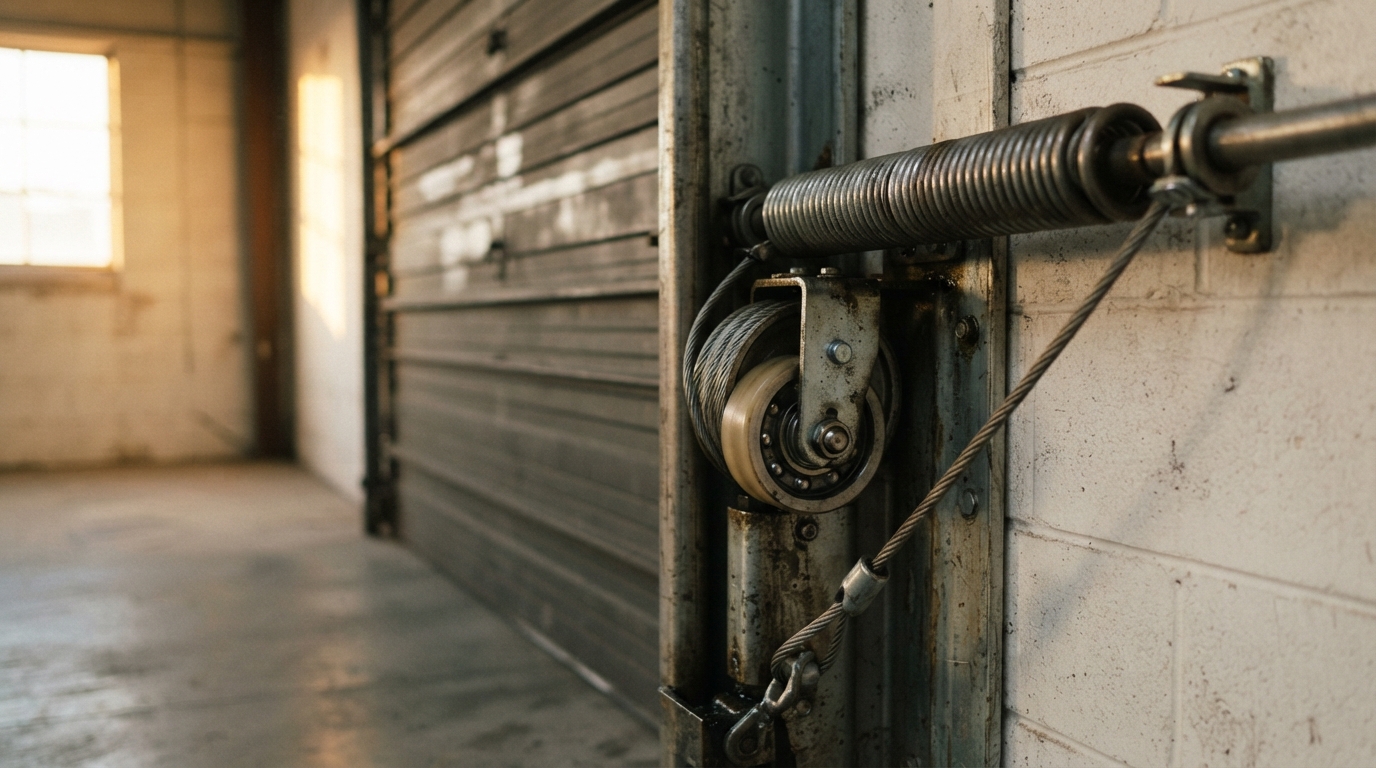
- Spring tension and cable condition, since these parts carry the bulk of the door’s weight.
- Track alignment and roller wear, which affect how smoothly a door travels.
- Photo-eye sensors and reversing mechanisms, which are the primary entrapment safeguards.
- Weatherstripping and seals, particularly relevant for buildings exposed to coastal moisture.
- Opener motor performance and electrical connections.
Coastal humidity and salt exposure common to Long Beach, CA can accelerate corrosion on hardware and fasteners, which is one reason manufacturer-recommended inspection intervals matter more in this region than in drier inland areas.
Setting a Practical Inspection Schedule
Maintenance frequency should reflect how often a door cycles and the environment it operates in, not a single generic calendar.
- High-cycle loading dock doors used dozens of times daily generally need more frequent professional attention than low-traffic secondary doors.
- Seasonal transitions are a reasonable checkpoint for inspecting weatherstripping, drainage, and hardware for wear.
- Any unusual noise, binding, or delayed response from safety sensors warrants an inspection sooner than the next scheduled visit.
Frequently Asked Questions
How often should a commercial overhead door be inspected? Inspection frequency depends on daily cycle count and operating environment, with high-use loading dock doors generally requiring more frequent checks than low-traffic doors.
What are early signs a commercial door needs service? Unusual grinding or scraping noises, uneven movement, slow response from photo-eye sensors, and visible rust or fraying cables are common early indicators.
Does deferred maintenance create liability risk? Yes. Facilities with worn hardware, misaligned tracks, or failing safety systems can face citations if inspectors identify conditions that do not meet walking-working surface requirements.
Is coastal weather a factor for doors in Long Beach, CA? Salt air and humidity common near the coast can accelerate hardware corrosion, which is a reason to keep inspection intervals consistent rather than skipping scheduled visits.
A Note on Local Service
Based in Carson, CA, R&S Overhead Doors Of South Bay, Inc. serves customers across Long Beach, CA.
Additional details about the local service area are available through Read More About R&S Overhead Doors Of South Bay, Inc., which covers the Long Beach, CA region.