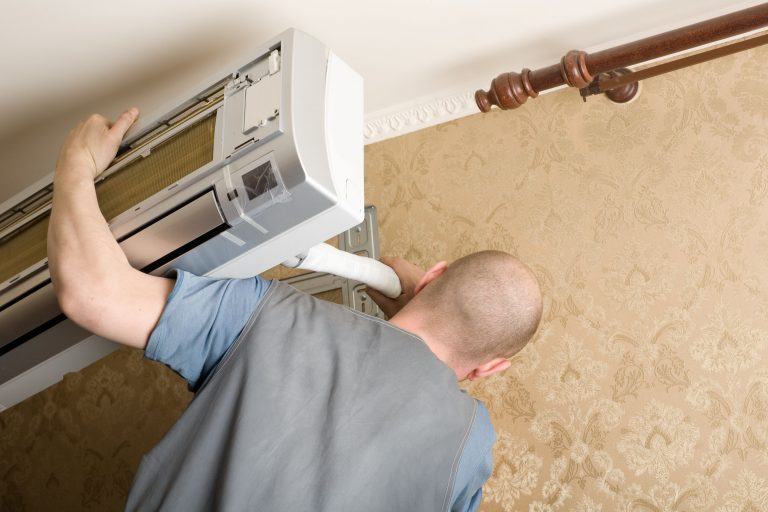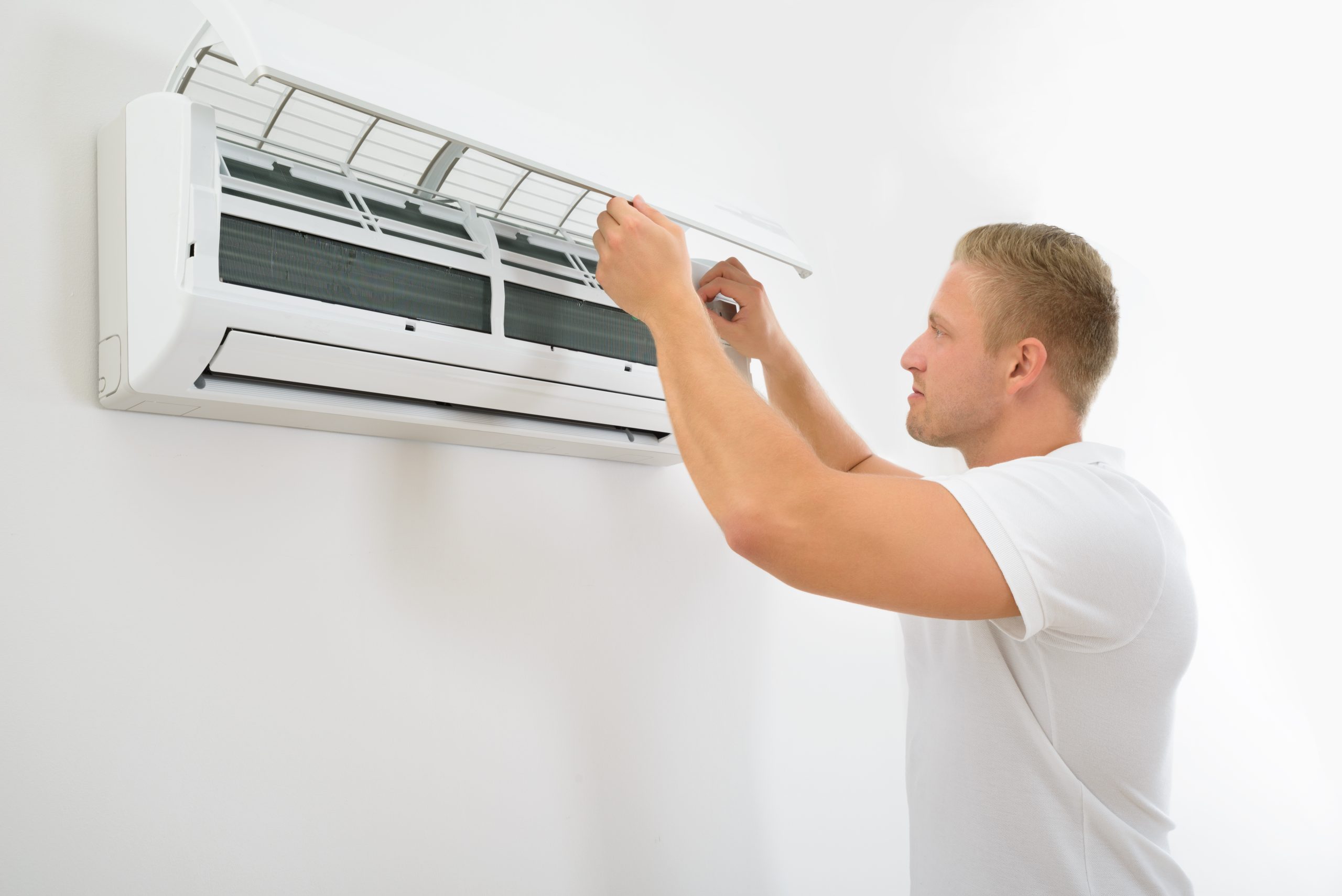
An indoor AC blower may continue running because the thermostat fan is set to “On,” the system is completing a normal delay, or a control component is not shutting the fan down correctly. Identifying whether the blower stops after a few minutes or operates continuously helps determine whether the behavior is normal or requires AC repair and service.
The indoor blower and outdoor cooling unit perform different functions. The outdoor equipment removes heat, while the blower distributes conditioned air through the home. Because these components are controlled separately, one may continue operating after the other stops.
Could the Thermostat Fan Setting Be the Cause?
The thermostat is the first place to check. Most thermostats provide “Auto” and “On” fan settings.
When the fan is set to “Auto,” the blower normally operates during a cooling cycle and stops after the cycle ends. When the setting is “On,” the blower continues circulating air regardless of whether the outdoor unit is operating.
Continuous circulation is not necessarily a malfunction. Some homeowners intentionally use this setting to keep indoor temperatures more consistent. However, it consumes additional energy and may make the air from the vents feel warmer after active cooling ends.
Changing the fan setting from “On” to “Auto” should allow the blower to stop. If it continues operating, the thermostat or another control may not be responding correctly.
Is a Short Blower Delay Normal?
Many cooling systems are designed to keep the blower running briefly after the outdoor unit shuts off. This delay moves the remaining cooled air from the ducts into the living areas instead of leaving it inside the system.
A normal delay may last from several seconds to a few minutes, depending on the equipment and its settings. Certain variable-speed systems can also operate at a lower speed for longer periods to manage air circulation and indoor comfort.
Homeowners should observe the pattern before assuming a repair is necessary. If the blower stops consistently after a brief delay, the system may be functioning as intended. A blower that operates for an extended period without stopping is more likely to indicate a control or component problem.
Can a Faulty Thermostat Keep the Blower Running?
A thermostat does more than display the indoor temperature. It sends signals that tell the cooling equipment and blower when to start and stop.
A worn internal switch, wiring fault, incorrect configuration, or loss of communication can cause the thermostat to keep sending a fan command. The display may appear normal even though the control signal remains active.
One simple observation can provide useful information: switch the system mode to “Off” while leaving the fan setting on “Auto.” If the blower continues running after a reasonable delay, the cause may extend beyond the selected thermostat settings.
Thermostat wiring and internal controls should be evaluated carefully. Replacing a thermostat without confirming the cause may not resolve a problem originating elsewhere in the system.
What Is a Stuck Fan Relay?
A fan relay is an electrical control that helps supply power to the indoor blower. When the thermostat calls for cooling or circulation, the relay closes and allows the blower to operate. It should reopen when that command ends.
If the relay becomes stuck in the closed position, power may continue reaching the blower after the outdoor unit turns off. The fan can then run continuously, regardless of the thermostat setting.
Relay problems are usually confirmed through electrical testing. Because the indoor equipment contains powered components, this evaluation should be handled by a trained technician. Timely diagnosis may allow for affordable AC repair before unnecessary blower operation contributes to additional wear.
Could the Blower Control Board Be Malfunctioning?
Many modern systems use a control board to coordinate the thermostat, blower motor, safety devices, and other components. A damaged relay, failed connection, or control-board fault can interrupt the normal shutdown sequence.
Control-board problems may produce inconsistent symptoms. The blower might operate continuously, stop only after power is interrupted, or behave normally during some cycles but not others. These patterns can help a technician determine which signals and components require testing.
Marz Mechanical Heating, Cooling & Plumbing provides 24 Hour AC Repair information for Wickenburg homeowners experiencing unexpected cooling-system problems. They evaluate the operating sequence rather than assuming that continuous fan operation comes from a single cause.
Can a Safety Condition Affect Blower Operation?
In some systems, the blower may continue operating in response to an internal safety condition. This behavior is designed to move air and protect equipment when a control detects abnormal temperatures or another operating concern.
A safety-related response may be accompanied by limited cooling, unusual cycling, a system warning, or equipment that does not respond normally to thermostat changes. Turning the fan off repeatedly does not address the condition that activated the safety response.
When the blower’s behavior changes suddenly, professional AC repair and service can determine whether the fan is following a protective command or operating because of a failed control.
Does Continuous Blower Operation Increase Energy Use?
A continuously operating blower uses electricity even when the outdoor equipment is not cooling. The exact impact depends on the motor type, speed, condition, and amount of time it operates.
Extended operation can also increase filter loading because more air passes through the system. If the filter becomes restricted, airflow can decline and place greater strain on the blower.
Homeowners should check the filter and confirm that return grilles are unobstructed. These observations are useful, but they should not replace testing when the blower refuses to shut down.
When Should Wickenburg Homeowners Request Service?
Service should be scheduled when the blower continues running with the thermostat set to “Auto,” remains active after the system is switched off, or begins behaving differently without an intentional setting change. Unusual noises, reduced airflow, burning odors, or repeated control problems require prompt attention.
If the blower will not stop and other warning signs are present, seeking AC repair in Wickenburg can help identify whether the thermostat, relay, control board, motor, or safety system is responsible. Contact a qualified local provider to arrange an inspection and restore the system’s proper operating sequence.