Recap:
• Routine checks on pressure, radiators, and venting help boilers run efficiently and avoid mid-winter breakdowns.
• Annual professional servicing catches hidden wear before it becomes a costly repair.
• Simple homeowner tasks, paired with scheduled inspections, extend equipment life and keep heating bills in check.
Reliable winter heating starts with a boiler that is inspected, bled, and pressure-checked before cold weather sets in, not after the first hard freeze exposes a problem. A short seasonal routine, combined with an annual professional visit, is the most direct way to avoid an unplanned outage.
Homeowners searching for guidance on heating repair in Joliet IL maintenance are usually trying to prevent one thing: a cold house during the coldest week of the year. The good news is that most preventable failures trace back to a handful of recurring issues, and each one has a straightforward fix that either takes a few minutes or a single service appointment.
Why Seasonal Boiler Checks Matter
Boilers work harder once outdoor temperatures drop, and components that were fine in September can struggle by December. Trapped air, scale buildup, and pressure swings are common culprits behind weak heat output.
• Air pockets in radiators force the system to run longer to reach the same temperature.
• Scale and sediment reduce heat transfer efficiency over time.
• Incorrect pressure can trigger shutdowns or uneven heating across rooms.
The Department of Energy notes that boiler owners should follow several diagnostic and maintenance procedures to keep operation efficient throughout the heating season.
A Practical Pre-Winter Maintenance Checklist
A short list of tasks, done before the heating season begins, addresses most common performance complaints.
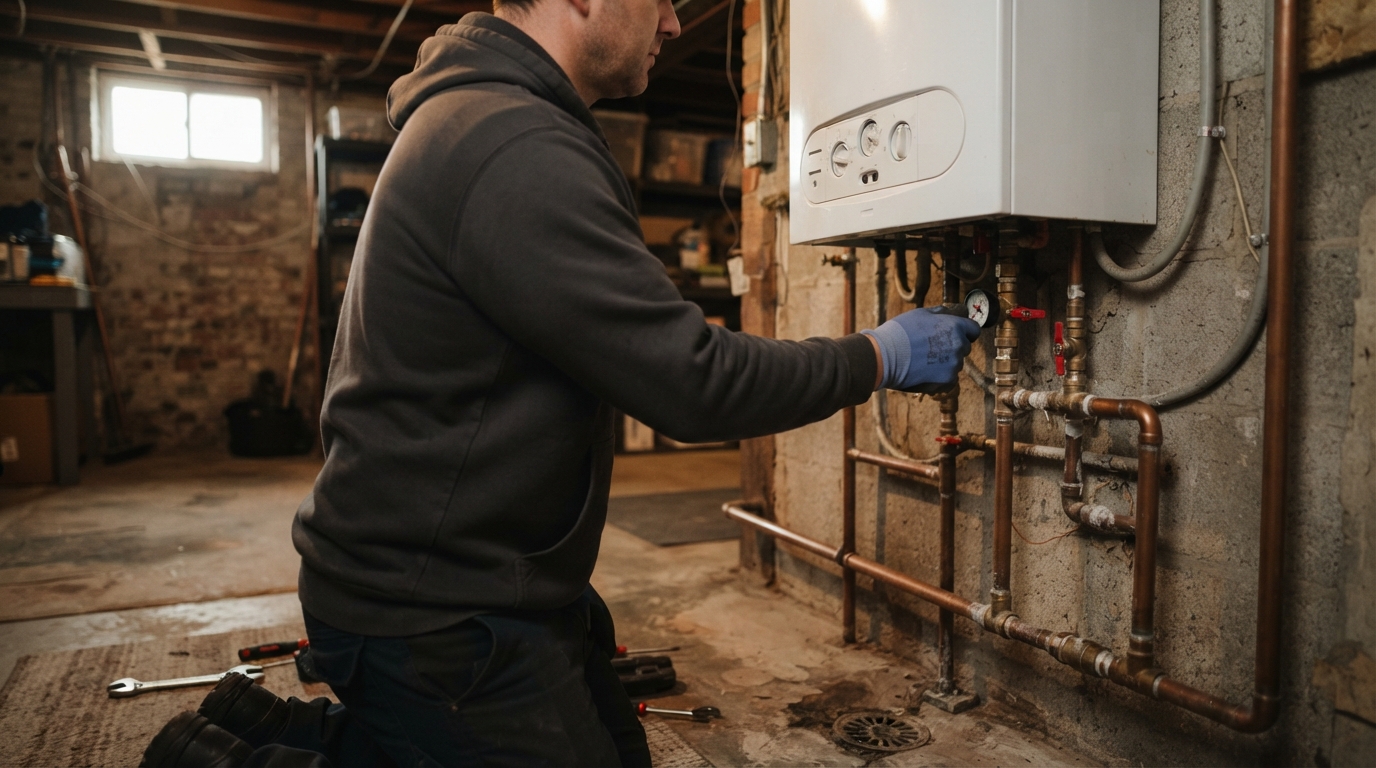
1. Check the pressure gauge. Most residential boilers should read between 1.0 and 1.5 bar when cold, and low pressure often means radiators will not heat properly.
2. Bleed each radiator. Cold spots near the top of a radiator usually signal trapped air that is blocking hot water circulation.
3. Inspect for leaks and corrosion. Valve connections and visible pipework should be checked for moisture, staining, or wear before temperatures drop.
4. Clear the area around the unit. Boxes, tools, or stored fabric near the boiler can restrict airflow and increase overheating risk.
5. Insulate exposed pipework. Condensate lines and pipes in unheated spaces are more likely to freeze without insulation.
These steps are manageable for most homeowners and take only a short amount of time each fall.
What a Professional Tune-Up Typically Covers
Homeowner tasks handle surface-level upkeep, but an annual service visit goes deeper into the system’s internal components. A licensed technician typically checks areas that are not accessible or safe for a homeowner to inspect alone.
| Maintenance Task | Homeowner Can Do | Professional Visit Recommended |
| Bleed radiators | Yes | Not required |
| Check pressure gauge | Yes | Not required |
| Inspect heat exchanger | No | Yes |
| Test flue and ventilation | No | Yes |
| Calibrate thermostat/controls | Limited | Yes |
A trained technician can also flush the system to remove scale, verify combustion is burning correctly, and confirm the flue is venting safely. Skipping this step for multiple seasons is one of the more common reasons boilers lose efficiency or fail without warning.
Signs a Boiler Needs Attention Now
Certain warning signs should not wait for the next scheduled service. Unusual noises, a pilot light that is not burning steady blue, or a sudden drop in water pressure all point to issues that can worsen quickly in cold weather. Homeowners who notice these symptoms, especially alongside rising energy bills or uneven heating between rooms, are better served by scheduling an inspection promptly rather than waiting out the season.
How often should a boiler be serviced? Most manufacturers and service professionals recommend a professional inspection at least once a year, ideally before the start of the heating season.
What is the correct pressure for a home boiler? Typical residential boilers operate best between 1.0 and 1.5 bar when the system is cold, though the exact range depends on the manufacturer’s specifications.
Can bleeding radiators really improve heating performance? Yes. Removing trapped air restores proper water circulation, which helps radiators heat evenly and reduces strain on the boiler.
What are early warning signs of boiler trouble? Cold spots on radiators, gurgling pipes, pressure that keeps dropping, or a pilot light that is not a steady blue flame are all signals worth checking before they become bigger problems.
Planning Ahead for a Dependable Heating Season
A boiler that receives routine attention before winter is far less likely to leave a household without heat during the coldest stretch of the year. Pairing simple homeowner checks with a yearly professional inspection remains the most practical way to keep a heating system dependable season after season.
Owens Family Plumbing, Boilers & Heating provides residential plumbing and heating services, including boiler installation, boiler repair, and heating system maintenance for homes in the Joliet and Morris, Illinois areas. Homeowners preparing for the colder months can learn more about seasonal heating support from Owens Family Plumbing, Boilers & Heating or review service details through the business’s Google Business Profile before scheduling an inspection.