At glance:
- Reiki is a hands-on, fully clothed energy practice rooted in Japanese tradition, aimed at easing tension and restoring balance.
- A typical session runs about 60 minutes and takes place in a quiet, low-stimulation setting.
- Research from 2025 points to measurable short-term reductions in self-reported stress following brief sessions.
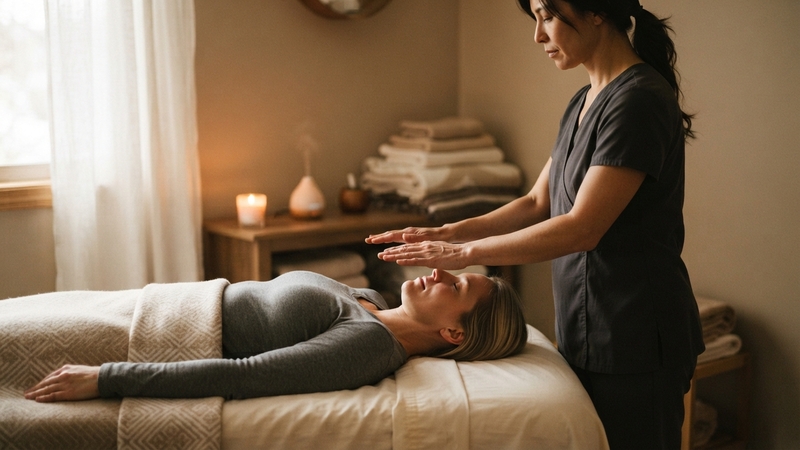
Reiki is a light-touch energy practice in which a practitioner places their hands near or lightly on the body to help calm the nervous system and ease tension, typically while the recipient remains fully clothed and resting quietly. It does not involve massage strokes, manipulation, or medical diagnosis, which sets it apart from other bodywork practices.
Reiki traces its roots to early twentieth-century Japan, where it developed as a practice built on the idea of channeling what practitioners describe as universal life energy through the hands. A session usually begins with a short conversation about areas of tension or stress, followed by a period of stillness while the practitioner works through a sequence of hand positions near the head, torso, and limbs.
What Happens During a Typical Session
Sessions generally follow a predictable rhythm, which helps first-time recipients know what to expect.
- Intake: A brief discussion covers current stress levels, physical discomfort, or specific concerns.
- Settling in: The recipient lies on a table or sits comfortably, fully clothed, often with soft music or dim lighting.
- Hands-on phase: The practitioner moves through a series of positions, holding each for several minutes.
- Closing: A short check-in follows, covering sensations noticed and any recommended follow-up.
Most sessions run between 30 and 60 minutes, though some practices offer shorter introductory formats.
What the Research Says About Reiki’s Effects
Scientific interest in Reiki has grown as hospitals and wellness researchers look for low-risk complementary approaches to stress and pain management. A 2025 study published in Frontiers in Psychology examined changes in self-reported stress and pain levels before and after a single, ten-minute Reiki session among high-stress groups in community settings in Chicago, finding that the majority of participants reported significant change in stress, with a 72.62% reduction overall, and pain, with a 63.34% reduction overall.
A separate 2025 meta-analysis of randomized controlled trials, published in Systematic Reviews, reported that a 2025 meta-analysis analyzed 11 randomized controlled trials with over 660 participants and found Reiki significantly improved overall quality of life, with participants reporting better sleep, reduced fatigue, improved emotional well-being, and a deeper sense of calm. Researchers note, however, that more rigorous research is needed to evaluate the impact of short Reiki sessions in non-clinical settings, and repeated sessions over time. For general context on complementary health practices and ongoing research priorities, the National Center for Complementary and Integrative Health maintains public information on energy-based therapies.
Reiki Compared to Other Relaxation-Focused Practices
| Practice | Physical Contact | Typical Session Length | Primary Focus |
| Reiki | Light touch or near-body, clothed | 30-60 minutes | Energy balance, stress relief |
| Guided Meditation | None | 15-45 minutes | Mental focus, relaxation |
| Swedish Massage | Direct, with pressure | 60-90 minutes | Muscle tension release |
| Chakra Balancing | Light touch, clothed | 60-90 minutes | Energy center alignment |
Readers in Southlake, TX can use this table to compare how Reiki differs from more physically active bodywork before deciding which approach fits their needs.
Frequently Asked Questions
Does Reiki require removing clothing? No. Recipients stay fully clothed throughout a session, with the practitioner using light touch or working just above the body.
How many sessions are typically needed to notice an effect? Research suggests even a single short session can produce noticeable short-term changes in self-reported stress, though longer-term benefits are more closely associated with repeated sessions over time.
Is Reiki a substitute for medical treatment? No. It is generally described as a complementary practice, meant to work alongside, not replace, conventional medical or mental health care.
What should someone wear to a session? Loose, comfortable clothing is recommended since recipients remain dressed and lie or sit still for the duration of the appointment.
Reiki practices based in USA extend their service area to clients across Southlake, TX, offering a complementary option for those exploring stress-reduction practices without requiring travel to a physical office location. Those researching local holistic wellness options may find it useful to review practitioner backgrounds and service details, since offerings and training can vary between providers in the broader Dallas-Fort Worth region.
Business Info
Holistic energy work and related wellness sessions are described by Tao Tantra, a practice offering Reiki and related services.
Checking Current Session Details
Current availability details for Tao Tantra are published for the local service area.