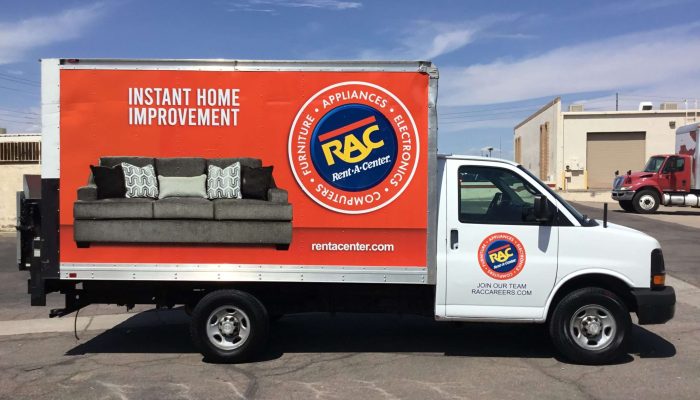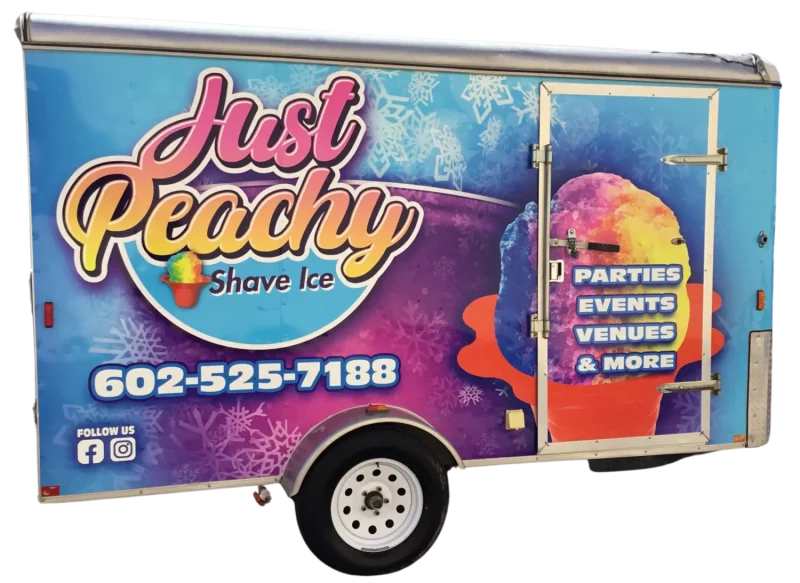
Trailer wraps accommodate refrigeration units and exterior piping by adapting graphic layouts around mechanical components, ventilation openings, service panels, and exposed connections. Professional wrap planning ensures that branding is applied to appropriate surfaces without interfering with the trailer’s refrigeration equipment, maintenance access, or normal operation.
Refrigerated trailers serve businesses transporting temperature-sensitive products, including food, beverages, pharmaceuticals, and other refrigerated goods. Unlike conventional enclosed cargo trailers, these vehicles may contain specialized exterior equipment that requires additional consideration during graphic design and installation.
For businesses in Mesa, Arizona, planning trailer wraps for refrigerated equipment involves understanding the difference between decorative body surfaces and functional mechanical components.
A trailer may have large side panels suitable for branded graphics, but its refrigeration unit, exposed piping, and equipment housings may introduce restrictions on where vinyl can be applied.
Understanding these considerations helps fleet managers and business owners make informed decisions about their trailer branding without compromising the equipment used to transport their products.
Why Do Refrigerated Trailers Require Different Wrap Planning?
Refrigerated trailers differ from ordinary cargo trailers because they contain mechanical systems designed to maintain controlled temperatures inside the cargo compartment.
A typical refrigerated trailer, also called a reefer trailer, has an insulated cargo body and an attached refrigeration unit. Depending on the equipment configuration, the system may include condensers, compressors, service connections, refrigerant lines, and additional components.
The University of Florida’s IFAS Extension explains that refrigerated trailers commonly use a refrigeration unit mounted outside the cargo compartment, generally at the front of the trailer.
ask.ifas.ufl.edu
These components affect how graphics can be planned across the exterior.
Mechanical Equipment Creates Design Boundaries
An ordinary enclosed trailer may provide relatively uninterrupted side panels.
A refrigerated trailer can include additional equipment housings, mechanical connections, and service areas that interrupt those surfaces.
For example, the front wall may accommodate a refrigeration unit occupying a substantial portion of the available space.
A design originally developed for a conventional cargo trailer may not translate directly to this configuration.
Professional designers must account for the equipment’s size and position before establishing the final graphic layout.
Functional Components Are Not Automatically Wrappable
Not every exterior component is suitable for vinyl application.
Mechanical housings, exposed piping, protective covers, and other accessories can have different surface materials, temperatures, and operating requirements.
A component may also need to remain accessible for inspection or repair.
For custom trailer wraps, the appropriate application area depends on the equipment’s construction, the trailer’s condition, and the wrapping material’s intended use.
Refrigeration Equipment Changes the Trailer’s Appearance
Large refrigeration units can alter the visual proportions of the trailer’s front section.
This can influence how branding appears when the trailer is viewed from different angles.
A fleet operator may want graphics that remain recognizable from the side while maintaining a coordinated appearance across the trailer’s front and rear.
Achieving this visual consistency does not necessarily require placing graphics directly on the refrigeration equipment.
Instead, the design can use available body panels to create a cohesive appearance around the functional components.
How Do Trailer Wraps Account for Exterior Refrigeration Piping?
Exterior piping can create additional considerations because it may connect refrigeration components or support other mechanical functions.
Not every refrigerated trailer has extensive exposed piping. The location and configuration of these components depend on the specific refrigeration system.
Where pipes, hoses, or conduits are present, professional graphics planning must account for their position and operational purpose.
Exposed Pipes Can Interrupt Graphic Coverage
A pipe or conduit installed along a trailer’s exterior may interrupt an otherwise continuous application surface.
For example, a specialty refrigerated trailer could have exterior connections running near a side panel.
A graphic extending across that area may need to terminate before the piping rather than continuing over the component.
This helps avoid using vinyl in locations where it could interfere with access or be unsuitable for the underlying surface.
Professional designers can adjust nearby artwork so the interruption appears intentional.
Refrigeration Lines Have Functional Requirements
Refrigerant lines are part of the cooling system and may be subject to equipment-specific operating conditions.
Some components may experience temperature changes, vibration, or movement during operation.
These factors can affect whether conventional graphic films are appropriate for the surface.
A vinyl material designed for painted trailer panels should not automatically be considered suitable for exposed refrigeration piping.
Any proposed application to mechanical components must follow the equipment manufacturer’s requirements and the wrap-film manufacturer’s specifications.
Maintenance Connections Need to Remain Accessible
Refrigeration systems may contain service valves, fittings, inspection points, and other connections used by qualified technicians.
These locations should remain identifiable and accessible.
Covering a service connection with graphics could complicate maintenance, particularly if the material conceals labels, fasteners, or connection points.
Professional trailer vinyl wrap planning distinguishes between surfaces intended for branding and equipment areas that must remain available for servicing.
The purpose is to preserve the functionality of the refrigeration system while making appropriate use of the trailer’s exterior.
Why Are Ventilation Openings Important During Wrap Installation?
Refrigeration equipment relies on airflow for heat transfer and proper operation.
Ventilation openings, grilles, and other airflow features serve mechanical purposes and should not be obstructed by decorative materials.
This consideration is especially important when a trailer’s refrigeration unit includes a large front-mounted housing.
Condenser Airflow Must Remain Unrestricted
The condenser is a component of the refrigeration system that releases heat.
Depending on the equipment design, the condenser relies on airflow through designated openings.
ASHRAE’s refrigeration guidance identifies obstructed airflow and heat transfer as conditions that can affect refrigeration equipment performance.
handbook.ashrae.org
A graphic should not cover condenser openings or reduce required equipment clearances.
Even a film that appears thin can create an obstruction if it is installed across a ventilation grille.
Decorative Graphics Should Not Cover Functional Grilles
A ventilation grille may look like another part of a trailer’s exterior design, but it performs a specific mechanical function.
Applying vinyl across openings can interfere with airflow.
Cutting or modifying materials around a grille also requires consideration of the equipment’s design and applicable installation requirements.
For refrigerated trailers, branding should be planned around these features rather than treating them as available advertising surfaces.
Equipment Labels and Warnings Must Remain Visible
Refrigeration equipment may display manufacturer information, operating instructions, identification plates, or safety warnings.
These markings can be important for maintenance, identification, and safe operation.
Professional graphics should not conceal required labels or warnings.
Where equipment housings contain both decorative surfaces and functional information, the appropriate coverage must be established before production.
How Do Refrigeration Units Affect Trailer Graphic Placement?
Refrigeration units influence graphic placement because they can occupy exterior space and change which areas remain visible.
A refrigerated trailer typically offers large side panels, but the front section may be partially occupied by mechanical equipment.
Professional planning considers the trailer’s complete configuration rather than assuming every panel is available for uninterrupted graphics.
Side Panels Often Provide the Main Branding Area
The sides of a refrigerated trailer commonly provide substantial space for company names, logos, and other approved branding elements.
These surfaces can communicate the business’s identity without requiring extensive graphic coverage on the refrigeration unit itself.
However, even side panels may contain additional features.
Some trailers have side-access doors, protective rails, service openings, or other equipment that can affect graphic placement.
A design should account for these details so essential information remains visually organized.
Front Graphics Require Additional Consideration
The front of a refrigerated trailer may contain a large refrigeration assembly.
This can limit the amount of suitable space available for graphics.
Depending on the configuration, the visible bodywork surrounding the unit may offer opportunities for coordinated branding.
However, application directly to mechanical housings should not be assumed appropriate.
The equipment’s surface material, operating requirements, and service-access needs must be considered.
Rear Graphics Have Different Requirements
Rear doors may provide additional branding opportunities, but they also contain functional components.
Hinges, handles, locking bars, seals, lights, and required markings can affect the available application area.
A graphic may need to be divided across moving door panels while maintaining its intended appearance when the doors are closed.
These considerations differ from those created by front-mounted refrigeration units.
Professional design planning allows each section of the trailer to be treated according to its actual function.
Can Trailer Wraps Be Installed on Insulated or Corrugated Panels?
Many refrigerated trailers use insulated body structures designed to help maintain cargo temperatures.
Their exterior panels may differ in construction and surface characteristics from those found on ordinary trailers.
Some present relatively flat surfaces, while others include seams, rivets, corrugations, or protective trim.
These differences affect installation requirements.
Insulated Panels Need Appropriate Surface Evaluation
The presence of insulation behind a trailer’s exterior does not automatically prevent wrapping.
The more relevant considerations involve the exposed surface material, coating condition, and selected film’s compatibility.
A painted metal panel may have different application characteristics from a fiberglass-reinforced composite surface.
Professional assessment helps establish whether the material is suitable for the proposed graphic application.
The wrap should not be used to conceal damaged panels, deteriorating coatings, or underlying structural problems.
Corrugations and Rivets Require Specialized Application
Corrugated surfaces and riveted panels introduce additional contours that can affect material placement.
3M publishes trailer-specific installation guidance addressing features such as corrugations, rivets, graphic edges, and application techniques.
multimedia.3m.com
These details matter because the film must be applied according to its specifications.
Not every product has identical performance characteristics, and a material’s suitability depends on the particular surface.
Temperature Exposure Can Affect Material Selection
Refrigerated trailers operate in a range of environmental conditions.
Their exterior surfaces may experience sunlight, rain, road contamination, and temperature fluctuations.
In Arizona, prolonged outdoor exposure can make material selection particularly important.
The fact that a trailer transports refrigerated cargo does not mean every exterior surface stays cold during operation.
Surface temperature depends on factors such as insulation, environmental conditions, and equipment configuration.
Professional installers consider the actual application surface and relevant product specifications rather than relying on assumptions about refrigerated vehicles.
How Can Trailer Graphics Remain Consistent Across Different Refrigeration Systems?
Businesses operating refrigerated fleets may use trailers from different manufacturers or with different refrigeration units.
Although the vehicles perform similar functions, their exterior configurations may vary.
This creates challenges when the company wants consistent branding across the fleet.
Different Equipment Configurations Affect Available Space
One trailer might have a prominent front-mounted refrigeration housing, while another uses a different unit design.
A third may include additional exterior equipment or service connections.
These variations can influence where graphics begin, end, or transition between panels.
A consistent brand does not require every graphic element to occupy identical dimensions on every trailer.
Instead, designers can preserve recognizable colors, typography, logos, and messaging while adapting the layout to each vehicle.
Equipment Replacement Can Affect Existing Graphics
Refrigeration equipment may be repaired or replaced during a trailer’s working life.
Such work can affect nearby graphics, particularly when access requires removing exterior covers or modifying surrounding components.
Fleet operators should consider planned equipment changes when coordinating a branding project.
Installing graphics immediately before extensive mechanical work may create avoidable complications.
Brand Visibility Depends on the Complete Trailer
A trailer’s visual identity is influenced by its size, proportions, equipment, and operating environment.
Large graphics on the side panels may provide greater visibility than small decorative elements placed around mechanical equipment.
For companies coordinating multiple trailers, consistent branding can be achieved through thoughtful placement rather than attempting to cover every available component.
This allows the equipment to remain functional while the business maintains a recognizable visual identity.
What Should Businesses Confirm Before Scheduling a Refrigerated Trailer Wrap?
Before arranging a refrigerated trailer graphics project, businesses should understand the vehicle’s equipment configuration and exterior condition.
These details help establish appropriate graphic coverage and installation requirements.
Refrigeration Equipment Configuration
The type and location of refrigeration equipment influence the available application surfaces.
Relevant details may include the equipment housing, visible piping, ventilation openings, service panels, and exterior mounting hardware.
Information about the trailer’s manufacturer and configuration can also support planning.
Existing Exterior Condition
Trailer panels should be evaluated for coating damage, corrosion, previous graphics, and other conditions that may influence adhesion.
A large exterior panel may offer substantial space for branding but still require attention before wrapping.
Refrigeration equipment and piping should also be distinguished from surfaces intended for decorative graphics.
Graphic Coverage and Business Priorities
A company may want extensive branding across the trailer, while another may prefer partial graphics concentrated on the side panels.
The appropriate approach depends on the available surfaces, business objectives, and practical limitations of the vehicle.
For businesses seeking trailer graphics in Mesa, Arizona, Fast-Trac Designs provides professional trailer wrap design, production, and installation services.
Their team can discuss the trailer’s configuration and the intended graphic coverage while considering how exterior equipment influences the overall project.
Why Does Maintenance Access Matter After Installation?
A trailer’s refrigeration equipment continues to require inspection and maintenance after graphics have been installed.
Routine servicing may involve opening equipment covers, reaching fittings, checking connections, or accessing other components.
A graphic application should not make these activities unnecessarily difficult.
Service Panels Must Remain Functional
Where removable panels provide access to refrigeration equipment, graphics should not prevent their intended operation.
A continuous design across adjacent surfaces may need separate sections to accommodate removable components.
The appropriate treatment depends on how the equipment is constructed.
Mechanical Repairs May Affect Nearby Graphics
If a refrigeration unit requires major repair, technicians may need access to exterior components near existing vinyl.
The graphics may be disturbed during this work.
Businesses should recognize that refrigeration maintenance and graphic replacement are separate services.
Future repairs may create a need to replace sections of vinyl, particularly if panels or components are removed.
Operational Function Takes Priority
The purpose of a refrigerated trailer is to transport temperature-sensitive products under controlled conditions.
Its graphic design should complement that purpose without interfering with it.
Equipment ventilation, servicing, identification, and safe operation remain priorities regardless of the intended visual appearance.
Professional Refrigerated Trailer Wraps Balance Branding and Function
Refrigerated trailers present design considerations that differ from those of ordinary enclosed cargo trailers.
Front-mounted refrigeration units, exposed piping, service connections, ventilation openings, and insulated body panels can all affect where graphics are appropriate.
Professional trailer wraps account for these features through vehicle-specific planning, compatible material selection, and installation methods suited to the intended application surfaces.
For businesses operating refrigerated fleets, consistent branding does not depend on covering every mechanical component.
A coordinated design can use suitable trailer panels while respecting the equipment responsible for maintaining cargo temperatures.
By understanding how refrigeration systems influence graphic placement and installation, businesses can make informed decisions about their trailer branding without overlooking important operational requirements.
About Fast-Trac Designs
Based in Phoenix, Arizona, Fast-Trac Designs has provided vehicle graphics and custom printing services since 2007, serving businesses in Mesa and throughout the surrounding region. Their services include trailer wraps, fleet branding, graphic design, and professional vinyl installation, supported by a team of 3M-certified installers. Businesses can reach them at (623) 780-1168 or find their Phoenix location on Google Maps.