Short version:
- Moving PODS are portable storage containers delivered to a home or business, loaded at the owner’s pace, then transported or stored on-site.
- Container sizes typically range from 8 feet to 16 feet, matching studio apartments up to larger multi-bedroom homes.
- Local rules on driveway clearance, permits, and HOA approval affect where a container can be placed in Jacksonville, FL.
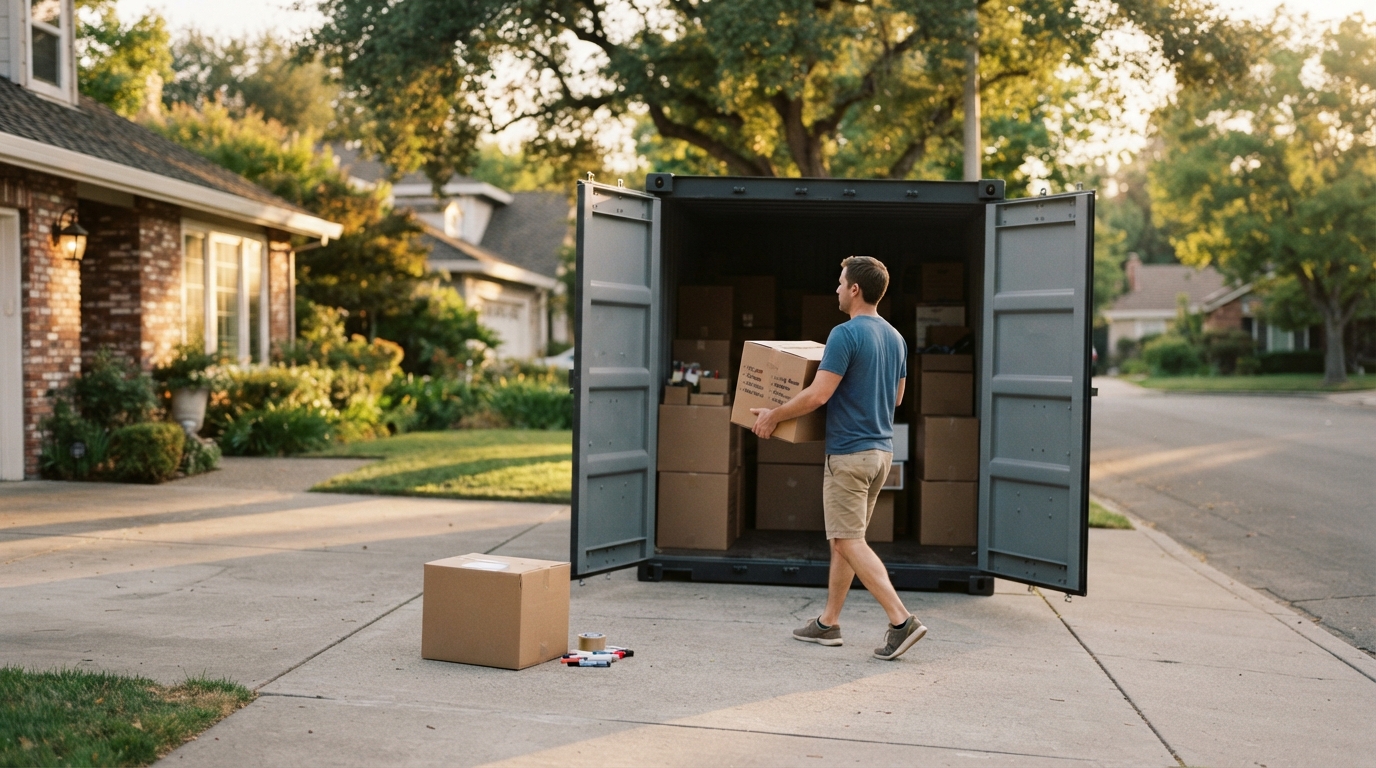
A direct-to-driveway container that you load on your schedule is the core idea behind Moving PODS in Jacksonville, FL, which separates the packing phase from the trucking phase of a move. Instead of renting a truck for a single day, a household loads at its own pace while the container sits at ground level outside the home.
This model has grown popular because it removes the tightest deadline from relocation: the rental-truck clock. A portable container unit is dropped off, packed over several days if needed, then picked up and taken to a new address or a storage yard.
How the Container Delivery Process Works
The sequence is consistent across most portable storage providers, though pickup windows and pricing vary.
- A container is delivered to a driveway, parking pad, or approved curb space.
- The renter loads belongings over the agreed rental period, often several days to a few weeks.
- The provider picks up the loaded container and transports it to the new address or a storage facility.
- The container is unloaded on the renter’s schedule, sometimes with a second storage period before final delivery.
Local placement details matter. According to HireAHelper’s guide to PODS, driveway placement is generally straightforward, but street placement for a portable container typically requires a city permit. Homeowners in Jacksonville, FL should confirm any HOA or municipal rules before scheduling delivery, since driveway width, overhead clearance, and street permit requirements differ by neighborhood.
Choosing the Right Container Size
Matching container size to household size prevents both wasted space and last-minute scrambling for a second unit. Industry sizing guidance groups containers into three general categories.
| Container Size | Typical Fit | Common Use Case |
| 8 ft | Studio or single room | Garage cleanout, renovation storage, small apartment |
| 12-16 ft | 1-2 bedroom apartment | Local moves, moderate furnishings |
| 16 ft (multiple units) | 3-4+ bedroom home | Full household moves, heavily furnished homes |
According to PODS’ own sizing guide, a 3-4+ bedroom home generally calls for one or more 16-foot containers, which is described as the largest and most popular size category. Renting slightly more space than estimated is usually preferable to running short on moving day, since swapping in a second unit mid-move adds cost and scheduling complexity.
Packing and Placement Considerations
Loading strategy affects how safely belongings travel, whether the container moves across town or sits in temporary storage.
- Distribute weight evenly across the floor rather than concentrating heavy items on one side.
- Use straps or rope through built-in tie-down rings to anchor furniture and stacked boxes.
- Avoid loading during active rain, since most containers are weather-resistant rather fully waterproof.
- Leave a center aisle or working path rather than packing wall-to-wall in one pass.
For households in Jacksonville, FL, humidity and seasonal rain are practical factors. Moisture absorbers and sealed plastic bins for fragile items reduce the risk of condensation damage during multi-day loading periods, particularly in warmer months.
MI-BOX First Coast serves customers across Jacksonville, FL, delivering containers to residential and commercial addresses rather than operating a storefront location there. The company (MI-BOX First Coast) describes delivering weather-resistant portable storage containers directly to a home or business as its core offering.
Frequently Asked Questions
How long can a portable moving container stay at a property? Rental periods vary by provider, with many companies offering timeframes from a few days to several months, though local permits may limit how long a unit can sit on a street.
Does a driveway need special preparation before delivery? A standard paved driveway typically handles the weight of a container without modification, though a level, clear surface free of soft dirt or mud is recommended for stable placement.
Can a loaded container go straight into storage instead of a new address? Yes, many providers offer on-site storage or transport to a secure facility, allowing a gap between move-out and move-in dates without requiring a same-day transfer.
What is the biggest packing mistake to avoid? Loading room-by-room rather than packing floor-to-ceiling sections from the back of the container forward is a common error that wastes space and increases shifting during transport.
Final Notes on Planning a Container-Based Move
Confirming container size, delivery window, and local placement rules ahead of time reduces the chance of delays once a moving date is set. Current availability details for MI-BOX First Coast are published for the local service area.