Recap:
• Plumber costs reflect licensing, parts, and the risk of Anchorage’s freeze-thaw conditions on aging pipe systems.
• Professional repair work typically costs more upfront than DIY fixes but reduces the odds of repeat failures and water damage.
• Residential and commercial plumbing and mechanical services in Anchorage include repairs, installations, and specialty piping work.
Hiring a licensed plumber in Anchorage costs more than a bucket of sealant from a hardware store, but the price reflects labor, code compliance, and parts that are built to withstand repeated freeze cycles. For homeowners weighing a do-it-yourself fix against a service call, the real expense usually shows up later, in the form of reopened walls, mold remediation, or a second repair within the same year.
Anchorage’s climate puts unusual strain on plumbing systems compared to much of the country. Ground freeze depth, older housing stock, and extended cold snaps all raise the stakes when a pipe bursts or a water heater fails mid-winter.
What Drives Plumbing Costs in a Cold Climate
Material and labor pricing for plumbing work is shaped by a few recurring factors, regardless of the specific repair.
• Parts and materials. Pipe fittings rated for cold-weather expansion and contraction often cost more than standard stock.
• Labor time. Diagnosing a hidden leak in a frozen wall cavity takes longer than a visible fixture swap.
• Access and location. Crawl spaces, unheated utility rooms, and older construction can add time to any job.
• Emergency timing. After-hours or weekend calls during a cold snap typically carry a premium over scheduled daytime work.
These variables explain why two seemingly similar jobs, like a leaking supply line versus a cracked drain pipe, can have very different price tags once labor and parts are factored in.
DIY Repair Versus Professional Service
A side-by-side look helps frame when a homeowner might reasonably attempt a fix versus when a licensed technician is the safer call.
| Factor | DIY Approach | Licensed Plumber |
| Upfront cost | Lower, limited to parts | Higher, includes labor and diagnostics |
| Code compliance | Not guaranteed | Required and verified |
| Risk of repeat failure | Higher if root cause is missed | Lower, addresses underlying issue |
| Insurance and warranty | Rarely applicable | Often covers labor and parts |
Minor tasks like replacing a worn faucet washer are reasonable for many homeowners. Anything involving frozen supply lines, gas connections, or venting systems carries higher risk and is better suited to a trained technician.
Why Cold-Weather Plumbing Work Carries Added Value
Winter conditions change the calculus on plumbing repairs in ways that are easy to underestimate. Frozen or burst pipes are one of the most common cold-weather property damage claims, and the risk climbs when outdoor temperatures drop fast enough to catch unprepared systems off guard. Workers responding to these emergencies also face real physical risk from prolonged cold exposure, which is why OSHA’s cold stress guidance outlines symptoms and prevention steps for anyone working outdoors or in unheated spaces during winter months.
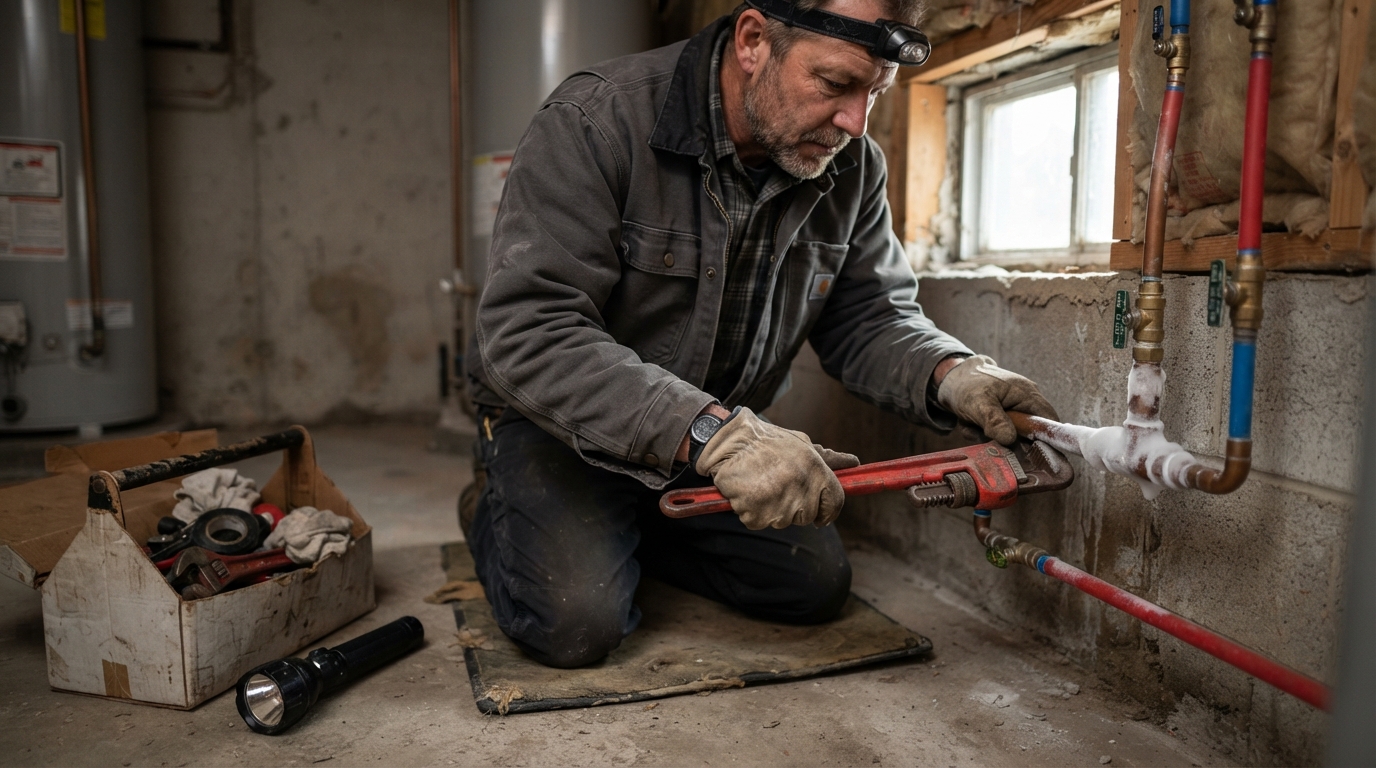
A technician responding to a burst pipe in January is not just fixing the leak. The job includes:
1. Locating the failure point, often inside a wall or crawl space.
2. Shutting off and isolating the affected line to prevent further water loss.
3. Replacing damaged sections with materials suited to the local climate.
4. Checking adjacent fixtures and insulation for related vulnerabilities.
That scope of work is part of why a cold-weather emergency call costs more than a routine repair scheduled during a dry summer afternoon.
When a Professional Call Makes Sense
Not every plumbing issue requires an immediate service call, but certain signs point toward bringing in a professional rather than waiting.
• Water pressure that drops suddenly across multiple fixtures.
• Visible frost or condensation on exposed pipes.
• A water heater that is leaking or producing lukewarm water only.
• Slow drains in more than one part of the house, which can point to a main line issue.
Addressing these signs early tends to cost less than waiting for a full system failure, particularly once freeze damage is involved.
Frequently Asked Questions
Does the cost of a plumber vary by season in Anchorage? Yes. Emergency calls during cold snaps, especially for frozen or burst pipes, commonly cost more than scheduled repairs made during milder months.
Is it worth replacing old pipes before they fail? Preventive replacement of aging or corroded pipe sections can reduce the likelihood of a mid-winter emergency, though the decision depends on the age and condition of the existing system.
Can a homeowner thaw a frozen pipe safely without a plumber? Gentle heat sources applied carefully can sometimes thaw a frozen section, but if the pipe has already cracked, a professional repair is needed to prevent further leaking.
What should be checked before calling for a plumbing repair? Note which fixtures are affected, whether water is visibly leaking, and whether the main shutoff valve has already been used, since this information speeds up diagnosis.
Final Notes on Plumbing Costs
Based in USA, CGC Services, LLC serves customers across Anchorage with residential and commercial plumbing work.
Current scope and service details for Learn More About Our Plumbing Services are published for the local service area.