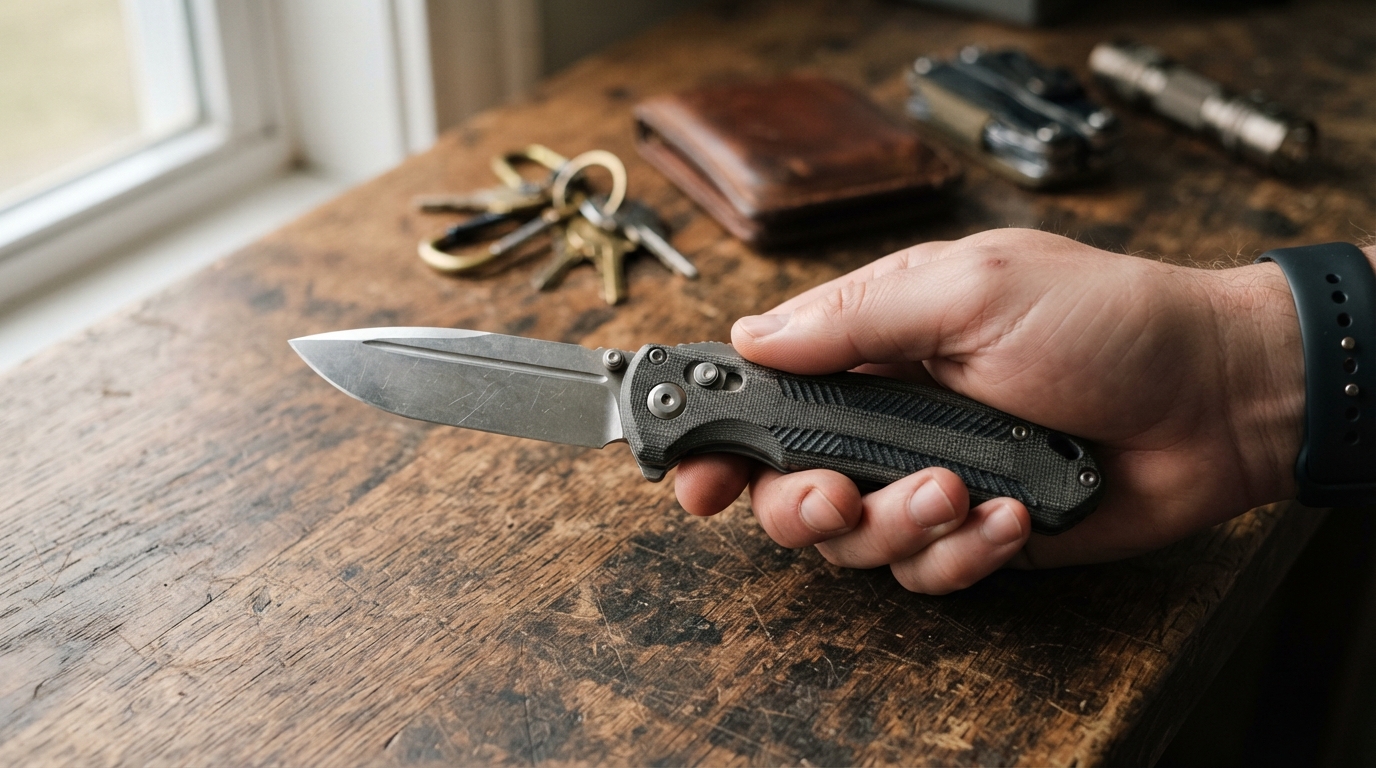
Choosing an automatic pocket knife for daily tasks comes down to matching blade steel, locking mechanism, and size to how the knife will actually be used. The right combination of these factors determines whether a knife holds an edge, opens reliably, and stays safe to carry.
Shoppers researching the Best Automatic Pocket Knife often start by comparing blade materials and opening speed, but overall build quality and legal compliance in their area matter just as much. A knife that looks sharp in photos can still fall short if the steel corrodes quickly or the lock disengages under pressure.
Key Features That Define Quality
Automatic knives open with a push-button or lever rather than manual assistance, which makes mechanism durability a top consideration.
• Blade steel : Stainless options like 440C or D2 resist corrosion and hold an edge through regular cutting tasks.
• Locking mechanism : Liner locks and frame locks are common, but button locks are standard on most automatics and should engage with a firm, audible click.
• Handle material : Aluminum, G10, and textured polymer each affect grip and weight differently.
• Blade length : Shorter blades (under 3.5 inches) typically fall within legal carry limits in more jurisdictions, though this varies by state.
Legal Considerations Before You Buy
Automatic knife laws differ significantly by state, and some jurisdictions restrict blade length, carry method, or possession entirely. The American Knife and Tool Institute tracks state-level knife legislation and is a useful reference before purchasing or carrying an automatic knife across state lines. Checking current regulations in a specific state avoids unintended legal issues, since laws can change and enforcement varies by locality.
Comparing Common Automatic Knife Types
Type |
Opening Mechanism |
Typical Use Case |
Carry Consideration |
|
Out-the-front (OTF) |
Blade slides forward from handle |
Fast deployment, utility tasks |
Often more regulated by state |
|
Side-opening automatic |
Blade swings out via button |
General EDC, tactical use |
Common legal variant |
|
Double-action OTF |
Push button both opens and retracts |
Repeated quick-draw tasks |
Mechanism complexity adds cost |
|
Single-action OTF |
Button opens, manual retract |
Simpler mechanism, lower cost |
Easier to maintain |
Each type suits different daily tasks, from opening packages to outdoor utility work, so matching the mechanism to the intended use helps narrow the selection.
Matching a Knife to Everyday Tasks
Everyday carry knives face repeated, varied demands, so durability and ease of maintenance should guide the decision.
1. Light daily use (mail, packages, light cutting): A compact automatic with a 2.5 to 3 inch blade is usually sufficient.
2. Outdoor or utility work : Thicker blade stock and a non-slip handle improve control during heavier tasks.
3. Professional carry (where legally permitted): A knife with a reinforced pocket clip and consistent lock engagement supports frequent opening and closing.
Across the USA, automatic knife buyers should confirm local ordinances, since city and county rules can be stricter than state law even where state possession is legal.
Frequently Asked Questions
Are automatic knives legal to own? Legality depends on state and local law; some states permit ownership but restrict blade length or public carry, so checking current regulations is necessary before purchase.
What blade steel is best for everyday carry? Stainless steels such as 440C or D2 offer a practical balance of edge retention and corrosion resistance for daily tasks.
How often should an automatic knife be maintained? Regular cleaning of the mechanism and occasional lubrication of pivot points helps maintain reliable opening and locking function.
What is the difference between OTF and side-opening automatics? OTF knives deploy the blade straight out of the handle front, while side-opening automatics swing the blade out from a pivot, affecting both legal classification and handling.
Specifications and product listings for automatic pocket knives from Viper Tec Inc are published for reference by buyers comparing blade types and mechanisms.

