Quick summary:
- Fireproofing refers to passive fire protection methods, such as thermal barriers and intumescent coatings, that slow flame spread and protect building structures and occupants.
- Montana building codes require foam plastic insulation to be separated from living spaces by an approved thermal barrier, and wildfire-prone areas follow added ignition-resistant construction standards.
- Fireproofing is typically paired with insulation work during new construction or renovation projects to meet code and improve overall building safety.
Fireproofing describes a set of materials and installation methods, including thermal barriers, intumescent coatings, and fire-resistant insulation assemblies, that slow the spread of flame and heat through a building. It does not make a structure immune to fire, but it buys time for occupants to evacuate and for structural elements to hold.
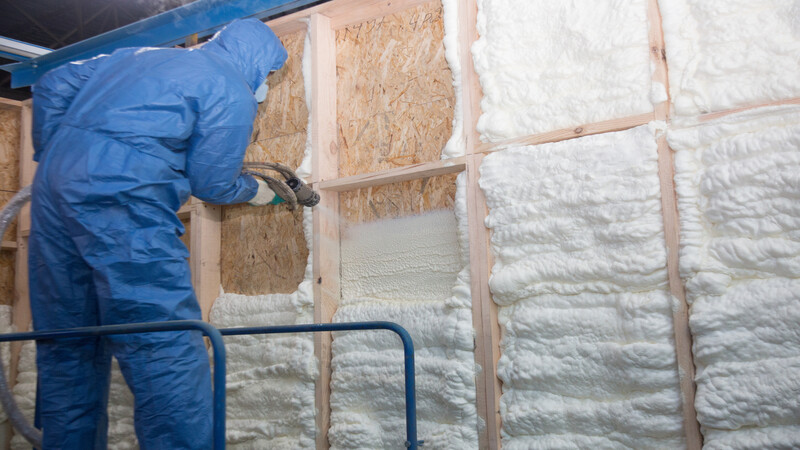
Many homeowners assume that insulation alone offers fire protection, but that is not accurate. Spray foam and other foam plastic insulations are combustible and must be paired with an approved covering to meet code. The fire proofing process typically involves installing a rated barrier, such as gypsum board, or an intumescent coating over exposed foam to limit ignition risk.
Building codes reflect this reality directly. The International Fireproof Technologies overview notes that both the International Building Code (IBC) and International Residential Code (IRC) mandate that all foam plastic insulation be separated from occupied spaces by an approved thermal barrier (typically a 15‑minute gypsum board such as ½″ drywall). That same source points out that the Spray Polyurethane Foam Alliance (SPFA) explicitly states that SPF “must be separated from the interior spaces with a 15-minute thermal barrier”.
Why Fireproofing Matters for Insulated Buildings
Spray foam insulation is valued for energy efficiency, but fire performance is a separate consideration. Industry reporting makes clear that spray foam insulation (spray polyurethane foam, or SPF) is prized for its energy efficiency, but it is not fireproof, as “spray polyurethane foam… is a combustible material”.
A few practical points follow from this:
- Exposed foam in an attic, crawl space, or mechanical room generally needs a rated thermal barrier.
- Manufacturers add flame retardants to slow ignition, but modern SPF formulations include flame retardants to slow ignition, but by itself spray foam is still a plastic foam that burns, meaning it cannot be relied on alone as “fireproof insulation.”
- Intumescent coatings expand when heated, forming a char layer that helps protect the substrate beneath.
Montana Code Context and Wildfire Considerations
Montana follows adopted versions of the International Building Code, which set out fire and smoke protection requirements for walls, barriers, and separations between occupancies, as detailed in the state’s adopted building code chapter. These provisions apply broadly across commercial and multi-family construction.
Wildfire exposure adds another layer of concern across the region. Montana has adopted wildland-urban interface standards for new construction in higher-risk zones, and recent coverage explains that the State of Montana has adopted the International Wildland-Urban Interface Code (IWUIC) to mitigate wildfire risks to structures, mandating ignition-resistant construction methods and materials for new single-family homes in designated WUI areas. That same source is careful to clarify that the goal of WUI construction is not to make a home “fireproof” but “ignition-resistant.”
For property owners near forested terrain or steep canyon lots, this distinction matters when planning insulation and fire-barrier upgrades alongside other envelope improvements.
Comparing Common Fire-Resistance Methods
| Method | Typical Use | Fire Performance Note |
| Gypsum board (drywall) | Covers foam insulation in walls and ceilings | Provides a recognized 15-minute thermal barrier per code |
| Intumescent coating | Applied over foam, steel, or wood surfaces | Expands and chars when heated to slow flame spread |
| Fire-resistance rated assemblies | Separates fire areas in commercial buildings | Rating measured in hours per IBC tables |
Fireproofing as Part of a Broader Insulation Project
Fireproofing work is rarely a standalone task. It is usually addressed during new construction, renovation, or insulation upgrades, since foam plastic products trigger code-required barrier installation once exposed. Property owners planning spray foam, fiberglass, or blown-in insulation projects should confirm barrier and coating requirements before work begins.
Based in Butte, MT, the regional insulation contractor Butte Insulation addresses passive fire protection needs as part of broader residential and commercial insulation work serving Montana.
Frequently Asked Questions
Is fireproofing the same as fire-resistant insulation? No. Fireproofing refers to the barriers, coatings, and assemblies applied to slow fire spread, while fire-resistant insulation refers to insulation products formulated with flame retardants that still require a separate protective barrier in most applications.
Does spray foam insulation need a fire barrier? Yes, in nearly all interior applications. Code requires foam plastic insulation to be covered by an approved thermal barrier, typically drywall, unless an alternative tested coating is used.
Are Montana building requirements different because of wildfire risk? Some areas follow added wildland-urban interface standards that require ignition-resistant roofing, siding, and vent screening in addition to standard fire-barrier code requirements.
Final Notes on Fireproofing Decisions
Fireproofing choices depend on building type, occupancy, and whether the property sits within a designated wildfire-risk zone. Matching the right barrier or coating to the insulation system in place, and confirming it against current code requirements, remains the most reliable way to address fire safety during construction or renovation.
Published details for Butte Insulation cover the local service area and installation background relevant to Montana property owners.