Key point:
• Residential land grading projects typically range from roughly $1,000 to $6,500 depending on soil type, yard size, and earthmoving volume.
• Clay-heavy coastal soil, common around Virginia Beach, VA, often requires grading paired with engineered drainage to prevent standing water.
• Permits, soil conditions, and site access are the main factors that shift a grading estimate up or down.
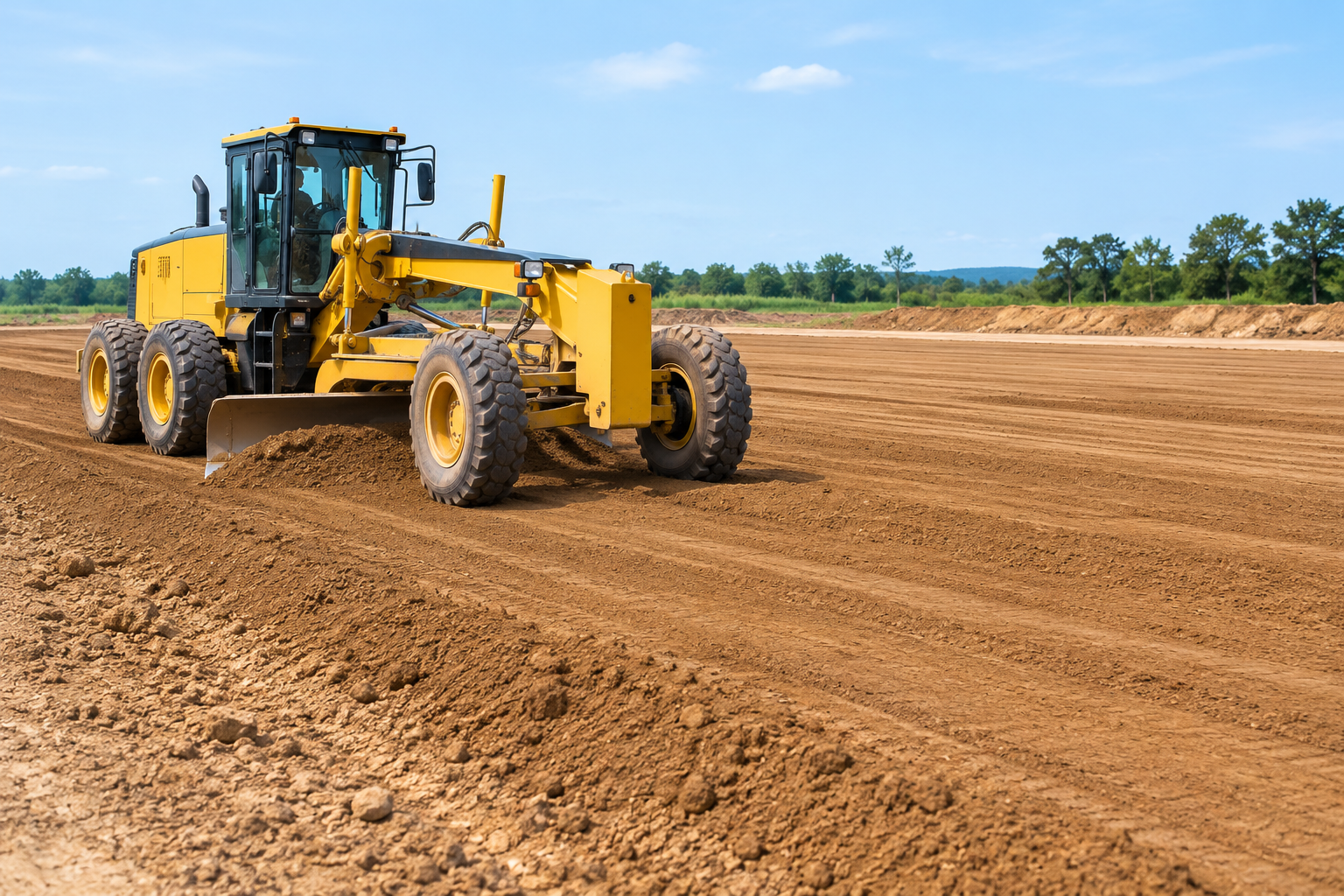
Land grading is the process of reshaping and sloping the ground so water moves away from a structure instead of pooling against it. The work typically costs between a few hundred dollars for a small patio area and several thousand dollars for a full residential lot, depending on terrain and drainage needs.
Hampton Roads properties face a particular challenge because of the region’s clay-dense soil, which holds water longer than sandy or loamy ground. land grading addresses this by correcting negative slopes, filling depressions, and establishing a consistent pitch that carries runoff away from foundations, driveways, and landscaping. On a residential lot, most grading projects fall between $1,000 and $6,500, with the final number shaped by soil conditions, yard size, and how much earth needs to move.
What Drives Land Grading Costs
Grading estimates vary widely because every lot presents a different combination of slope, soil, and access. National cost data gives a useful baseline, though local soil conditions and permitting rules can push numbers in either direction.
• Labor rates : Contractors typically charge anywhere from $40 to $180 an hour for labor, depending on crew size and equipment.
• Material volume : Work billed by volume runs between $50 and $200 per cubic yard of dirt moved.
• Project purpose : National average cost ranges differ by use case, with drainage-focused grading running $2,294 to $2,928 on average, higher than pool prep or new construction grading.
• Soil and terrain : Rocky sites add $200 to $1,200 more to the project, while tree removal can add between $1,000 and $6,000 more per acre.
| Grading Scenario | Typical Cost Range | Notes |
| Small lot (500-1,000 sq ft) | $400-$2,000 | Patio or deck prep |
| Standard residential lot | $1,000-$6,500 | Includes drainage grading |
| Drainage-specific grading | $2,294-$2,928 | National average for drainage purpose |
| Full acre, rough grading | $15,800-$44,535 | Large-scale or new construction sites |
These figures come from national contractor marketplace data and should be treated as planning ranges rather than fixed quotes, since every site inspection can change the scope.
How Site Conditions Affect the Grading Process
Soil type is one of the biggest variables in any grading project, and it directly affects both cost and long-term drainage performance. Established guidance on site grading for stormwater control recommends sloping the ground away from structures and using swales where the natural grade is flat or tilted toward a building. These same principles guide how grading crews plan cut-and-fill work on waterlogged lots.
A typical grading sequence includes:
1. Site assessment to identify low spots, slope direction, and soil composition.
2. Rough grading to establish the general elevation and remove major high or low points.
3. Compaction in layered lifts to stabilize the soil base.
4. Finish grading to create the final slope and smooth surface for landscaping or construction.
Clay soils, common throughout coastal Virginia, drain more slowly than sandy soil, which is one reason grading projects in this region are frequently paired with supplemental drainage features rather than relying on slope correction alone.
Timelines and Permitting Considerations
Most residential grading jobs take one to three days to complete once equipment is on site, though weather and soil saturation can extend that window. Projects involving significant cut-and-fill work, erosion control, or new construction grading take longer and may require inspection sign-off before further site work can proceed.
Permit requirements vary by locality, and grading near wetlands, floodplains, or drainage easements often triggers additional review. Property owners planning grading work in Virginia Beach, VA should confirm local permitting requirements before excavation begins, since unpermitted grading that affects neighboring drainage can create liability issues later.
Frequently Asked Questions
How long does a residential grading project typically take? Smaller lots can be graded in a single day, while larger or more complex sites with drainage integration may take several days depending on soil conditions and equipment access.
Does land grading alone solve standing water problems? Grading corrects slope and surface pitch, but persistently wet or clay-heavy lots often need it combined with drainage features such as French drains or swales for a lasting fix.
Is a permit always required for grading work? Not always, but many localities require permits for grading that alters drainage patterns, disturbs a minimum square footage, or affects neighboring properties.
What makes coastal Virginia soil different for grading purposes? Clay-dense soil common in Hampton Roads and Virginia Beach, VA drains slower than sandy soil, which often means grading plans account for both slope correction and water management from the start.
Land grading remains one of the more foundational steps in preparing a property for landscaping, construction, or long-term drainage control, particularly in regions where clay soil and heavy rainfall combine to create standing water problems. Property owners evaluating a grading project can review service details through Click Here before scheduling a site assessment.
