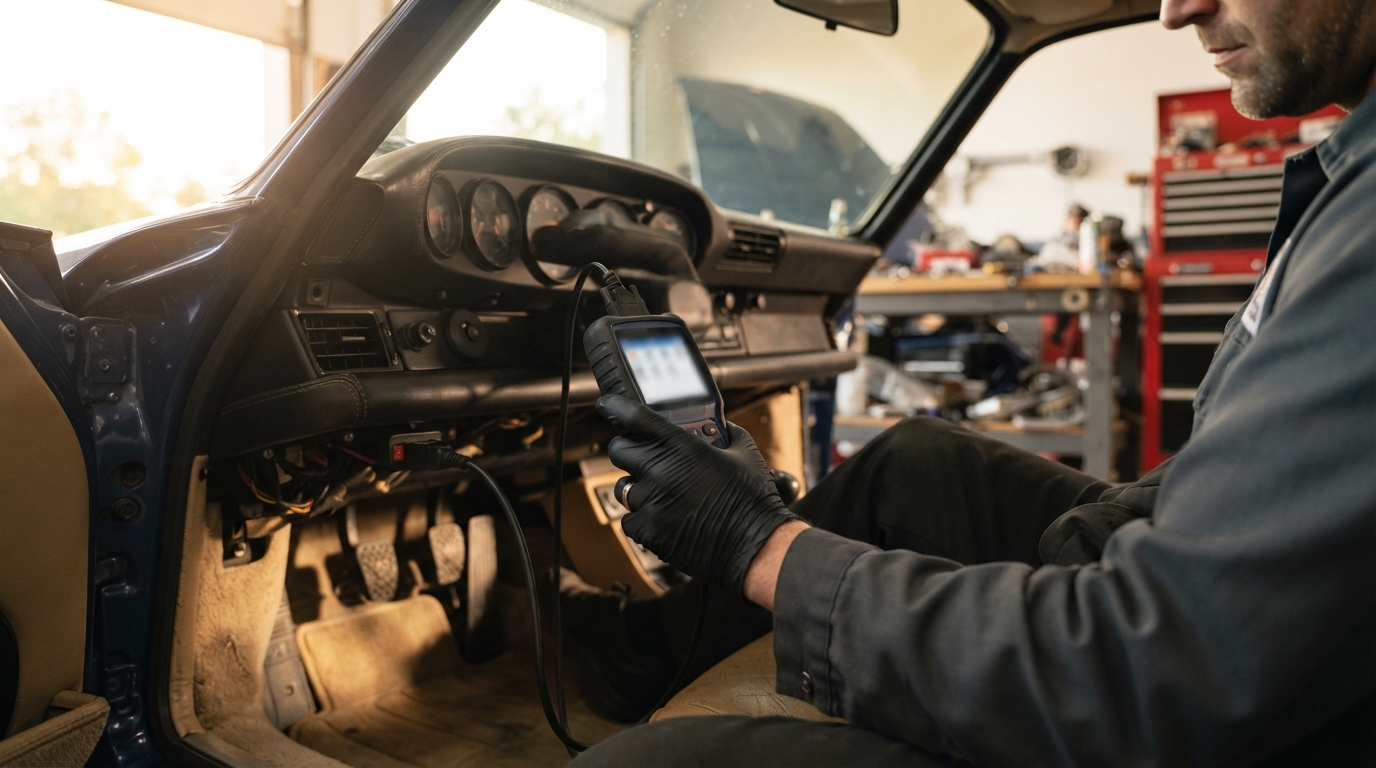
Quick take:
• Dashboard warning lights, rough idling, power loss, and falling fuel economy are the clearest signals your engine’s computer needs a professional read.
• Modern vehicles rely on onboard diagnostic systems, so accurate code interpretation requires the right scan tools and trained technicians, not guesswork.
• A performance-focused tuning shop can combine diagnostic scanning with dyno testing to pinpoint issues standard shops may miss.
A car that hesitates to start, loses power under acceleration, or triggers a check engine light is telling you something specific, and the fastest way to find out what is a professional diagnostic scan. These symptoms often trace back to the ignition, fuel delivery, or sensor systems that a trained technician can read precisely rather than guess at.
A Mobile Tuning Shop in Florida brings an added layer of precision to this process because the same diagnostic equipment used to dial in horsepower gains is also used to isolate exactly which component is underperforming. This matters for daily drivers and performance vehicles alike, since both depend on the engine computer reporting accurate data before any repair or adjustment happens. Knowing which symptoms point toward a deeper issue helps you decide when a basic scan is enough and when a more thorough diagnostic session is warranted.
Common Warning Signs That Point to a Diagnostic Visit
Most drivers notice a handful of repeating symptoms before a bigger problem develops. According to automotive diagnostic guidance, the most common indicators include a lit check engine light, reduced fuel economy, rough idling, and sluggish acceleration.
• Dashboard warning lights. A steady check engine light signals a non-emergency fault that still needs a professional read, while a flashing light means the vehicle should stop running until it is checked.
• Falling fuel efficiency. A noticeable drop in miles per gallon over a short period often points to worn spark plugs, a dirty air filter, or a failing oxygen sensor.
• Rough idle or stalling. Shaking or uneven running at a stoplight can indicate failing ignition coils, dirty fuel injectors, or vacuum leaks.
• Sluggish acceleration. Hesitation when merging or climbing hills frequently traces back to air intake restrictions or fuel system pressure problems.
• Unusual noises. Knocking, hissing, or squealing sounds under the hood usually mean a belt, hose, or engine component needs inspection.
Why Professional Scanning Tools Matter
Every vehicle built for the U.S. market since the mid-1990s uses an onboard diagnostics system to monitor emissions-related components and report faults through standardized trouble codes. This system, known as OBD-II, gives technicians access to the status of major vehicle subsystems, which is far more reliable than relying on symptoms alone, according to the federal emissions standards documented by the EPA.
A basic code reader can tell you that a fault exists, but interpreting what that code actually means in context, especially on a modified or performance-tuned engine, requires equipment calibrated for deeper analysis. Shops that combine standard OBD-II scanning with dyno-based diagnostics can observe how an engine performs under real load conditions rather than relying on static codes alone.
What a Tuning Shop Diagnostic Session Typically Involves
A diagnostic appointment at a performance-oriented shop generally follows a more detailed sequence than a quick parts-store scan.
1. Code retrieval and review. Technicians pull stored trouble codes and cross-reference them against the vehicle’s specific engine management system.
2. Visual and sensor inspection. Components tied to the reported codes, such as oxygen sensors, injectors, or ignition coils, are physically checked.
3. Dyno or road testing. For performance concerns, a dynamometer session can reveal how power delivery changes under load, which static codes cannot always show.
4. Tuning adjustments. If the issue relates to fuel mapping, turbo or supercharger calibration, or throttle response, adjustments can be made directly using the diagnostic data gathered.
| Diagnostic Approach | Best For | Typical Tools Used |
| Basic code reader | Quick check engine light check | Handheld OBD-II scanner |
| Shop-level diagnostic scan | Detailed sensor and system analysis | Professional scan tool, live data stream |
| Dyno-assisted diagnostics | Performance loss, modified engines | Dynamometer, tuning software |
Frequently Asked Questions
How do I know if my check engine light is an emergency? A steady light usually allows continued driving to a diagnostic appointment, while a flashing light signals a serious misfire or emissions issue that calls for stopping the vehicle as soon as it is safe.
Can a diagnostic scan fix performance issues on a modified vehicle? A scan identifies the fault, but correcting performance issues on a tuned or modified engine often requires adjusting the engine’s fuel and timing maps based on what the diagnostic data shows.
Is mobile diagnostic service as accurate as an in-shop visit? Mobile tuning and diagnostic visits use the same professional-grade equipment as an in-shop session, so accuracy depends on the technician and tools rather than the location itself.
How often should a performance vehicle get a diagnostic check? There is no universal interval, but it is reasonable to schedule a check whenever new symptoms appear or after significant modifications are installed, since baseline readings help track changes over time.
Recognizing these symptoms early and scheduling a proper diagnostic session can prevent a small sensor issue from turning into a costly repair. Florida Speed & Performance works on both daily-driven and performance-built vehicles, using dyno testing and tuning expertise to help identify what a standard code reader alone cannot explain.