Bottom line:
• Draining, disconnecting power, and clearing a path are the main steps homeowners should take before a hot tub pickup.
• Illinois treats hot tub components differently: metal and electrical parts require separate handling from the shell and foam insulation.
• Professional haulers manage disconnection, cutting, and disposal so property owners avoid injury and code violations.
Getting a hot tub off a property starts well before the removal crew arrives. The fastest, safest outcome comes from preparing the unit and the surrounding space in advance so the job moves without delays or damage to the yard.
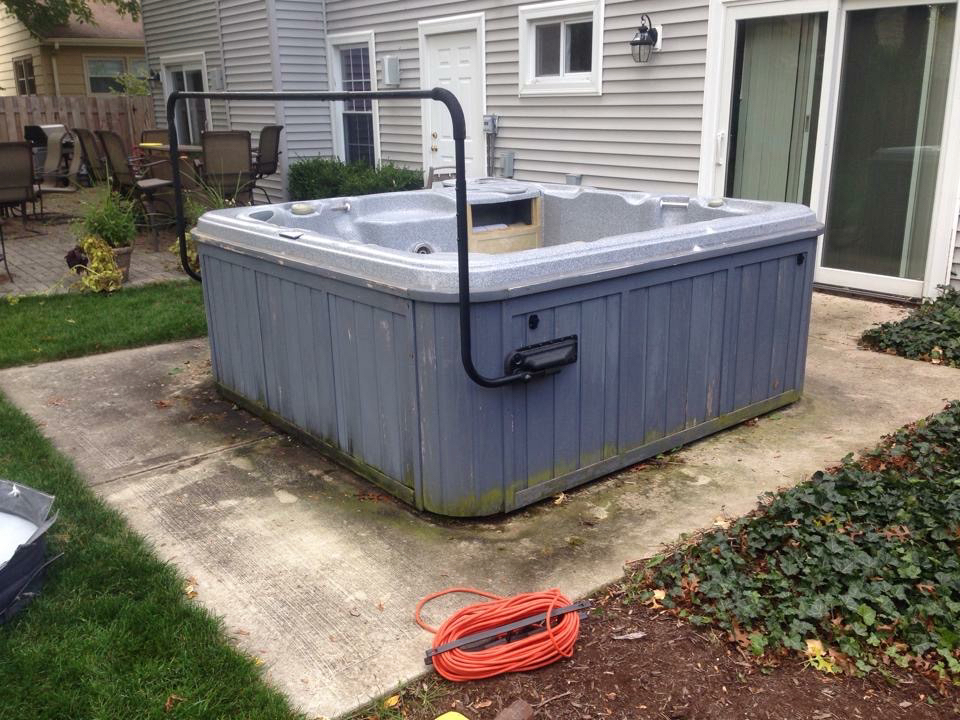
Homeowners searching for Hot Tub Removal in Arlington Heights IL are usually dealing with a spa that is broken, leaking, or simply taking up space that could be used for something else. Because hot tubs are bulky, heavy, and wired into a dedicated electrical circuit, they cannot be set at the curb like a typical piece of furniture. A short prep checklist on the homeowner’s end makes the actual removal day far more efficient.
Why Hot Tubs Require Extra Preparation
Hot tubs are not simple curb-side items. They combine electrical components, plumbing, water, and heavy shell materials that each need different handling.
• Electrical disconnection. Hot tubs typically run on a dedicated 240-volt circuit, and the breaker must be shut off before any physical work begins.
• Draining. Standing water adds significant weight and must be emptied before the unit can be moved or cut apart.
• Plumbing disassembly. Supply and return line fittings often need to be loosened and drained separately from the main basin.
Skipping these steps is one of the most common reasons DIY removal attempts stall partway through or result in damage to the tub, the deck, or the yard below it.
What Property Owners Should Do Before Pickup Day
A little advance planning prevents wasted trips and extra labor charges. Consider these steps in the days before scheduled removal:
1. Confirm the power is off. Flip the dedicated breaker and, if the unit is hardwired, have a licensed electrician disconnect the line.
2. Drain the tub fully. Attach a garden hose to the drain valve, usually located near the base, and allow all water to empty out.
3. Clear a path. Remove fencing panels, potted plants, or furniture between the tub and the driveway or street access point.
4. Note surface conditions. Flag any uneven pavers, soft ground, or low-hanging branches that could affect how equipment is moved through the yard.
5. Separate personal items. Covers, steps, and accessories stored near the tub should be moved aside so they are not mistaken for removal items.
How Materials Are Handled After Removal
Illinois has specific guidance for how large items with electrical and chemical components must be disposed of once separated from the home. Appliances and similar large items known as white goods were barred from landfills decades ago unless mercury switches, refrigerant gas, and PCB-containing components are removed first, according to the Illinois EPA. This same principle extends to hot tub equipment, since the pump, heater, and control board fall under similar electronic handling rules.
In practice, this means a hot tub removal job typically splits into two disposal streams:
| Material | Typical Handling |
| Metal frame, pump, heater | Sorted for scrap metal recycling |
| Acrylic or fiberglass shell | Taken to a licensed solid waste facility |
| Foam insulation | Compacted and disposed of, not recyclable curbside |
| Control board and wiring | Routed through electronic waste recycling |
Cutting the shell into sections is often necessary to move it through gates, fences, or tight side yards, which is part of why professional equipment and trained labor make the process faster than a DIY attempt.
Frequently Asked Questions
Can a hot tub be left at the curb for regular trash pickup? No. Standard municipal trash pickup does not accept hot tubs because of their size, weight, and electrical components, so a separate hauling arrangement is needed.
Do I need an electrician before removal? If the unit is hardwired to a dedicated circuit, a licensed electrician should disconnect the line at the panel before any physical disassembly begins.
What happens to the water inside the tub? The tub must be drained completely through its base valve before it can be safely moved, since standing water adds substantial weight.
Is cutting the hot tub shell always necessary? Many tubs are too large to pass through standard gates or side yard access points whole, so sectioning the shell is common in tighter properties.
Next Steps for a Smooth Removal
Junk Remedy is a locally based waste removal service handling residential and commercial cleanouts, including bulky item pickup, across the Lake Zurich , Arlington Heights areas and greater Chicago suburbs. Property owners planning a spa removal can review scheduling details or ask about yard access requirements before booking a pickup date. For service details, hours, or to request a quote, visitors can Visit Website to review current service areas and request an estimate.