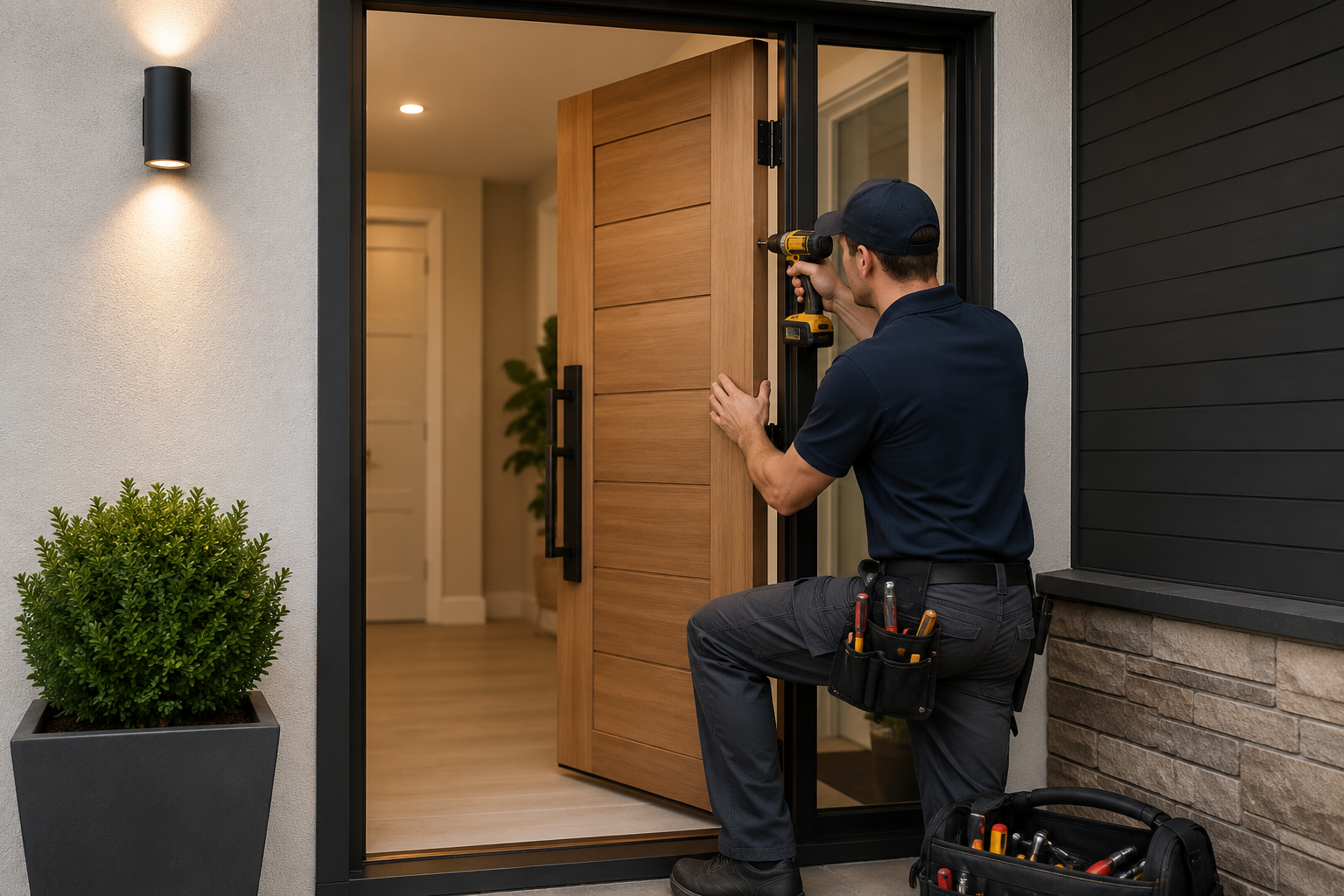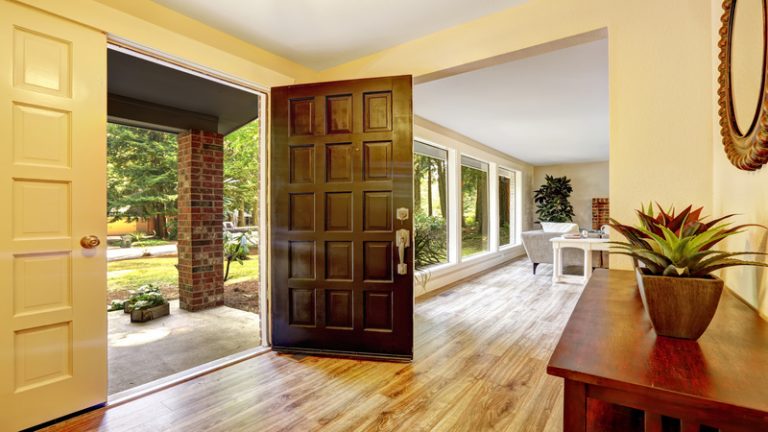
Homeowners should choose between smooth and textured wood surfaces by considering the home’s architecture, the desired level of visual detail, the wood grain, and how light reaches the door. Smooth surfaces create a cleaner and more refined appearance, while textured surfaces add depth, shadow, and a stronger handcrafted character.
Both options can work well for custom wood doors in Phoenix, but they communicate very different design styles. The best choice depends on whether the door should quietly support the exterior or serve as a more expressive architectural feature.
What Does a Smooth Wood Surface Look Like?
A smooth wood surface has an even, refined appearance that allows the color, grain direction, and overall proportions of the door to remain the primary visual elements. It is often associated with modern, contemporary, transitional, and minimalist architecture.
On a modern wood door, a smooth surface can emphasize broad panels, clean lines, and precise geometry. It also works well when the door includes glass, metal hardware, horizontal grain, or other features that already create visual interest.
Smooth surfaces do not remove the natural character of wood. Grain, figure, and color variation may still be visible, especially when the selected species has a pronounced pattern. The difference is that the surface itself does not add heavy texture.
This can make a smooth custom wood front door a strong choice for homes with detailed stone, tile, masonry, or other exterior materials. The restrained surface helps prevent the entrance from feeling visually crowded.
What Does a Textured Wood Surface Add?
A textured wood surface introduces physical depth and visible irregularity. Depending on the method used, the texture may highlight the grain, create shallow grooves, or produce a more weathered and handcrafted appearance.
Textured surfaces are often associated with rustic, Southwestern, Spanish-style, Old World, and traditional architecture. They can also be used selectively in contemporary homes when the design calls for a strong natural contrast against smooth stucco, concrete, glass, or metal.
Texture changes how light moves across the door. Raised areas catch light, while recessed sections create shadows. This gives the surface more variation throughout the day and can make the wood appear richer from different viewing angles.
For Phoenix homes, where sunlight can be strong and directional, these shadows may become a significant part of the door’s appearance.
How Does Architectural Style Affect the Choice?
The architecture should guide the surface treatment rather than the homeowner selecting texture in isolation.
A clean-lined modern residence may benefit from a smooth door with simple panel divisions or uninterrupted wood grain. A rustic home with exposed beams, stone, or textured plaster may support a more pronounced wood surface.
Transitional homes can work with either option. A lightly textured surface may introduce warmth without feeling heavily rustic, while a smooth solid wood custom door may balance traditional proportions with a cleaner finish.
Homeowners should also consider the entryway itself. A deeply recessed entrance may soften the appearance of subtle surface details because the door receives less direct light. An exposed entrance may make strong textures appear more pronounced.
The surface should remain compatible with the scale and detailing of the entire façade.
How Does Wood Grain Interact With Surface Texture?
Wood grain and surface texture are separate but closely related design elements. Some species already have bold grain patterns that create natural movement across the door. Adding heavy texture may make the surface feel overly active.
A quieter wood species may benefit from texture because the surface treatment introduces depth that the grain does not provide on its own. By contrast, expressive grain may be more effective on a smooth surface where its natural pattern remains easy to see.
Grain direction also matters. Vertical grain combined with subtle texture can reinforce height. Horizontal grain on a smooth modern wood door can create a wide, linear appearance. Textured boards arranged horizontally may produce a stronger rustic or layered effect.
The goal is to create a clear visual hierarchy. Grain, texture, panel design, glass, and hardware should not all compete equally for attention.
Which Surface Works Better With Carved Details?
Carved details are generally easier to read on a relatively smooth surrounding surface. The contrast between the flat areas and recessed carving helps the design remain clear.
When carving is added to a heavily textured door, small details may become difficult to distinguish. In that situation, larger and simpler carved shapes may work better than intricate patterns.
A homeowner considering both texture and carving should decide which feature will serve as the main focal point. A restrained texture can support bold carving, while a strongly textured surface may need little additional ornamentation.
This is particularly important for handmade wooden doors, where multiple custom features can be combined. A thoughtful design often depends on limiting unnecessary detail rather than adding every available option.
Does Texture Change How Large a Door Appears?
Yes. Smooth surfaces tend to emphasize the full silhouette and proportions of the door. This can make a broad slab, tall entry door, or pivot configuration feel visually clean and substantial.
Texture breaks the surface into smaller areas of light and shadow. Depending on the pattern, it can make a door feel more detailed, heavier, or visually active.
A large door may support stronger texture because there is enough surface area for the pattern to develop. On a smaller door, heavy texture may overwhelm the proportions or compete with nearby architectural details.
Viewing distance should also be considered. Fine texture may be visible from the porch but disappear from the street. Broad textural patterns remain more noticeable from farther away.
How Do Smooth and Textured Surfaces Fit Phoenix Homes?
Phoenix architecture includes modern desert homes, Spanish-inspired residences, Southwestern properties, traditional homes, and custom luxury construction. Both smooth and textured custom wood doors can work within this range.
A smooth surface often complements contemporary homes with large windows, clean stucco walls, and restrained landscaping. Textured wood can add warmth to desert materials such as stone, masonry, tile, and plaster.
Sun exposure should also influence the decision. Direct sunlight can create strong contrast across a textured surface, while shaded entrances may produce a more muted appearance. Homeowners should examine material samples near the actual entry at different times of day.
They should also consider how the surface will look from inside the foyer. The interior side of the door may receive different lighting and sit beside different materials than the exterior.
Which Surface Is Easier to Coordinate With the Rest of the Home?
Smooth wood surfaces are often easier to coordinate with minimalist interiors, flat-panel cabinets, simple trim, and modern flooring. Textured surfaces may relate more naturally to exposed beams, rustic furniture, hand-finished masonry, and other materials with visible character.
Exact matching is not necessary. A door can coordinate through shared undertones, grain scale, or architectural lines without duplicating nearby wood elements.
For example, a smooth door may complement textured ceiling beams by providing contrast. A textured door may add depth to a home where most other surfaces are clean and neutral.
The decision should be based on the total composition rather than one isolated sample.
What Should Homeowners Review Before Choosing?
Before selecting a smooth or textured surface, homeowners should evaluate:
-
The home’s architectural style
-
The scale of the entry
-
Wood species and grain character
-
Sunlight and shade
-
Nearby stone, stucco, glass, and metal
-
Carved or paneled details
-
Viewing distance
-
Interior materials visible from the foyer
-
The desired level of visual contrast
Smooth surfaces provide clarity, restraint, and a strong focus on proportion. Textured surfaces contribute depth, shadow, and a more tactile character.
Companies such as Anasazi Architectural Door create handmade wooden doors that can be designed around the architecture, opening dimensions, natural wood characteristics, and specific visual goals of a Phoenix home.
The strongest surface choice is the one that supports the entrance as a complete architectural composition rather than relying on texture or smoothness alone.