Takeaway:
- Solar water pumps convert sunlight into electricity that powers well or surface pumps, removing dependence on grid power or fuel.
- They suit off-grid ranches, farms, and remote properties across Montana, where extending electrical lines can be costly or impractical.
- Lower operating costs and minimal moving parts make them a practical option for livestock watering, irrigation, and domestic supply.
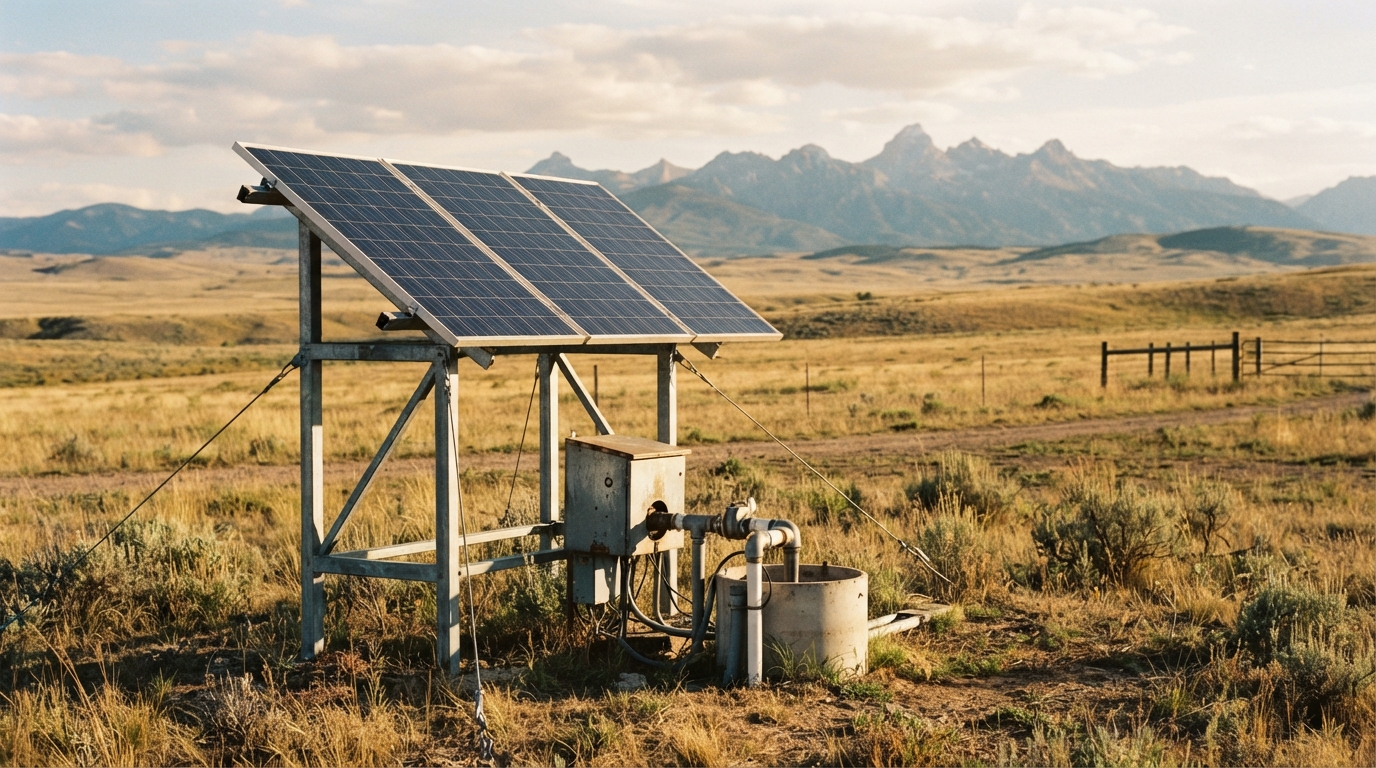
A property without reliable grid access can still maintain a steady water supply through a system powered entirely by sunlight. Solar Water Pumps use photovoltaic panels to generate direct current electricity that drives a submersible or surface pump, moving water from a well, pond, or cistern without relying on utility power or fuel delivery.
The technology works through a straightforward chain of components. Solar panels capture sunlight and convert it to electricity, a controller regulates the voltage sent to the pump motor, and the motor drives an impeller or diaphragm that pushes water through the pipe. This basic process is documented in technical guidance from the USDA Natural Resources Conservation Service, which outlines design considerations for small photovoltaic water pumping systems.
Why Montana Properties Benefit from Solar Pumping
Montana’s rural and agricultural land often sits far from existing power infrastructure, making trenching new electrical service a significant expense for a single well or stock tank. A solar-powered pump sidesteps that cost entirely by drawing power from panels installed at the pump site.
Several property types gain practical advantages from this setup:
- Ranches and livestock operations that need water delivered to remote pastures or troughs without running fuel generators daily.
- Agricultural irrigation for market gardens, hay fields, or greenhouses where drip or sprinkler lines depend on a consistent water source.
- Cabins and seasonal residences in areas where grid connection is unavailable or cost-prohibitive.
- Domestic wells on acreage parcels where the homeowner wants to reduce monthly utility costs tied to pumping.
Montana’s terrain and water-rights framework also shape how these systems get planned. Many private wells fall under the state’s exempt well provisions, and system design has to account for seasonal water table shifts common across the state’s varied elevations and basins.
Operating Advantages Compared to Conventional Pumps
| Factor | Solar Water Pump | Grid-Powered Pump | Fuel-Powered Pump |
| Ongoing energy cost | Minimal after installation | Monthly utility bill | Fuel purchase and hauling |
| Maintenance needs | Low; few moving parts | Moderate | Higher; engine upkeep |
| Suitability for remote sites | Strong, no lines needed | Requires grid access | Requires fuel transport |
| Noise and emissions | None during operation | None | Generator noise, exhaust |
Solar systems generally run during daylight hours unless paired with battery storage, so sizing a system correctly around daily water needs and total dynamic head (the vertical lift plus friction losses in the pipe) matters more than well depth alone for determining pump capacity.
Choosing the Right System for a Property
Selecting between a submersible and surface pump depends mainly on where the water source sits relative to the pump.
- Submersible pumps work best for drilled wells and boreholes where water sits well below the surface.
- Surface pumps suit ponds, cisterns, or shallow sources within roughly 20 feet of the pump, since they rely on suction rather than being placed underwater.
- Booster pumps help when water already sits in a holding tank and needs added pressure for household or irrigation use.
180 Water serves customers across Montana, supporting well pump and solar pump needs for residential, agricultural, and commercial properties throughout the state. Additional background on the company’s well pump and solar pump work is available through its 180 Water profile.
Frequently Asked Questions
Do solar water pumps work on cloudy days in Montana? Output drops with reduced sunlight, and most direct-drive systems slow down rather than stop completely; storage tanks help maintain supply through short periods of lower sun.
How deep can a solar pump draw water from? Submersible solar pumps can lift water from substantial well depths, while surface pumps are generally limited to shallower sources near the surface.
Are solar pumps suitable for year-round use in cold climates? Many systems operate through varying seasonal conditions, though components exposed to freezing temperatures need appropriate insulation or placement below the frost line.
What maintenance does a solar water pump need? Routine care typically involves checking panel cleanliness, inspecting wiring connections, and confirming the controller and pump motor are functioning within normal ranges.
Final Thoughts
A property’s water needs, terrain, and distance from grid power all factor into whether a solar-powered pump makes sense as a long-term solution. Published information about 180 Water outlines further detail on well and solar pump services available in the region.