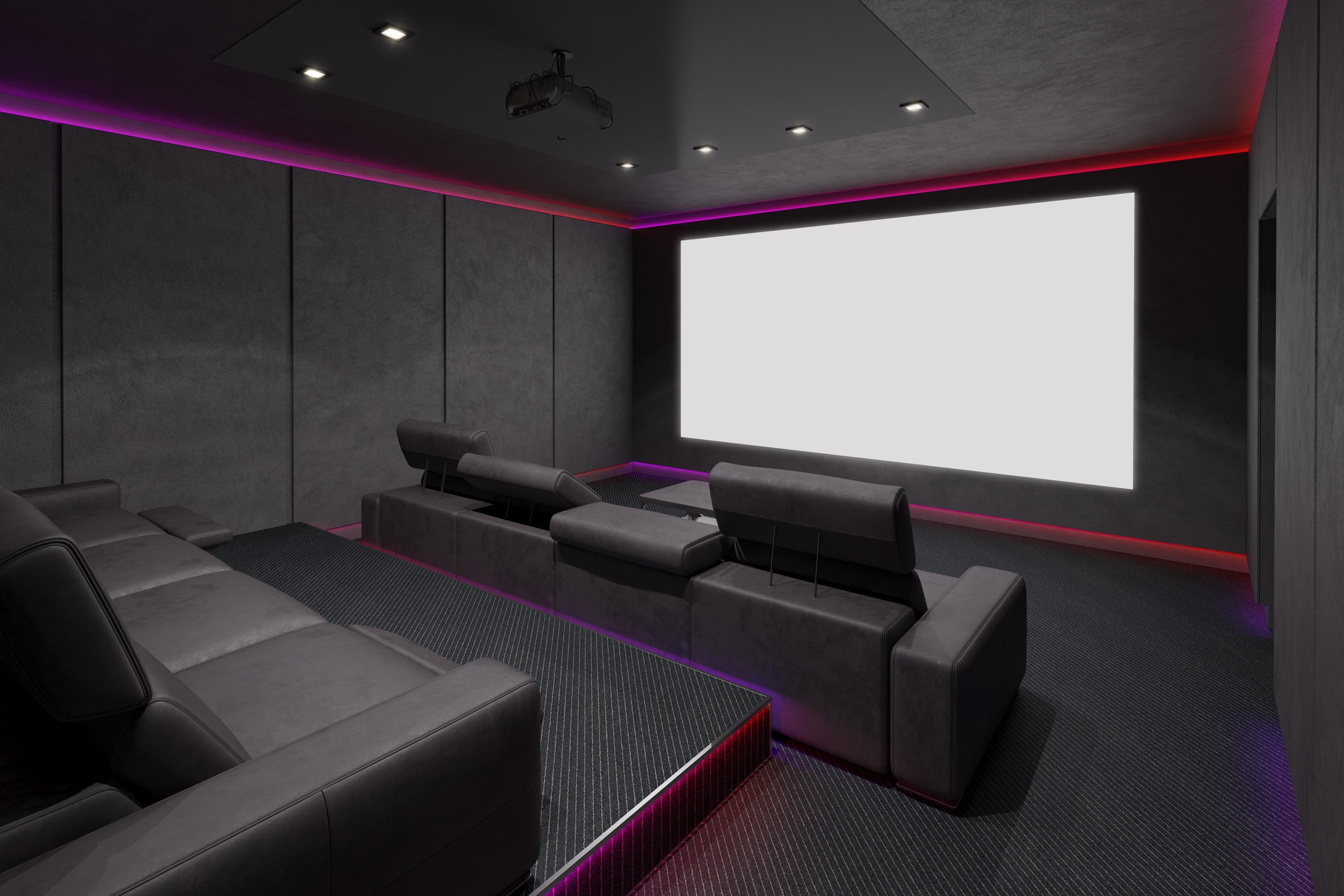
A well-planned home theater system should provide convenient access to essential equipment without compromising the room’s appearance or performance. Equipment accessibility matters because receivers, source devices, network components, and other technology may eventually need to be adjusted, serviced, replaced, or expanded.
In Scottsdale, AZ, where custom residential spaces can place a strong emphasis on both technology and interior design, equipment placement is an important consideration during the planning stage. A system can be technically capable and still become frustrating if the components are difficult to reach or poorly organized.
Accessibility does not mean that every component needs to remain visible. Instead, it means the equipment should be positioned and housed in a way that supports practical use while fitting appropriately into the surrounding room.
Why Does Equipment Accessibility Matter in a Home Theater?
Most people think about picture quality and sound when planning a home theater. Those elements are important, but the equipment supporting them also needs to be considered.
A typical entertainment system can include a display, receiver or processor, source devices, streaming equipment, gaming consoles, network equipment, and other connected components. These devices may need connections, power, ventilation, configuration, or occasional service.
If equipment is placed where it cannot be reached without moving furniture or removing finished surfaces, routine changes can become more complicated.
Accessibility is therefore part of good system planning. It helps ensure the technology remains practical after the initial home theater installation is complete.
What Equipment Needs to Remain Accessible?
Not every component requires the same level of access. Some devices may need regular interaction, while others can remain largely untouched once the system has been configured.
Components that may require greater accessibility can include:
- AV receivers or processors
- Streaming devices
- Media players
- Gaming consoles
- Network equipment
- Control equipment
- Power and connection points
- Components that may require periodic replacement
The appropriate arrangement depends on the system and how the room will be used.
For example, a gaming-focused entertainment space may require more frequent access to consoles and accessories than a dedicated movie room. A system built around streaming may have different equipment requirements from one that incorporates physical media.
The goal is to match accessibility with actual usage rather than applying the same arrangement to every room.
How Can Equipment Be Hidden Without Making It Difficult to Reach?
A clean entertainment space does not require every component to be on display. Equipment can be incorporated into cabinetry, dedicated storage areas, or other locations that keep the room organized.
The important distinction is between concealing equipment and making equipment inaccessible.
A cabinet may provide an attractive way to organize technology, but the space still needs to accommodate the equipment properly. Connections should be reachable, and the components should have the environmental conditions required by their manufacturers.
During a home theater system setup, equipment locations can be considered alongside the room’s furniture, cabinetry, display, speakers, and other features. This creates a more coordinated result than deciding where equipment will go after the room has already been completed.
Why Is Ventilation Important for Enclosed Equipment?
Electronic equipment can generate heat during operation. When components are placed inside enclosed cabinetry or another confined space, airflow needs to be considered.
The specific ventilation requirements vary by component. Manufacturer recommendations should be followed rather than relying on a universal clearance measurement for every type of equipment.
Cabinet design may therefore need to account for openings, airflow, spacing, or other provisions appropriate to the equipment being housed.
This is especially important in a high-end entertainment room where the desire for a clean appearance may encourage homeowners to conceal most of the technology.
A visually integrated design should still provide an appropriate environment for the equipment.
How Does Equipment Location Affect Maintenance?
Equipment does not necessarily require frequent maintenance, but homeowners may eventually need to troubleshoot a connection, replace a component, add a device, or change how the system is configured.
An accessible equipment location can make these tasks more manageable.
Consider a receiver positioned inside a cabinet that can be opened easily. If a connection needs to be checked, the component can be reached without disturbing the rest of the room.
Compare that with equipment positioned behind a permanently fixed structure or in a location that requires significant disassembly. The technology may still function, but future service becomes more complicated.
When planning a home theater system, accessibility should therefore be considered for the entire expected life of the system, not just the installation day.
What Should Be Considered When Planning Equipment Cabinets?
Custom cabinetry can be an effective way to organize entertainment equipment, but the cabinet should be planned around the technology.
Several factors deserve attention:
Equipment Dimensions
Components should have sufficient space based on their actual dimensions and installation requirements. Planning should account for the equipment selected rather than assuming every device will fit within a standard compartment.
Ventilation
The cabinet should provide an appropriate environment for the equipment based on manufacturer requirements.
Cable Access
Connections need practical pathways into and out of the cabinet. Poorly planned cable access can make an otherwise attractive installation difficult to service.
Power Access
Equipment requires appropriate power connections. These requirements should be coordinated during the broader room and construction planning process.
Service Access
Components should remain reachable when adjustments or replacements become necessary.
Future Changes
A homeowner may add or replace devices over time. Allowing reasonable flexibility can prevent the cabinet from becoming obsolete when the system changes.
How Does Accessibility Affect Custom Home Design?
Accessibility becomes particularly important when entertainment technology is integrated into a custom home.
A custom room may include built-in cabinetry, architectural wall treatments, dedicated equipment areas, or other design elements that are difficult to modify after construction. Decisions about technology should therefore be considered while these features are still being planned.
This does not mean that the AV system should dictate the entire room design. Instead, the technology and architecture can be coordinated so each supports the other.
For example, a builder or designer may be planning a large built-in entertainment wall. Before the cabinetry is finalized, the AV requirements can be reviewed to determine where the display, equipment, speakers, wiring, and access points need to be located.
This approach can help prevent situations where the finished cabinetry looks appropriate but does not adequately accommodate the technology.
Should Equipment Be Located Near the Display?
Not necessarily.
The best equipment location depends on the system design, room layout, wiring plan, and accessibility requirements. Some configurations place equipment close to the display, while others use a separate equipment area.
Keeping components away from the primary viewing area can reduce visible equipment and help maintain a cleaner appearance. However, the longer or more complex the connection pathways become, the more important proper planning becomes.
A professional system design can evaluate these relationships before installation so equipment location is based on the entire system rather than one component.
How Does Equipment Accessibility Affect Future Upgrades?
Entertainment technology changes over time. A homeowner may replace a display, add a gaming device, update a receiver, change a streaming source, or modify another part of the system.
Accessible equipment locations can make these changes easier to accommodate.
This is particularly relevant for custom homes, where the surrounding architecture may be designed to last much longer than individual electronics. A cabinet or equipment area should therefore be designed with reasonable flexibility rather than being sized exclusively around today’s devices.
That does not require predicting which products will be purchased years from now. It simply means allowing enough practical access for normal equipment changes.
What Role Does Wiring Play in Equipment Accessibility?
Wiring and equipment placement are closely connected.
A component may be easy to reach physically but still difficult to service if its connections are tangled, inaccessible, or routed through an impractical pathway. Organized wiring can make it easier to identify and access individual components.
Planning wiring before walls, cabinetry, or other finished surfaces are completed can provide additional opportunities to establish appropriate pathways.
This is one reason equipment accessibility should be considered alongside the broader home theater setup rather than as a separate issue after installation.
How Should Homeowners Think About Accessibility in a Luxury Entertainment Room?
Luxury entertainment spaces often place considerable emphasis on clean visual design. Technology may be integrated into cabinetry, walls, or other architectural features to reduce visual clutter.
That aesthetic goal can coexist with practical equipment access.
A well-coordinated room can conceal much of the technology while still providing appropriate access to the components that may need attention. The key is to establish those requirements before cabinetry and other permanent features are finalized.
For homeowners working with a builder, designer, or remodeling professional, discussing AV requirements early can help everyone understand how the technology needs to interact with the room.
When Should Equipment Accessibility Be Discussed?
Equipment accessibility should be considered before the final room design is complete, particularly when a project involves new construction, custom cabinetry, or significant renovation.
At that stage, equipment locations, wiring pathways, display placement, speaker locations, and access points can be considered together.
Imagine Audio Video works with residential projects involving home theater, home audio, distributed audio and video, and structured wiring. Their residential approach includes developing a structural wiring plan and collaborating with builders and other professionals as part of the system design process.
For homeowners exploring a Home theater system setup in Scottsdale, accessibility can therefore be considered as part of the broader system rather than as an afterthought.
What Should Homeowners Ask Before Finalizing an Entertainment Room?
Before equipment locations or cabinetry are finalized, homeowners can ask several practical questions:
- Can the main components be reached without moving major furniture?
- Does the equipment have adequate ventilation?
- Are the cable connections accessible?
- Can individual components be replaced without disrupting the entire system?
- Is there enough room for the equipment selected?
- Could the entertainment system change as technology or household needs change?
- Has the equipment location been coordinated with the room’s cabinetry and architectural features?
- Will the wiring remain accessible where service may eventually be required?
These questions can reveal potential problems before construction or installation is complete.
What Does Good Equipment Accessibility Look Like?
Good accessibility does not necessarily mean seeing the equipment. It means the system has been organized so that necessary components can be reached, connections can be managed, and reasonable changes can be made without unnecessarily disrupting the room.
For a dedicated theater, this may mean an organized equipment cabinet or separate equipment area. For a multipurpose entertainment room, it may mean keeping frequently used devices easier to reach while placing less frequently accessed components elsewhere.
The right arrangement depends on the room, the equipment, and the homeowner’s habits.
A thoughtful home theater installation considers these practical details alongside sound, picture quality, room layout, and aesthetics. The result is an entertainment environment that is not only visually cohesive when it is first completed but also easier to live with as technology changes.
About Imagine Audio Video
Imagine Audio Video is based in Phoenix and serves Scottsdale and the greater Phoenix area with residential and commercial audio/video solutions, including home theater, home audio, structured wiring, and related technology integration. They have been serving the Arizona audio/video community since 1999 and provide professionally trained technicians along with a one-year residential warranty. To Find their office on Google Maps, homeowners can use their listed Phoenix location at 20815 N 25th Place, Suite A105; they can also be reached at 480-497-6734.