Bottom line:
- Regular HVAC filter changes directly reduce airborne dust, pollen, and particulates circulating through a building.
- Manufacturers generally recommend replacement every 60 to 90 days, though usage and air quality conditions can shorten that window.
- A dirty or clogged filter restricts airflow and allows more unfiltered air to bypass the system.
Clean air filters remove particles before they recirculate through a building’s ductwork, which is why scheduled replacement is one of the most direct ways to support indoor air quality. Neglecting this basic maintenance task allows dust, pollen, and other particulates to build up inside HVAC equipment and spread into occupied spaces.
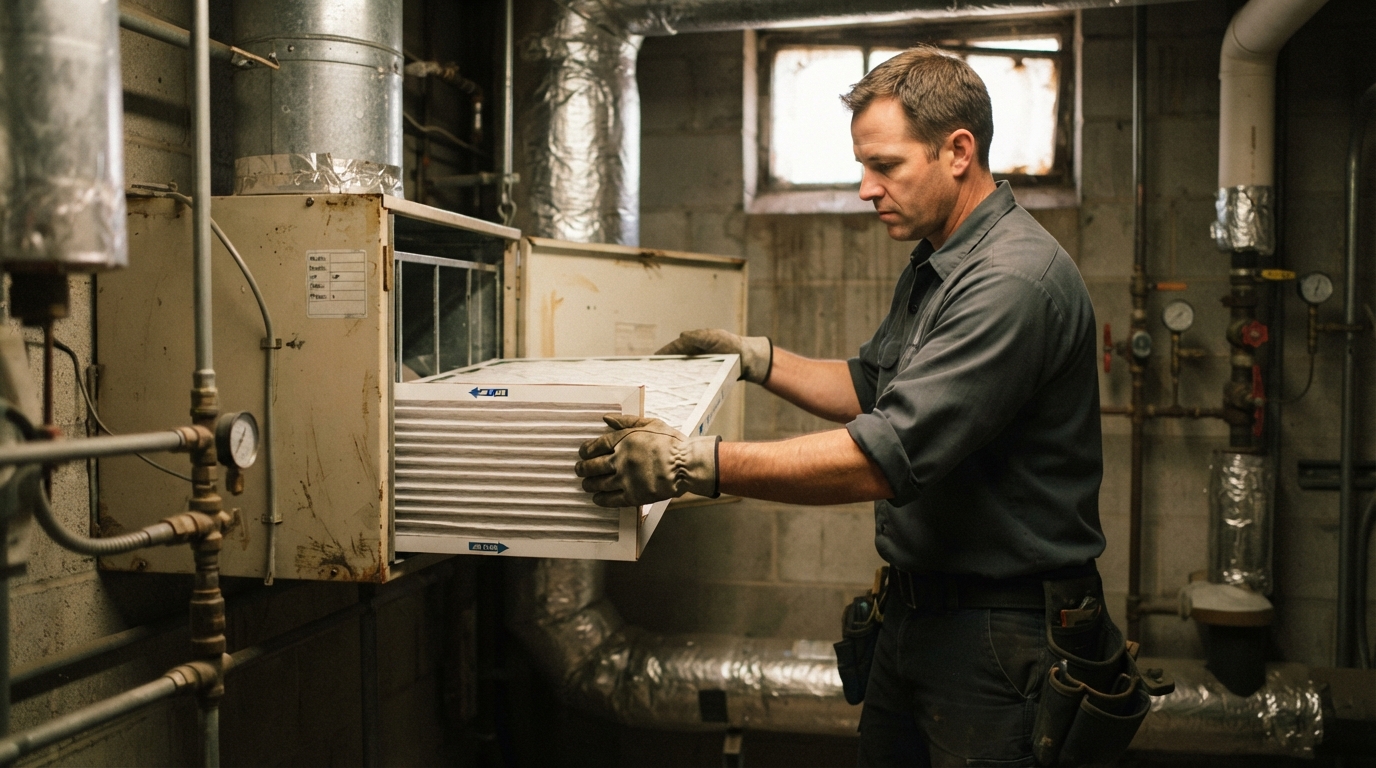
HVAC Filter Replacement in Illinois matters because filters perform their intended function only while they remain within their rated capacity. Federal guidance notes that an air cleaner or filter will not work well if it is dirty and overloaded, which is why manufacturers specify routine replacement intervals rather than leaving it to visual inspection alone. According to the EPA’s guide to air cleaners in the home, all filters need regular replacement, and manufacturers typically recommend replacement every 60 to 90 days.
Why Filter Condition Affects Air Quality Indoors
Central HVAC systems move air continuously through occupied spaces, carrying whatever particulates are present in that airstream. Central furnace or HVAC filters are designed to filter air throughout a home. When a filter becomes saturated with debris, it loses its ability to capture new particles effectively and can restrict airflow enough to strain system components.
Federal technical guidance also notes that high efficiency filters help remove small particles from the air that can cause adverse health effects, so upgrading HVAC filtration has the potential to make important improvements in indoor air quality for homeowners. This applies equally to commercial and institutional buildings, where occupant density and ventilation demands are often higher than in single-family homes.
Key factors that influence how quickly a filter loses efficiency include:
- Occupancy levels and foot traffic within the building
- Presence of pets, carpeting, or ongoing construction nearby
- Seasonal pollen and outdoor particulate levels
- System run time, since filters only trap particles while air is actively moving through them
Replacement Intervals for Illinois Facilities
Seasonal conditions in Illinois add practical considerations to filter maintenance schedules. Heating systems run for extended stretches during cold months, while spring pollen and summer humidity add additional particulate and moisture load during cooling season. Facilities that operate on fixed quarterly schedules may need to shorten intervals during these higher-demand periods.
Property managers, schools, and healthcare facilities across the state often tie filter changes to broader preventive maintenance calendars rather than treating replacement as a standalone task. Based in USA, Abron Industrial Supplies serves customers across Illinois, supporting facilities that need consistent access to correctly sized filter stock for ongoing maintenance programs.
Comparing Common Filter Types and Maintenance Needs
| Filter Type | Typical MERV Rating | Replacement Interval | Best Suited For |
| Fiberglass panel | 1 to 4 | 30 days | Basic residential systems, low filtration needs |
| Pleated media | 8 to 13 | 60 to 90 days | Homes and light commercial, improved particulate capture |
| High-efficiency pleated | 13 and above | 60 to 90 days | Offices, schools, healthcare facilities needing finer filtration |
Facilities seeking higher filtration performance should confirm compatibility with existing equipment before upgrading, since not every air handler is designed to accommodate denser filter media without airflow adjustments.
Frequently Asked Questions
How often should HVAC filters be replaced in a commercial building? Manufacturers typically recommend replacement every 60 to 90 days, though buildings with higher occupancy or construction activity nearby may require more frequent changes.
Does filter replacement affect energy costs? A clogged filter restricts airflow, which can force HVAC equipment to work harder to maintain set temperatures, so routine replacement supports more consistent system operation.
Can a higher-rated filter always be installed as an upgrade? Not automatically. Most furnaces and HVAC systems can accommodate a MERV 13 filter without creating equipment problems, though an HVAC technician can also modify the system to use a higher efficiency filter.
What happens if filters are left in place too long? If a filter is dirty and overloaded, it will not work well, which allows more unfiltered particulates to circulate and can increase strain on system components.
Maintenance Scheduling and Sourcing
Facility teams responsible for filter maintenance programs often need a dependable supply source to avoid gaps between replacement cycles. Current product availability for Abron Industrial Supplies is published for reference by facility managers planning seasonal maintenance orders.

