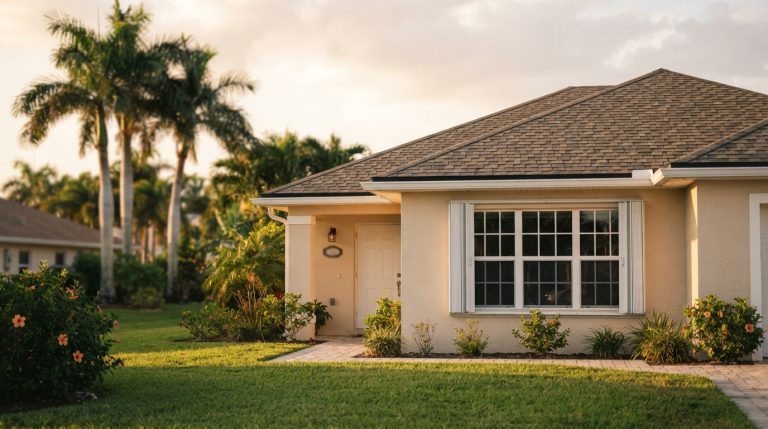
Home insurance is a package policy that protects a house, its contents, and the owner’s financial liability if someone is injured on the property. Understanding what each coverage actually pays for helps homeowners avoid gaps that only become obvious after a loss has already happened.
A standard home insurance policy is built around a handful of core components rather than a single blanket guarantee. According to the NAIC’s consumer guide, each package policy usually contains four additional types of coverage: property damage, additional living expenses, personal liability and medical payments. Knowing how these pieces fit together is the first step toward choosing adequate limits.
The Core Coverage Types Explained
Every policy is built from a small set of standard protections, even though insurers may label them differently.
- Dwelling coverage : pays for damage to your house and to structures attached to your house, including damage to fixtures, such as plumbing, electrical wiring, heating and permanently installed air-conditioning systems.
- Other structures : covers detached buildings such as a garage, shed, or fence that sit on the same property.
- Personal property : covers damage to, or loss of personal property, including household contents and other personal belongings used, owned or worn by you and your family.
- Liability protection : protects you against claims arising from accidents to others on property that you own or rent, and with a few exceptions, it is an all purpose liability policy that follows you wherever you go.
- Additional living expenses : covers additional living expenses incurred by the insured to continue, as nearly as possible, the normal standard of living when the house cannot be occupied due to a covered loss.
Limits on these coverages are tied together. Dwelling coverage should be enough to cover the cost to fully rebuild the insured home, coverage limits for personal liability and medical payments are chosen by the policyholder, and the limits of coverage for the other coverages are typically calculated as percentages of the dwelling limit.
Why Coverage Choices Matter in Maine
Maine’s weather and housing stock create specific exposure points that affect how a policy performs when a claim is filed.
1. Winter weather damage : Ice dams, frozen pipes, and heavy snow loads are common sources of dwelling claims across the state.
2. Coastal wind exposure : Properties near the shoreline often carry separate wind deductibles and higher premiums than inland homes.
3. Flood exclusion : Standard policies do not include flood protection, so homes near rivers or the coast may need a separate flood policy.
4. Older housing stock : Many Maine homes were built decades ago, which can affect replacement cost estimates and premium calculations.
Recent market data shows how these factors play out in pricing. According to LendingTree’s 2026 State of Home Insurance report, homeowners insurance in Maine costs an average of $1,433 per year for $400,000 of dwelling coverage, which is 45% lower than the national average. That same analysis notes Maine also ranks among the lowest states for theft-related losses, which means a lower risk for insurers and lower rates for homeowners.
Policy Forms and What They Exclude
Not every homeowners policy covers the same set of risks, and the differences matter when comparing quotes.
Policy Form |
Perils Covered |
Typical Use |
|
Dwelling Fire (DP-1) |
Named perils only (fire, lightning, limited windstorm) |
Vacant or secondary properties |
|
Broad Form (DP-2/HO-2) |
Named perils plus falling objects, weight of snow, vandalism |
Standard owner-occupied homes |
|
Special Form (HO-3) |
All perils except those excluded (flood, earthquake) |
Most common homeowners policy |
The gap between these forms is significant. The Dwelling Fire Form covers only your dwelling and does not cover your personal property, personal liability or medical payments, and it also covers only a few perils. A homeowner who assumes a cheaper policy includes liability protection may discover otherwise only after filing a claim.
Based in Kennebunk, ME, Cole Harrison Insurance Agency works with homeowners across Maine to review these policy structures against individual property risks.
Frequently Asked Questions
Does home insurance cover flood damage? No. Standard homeowners policies exclude flood damage, which requires a separate flood insurance policy, typically through the National Flood Insurance Program or a private flood carrier.
What is the difference between replacement cost and actual cash value? Replacement cost pays to rebuild or repair at current prices, while actual cash value subtracts depreciation from that figure, often resulting in a smaller payout for older homes or belongings.
Are ice dams and frozen pipes covered? Most standard policies cover sudden and accidental water damage from burst pipes, but gradual damage from neglect or lack of maintenance is typically excluded.
Is home insurance legally required in Maine? State law does not mandate homeowners insurance, but mortgage lenders almost always require it as a condition of financing.
Final Thoughts
Home insurance works as a coordinated set of coverages rather than a single guarantee, and understanding how dwelling, liability, and living-expense protections interact helps homeowners set limits that match their actual risk. Maine’s coastal and winter weather patterns make it worth reviewing policy exclusions carefully before a claim becomes necessary.
Published policy information for Cole Harrison Insurance Agency is available for reference regarding coverage options for homeowners in the area.