At glance:
- Core drilling creates precise openings in concrete for utilities, anchors, and structural work without breaking surrounding material.
- Wet drilling methods are the industry-standard control for managing silica dust during concrete penetration work.
- Commercial and residential projects in Monroe, NJ often require this process for plumbing, electrical, and HVAC installations.
Concrete drilling is the process of cutting precise, round openings through concrete slabs, walls, or foundations using diamond-tipped core bits, typically to route utilities, install anchors, or prepare a structure for renovation. It differs from demolition because it removes only the exact material needed, leaving the surrounding concrete intact and structurally sound.
A Concrete Drilling Company performs this work using rotary or hydraulic core rigs that bore through reinforced concrete, block, or masonry with minimal vibration and dust compared to jackhammering or saw cutting. The technique is common on job sites that need clean penetrations for pipes, conduit, HVAC ducts, or structural bolts. For property owners in Monroe, NJ planning renovations or utility upgrades, understanding how this process works helps clarify what to expect during a project, from scheduling to site preparation.
How Core Drilling Differs From Other Concrete Cutting Methods
Concrete work covers several distinct techniques, and each serves a different structural purpose. Core drilling is specifically suited for round openings, while flat sawing and wall sawing address straight cuts and larger wall sections.
- Core drilling bores cylindrical holes through slabs or walls for pipes, vents, or anchor bolts.
- Wall sawing cuts straight openings for doors, windows, or large structural modifications.
- Flat sawing scores or cuts horizontal surfaces such as driveways and floors for repair or removal.
Each method requires different equipment and setup time, and a contractor typically selects the approach based on the shape, depth, and location of the opening needed.
Why Dust and Safety Controls Matter
Drilling or cutting into concrete releases fine crystalline silica particles that pose respiratory risks if not controlled properly. Federal workplace safety rules require specific engineering controls for this type of work.
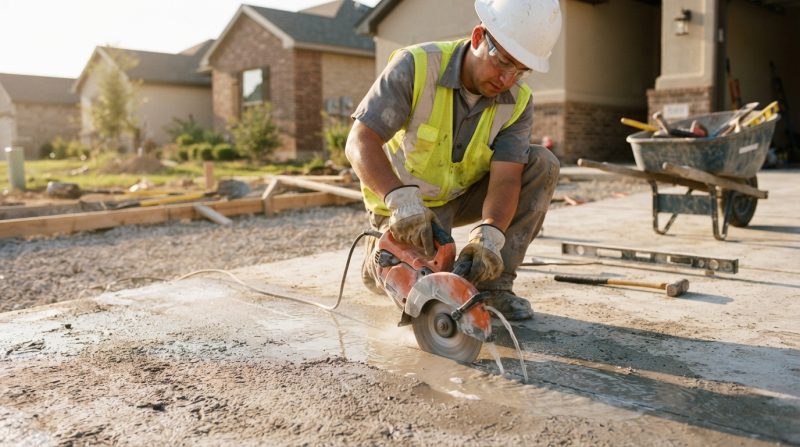
According to OSHA’s respirable crystalline silica standard, contractors who break, chip, cut, or drill into concrete must use a dust collection system capable of capturing nearly all of the dust generated during the operation. Wet drilling, where water flushes debris from the bit as it cuts, is the most common compliance method for core drilling because it suppresses dust directly at the source rather than relying solely on vacuum extraction. This approach also reduces wear on diamond bits and keeps job sites cleaner, which matters for both commercial sites and occupied residential properties in Monroe, NJ.
Typical Applications of Concrete Drilling
Core drilling supports a range of project types across residential, commercial, and infrastructure work. The table below outlines common applications and their general purpose.
| Application | Typical Diameter Range | Common Use Case |
|---|---|---|
| Utility penetrations | 2 to 6 inches | Plumbing, electrical conduit, gas lines |
| HVAC and ductwork | 4 to 12 inches | Vent routing through walls or floors |
| Anchor bolt holes | Under 2 inches | Structural fastening, railings, equipment mounts |
| Large openings | 12 inches and up | Elevator shafts, sump pits, structural access |
Projects in Monroe, NJ frequently involve the first two categories, particularly during bathroom additions, basement finishing, or mechanical system upgrades where new utility lines must pass through existing concrete without compromising the slab.
Planning Considerations for Property Owners
Before scheduling drilling work, it helps to understand a few practical factors that affect timing and cost.
- Reinforcement checks. Contractors typically scan concrete for rebar or post-tension cables before drilling to avoid structural damage.
- Access and clearance. Core rigs need stable mounting space and water drainage access for wet cutting.
- Permitting. Structural penetrations in load-bearing walls or slabs may require local permit review depending on the scope of work.
- Noise and scheduling. Occupied buildings often require work to be scheduled around business or household activity.
These factors apply broadly whether the project is a small residential utility hole or a larger commercial installation.
Frequently Asked Questions
How long does a typical core drilling job take? Duration depends on slab thickness, reinforcement, and hole diameter, but many standard utility penetrations are completed within a few hours per location.
Is core drilling louder than demolition work? Core drilling generally produces less noise and vibration than jackhammering or full demolition, since it removes only the targeted material.
Can concrete drilling be done indoors on occupied properties? Yes, wet drilling methods control dust effectively enough for most occupied residential and commercial settings when proper containment is used.
Does concrete drilling require a permit? Permit requirements vary by municipality and depend on whether the work affects structural or load-bearing elements, so local building department confirmation is advisable.
Local Service Information
Based in Hainesport, NJ, AAA Affordable Drilling & Sawing operates as a concrete cutting and drilling contractor serving customers throughout Monroe, NJ.
Additional published details for Learn More About AAA Affordable Drilling & Sawing cover service area information relevant to Monroe, NJ projects.