Key takeaway:
- Scrap metal prices move with global supply and demand, commodity exchange benchmarks, metal type, and material condition.
- Copper and aluminum typically track higher than steel and iron because of conductivity, scarcity, and processing costs.
- Tariffs, energy costs, and seasonal construction activity can shift local scrap yard rates within days.
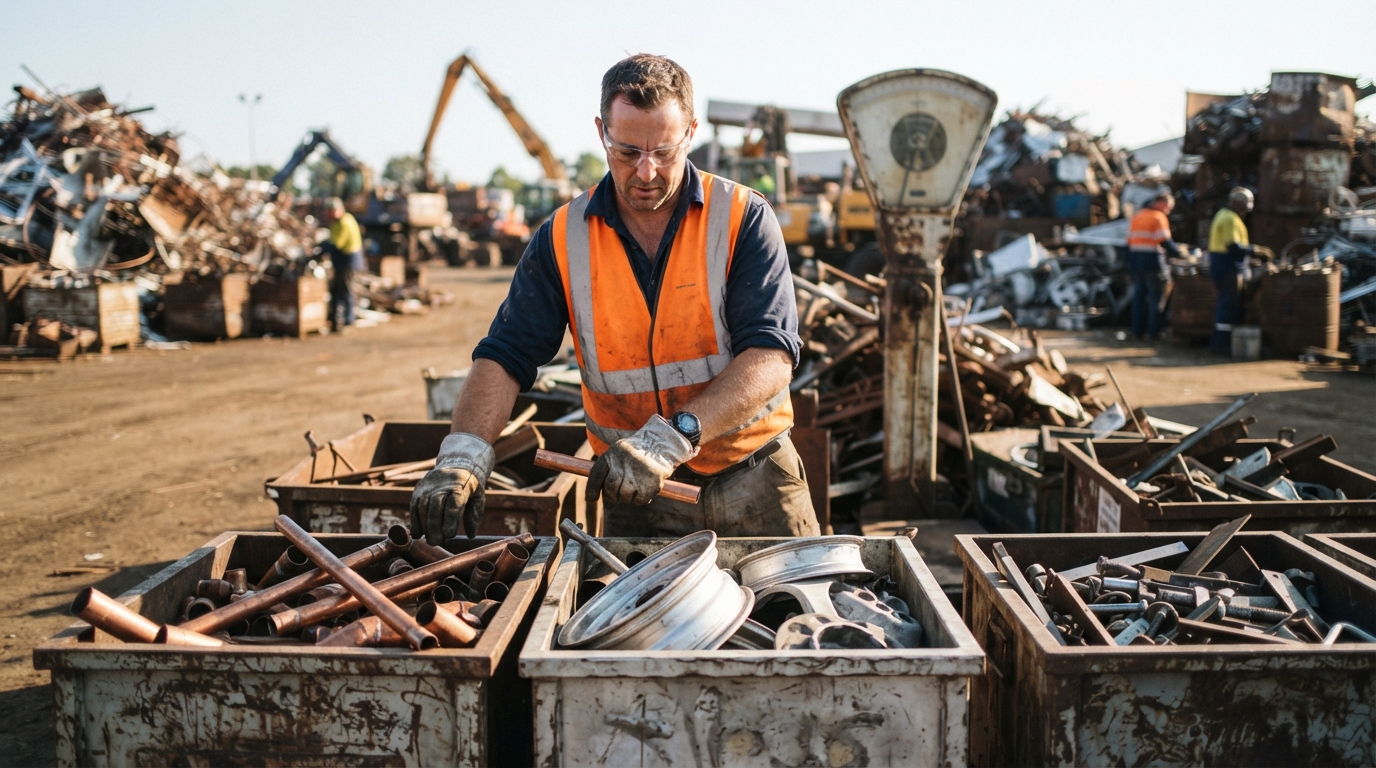
Anyone bringing in copper pipe, aluminum rims, or old appliances has likely noticed that quoted rates change week to week. Checking Scrap Metal Prices before a drop-off trip is one way residents in Bronx, NY confirm what a load is worth on a given day, since rates posted at a scale are rarely identical to what was quoted a month earlier.
Pricing for recyclable metal is not arbitrary. It follows a mix of global commodity benchmarks, regional demand, and the physical condition of the material itself, all of which interact to set the number a yard posts each morning.
Why Metal Type Determines Base Value
Not all scrap carries the same weight in dollar terms. Metal classification is the first filter any yard applies before quoting a price.
- Non-ferrous metals such as copper, aluminum, brass, and stainless steel consistently carry higher value per pound than ferrous metals like steel and iron.
- Copper remains near the top of the value chain; copper and brass consistently rank as the most valuable common scrap metals, with clean copper fetching up to 30 to 40 times more value than steel.
- Aluminum sits below copper but above steel, since aluminum offers approximately one-fifth of copper’s price per pound.
- Ferrous metals like structural steel and cast iron trade at the lowest per-pound rate but move in higher volumes.
This hierarchy explains why a load of mixed household metal is weighed and sorted before a final figure is calculated, rather than priced as a single flat rate.
Global Markets and Commodity Exchanges Set the Baseline
Local scrap prices do not originate at the yard. They follow international trading benchmarks first.
Exchanges set the tone for what processors are willing to pay. Scrap metal prices shift daily based on global commodity exchanges, including the London Metal Exchange and COMEX, which set baseline prices for copper, aluminum, nickel, and steel. When those exchange prices move, yard quotes typically adjust within days rather than months.
Trade policy adds another layer of volatility. Tariffs on steel and aluminum imports shift domestic demand for scrap metal as mills adjust sourcing, which can tighten or loosen local buying activity depending on which materials are affected. For readers who want a plain-language breakdown of how federal trade actions touch metal markets, the International Trade Administration publishes current guidance on steel and aluminum tariff measures.
Supply, Demand, and Seasonal Swings
Even with stable global benchmarks, local supply and demand cycles still move the needle on what a yard can offer.
| Driver | Effect on Price | Typical Trigger |
| Construction activity | Pushes steel and aluminum demand up | Spring and summer building season |
| Manufacturing output | Raises demand for copper and aluminum | Industrial expansion or contraction |
| Energy costs | Raises processing costs, can lower net buy price | Utility rate changes, fuel price shifts |
| Vehicle scrap supply | Affects automotive steel, copper wiring, aluminum parts | Auto sales trends |
When industries like construction, automotive, and manufacturing experience growth, demand for scrap metal rises, pushing prices upward. Seasonal patterns also emerge, with construction typically increasing during warmer months, driving up demand for metals like steel and aluminum. In Bronx, NY, where older housing stock and ongoing renovation work generate a steady stream of copper pipe, aluminum siding, and steel fixtures, these seasonal patterns can noticeably affect how much a load is worth depending on the time of year.
Material Condition and Preparation Matter Too
Beyond market forces, the physical state of the scrap itself changes the final offer.
- Sorting — separating metals by type avoids downgraded mixed-load pricing.
- Cleanliness — contamination refers to mixed metals, such as copper wire still attached to steel brackets or aluminum with bolts and fasteners still connected, which lowers payout.
- Volume — larger, well-sorted loads are generally processed more efficiently and may receive better per-pound terms.
- Grade — within a single metal category, alloy and form still affect the rate offered.
A yard operating from Trenton, NJ typically applies these same sorting and grading standards regardless of where a load originates, so preparation before a drop-off trip has a direct, visible effect on the final number.
Frequently Asked Questions
Why do scrap metal prices change so often? Rates track global commodity exchanges, trade policy, and regional industrial demand, all of which shift independently and sometimes within the same week.
Which scrap metals typically pay the most? Copper, brass, and aluminum generally pay more per pound than ferrous metals like steel and iron, largely due to scarcity and processing demand.
Does the season affect what a yard will pay? Construction-driven metals like steel and aluminum often see stronger seasonal demand during warmer months when building activity increases.
Does cleaner, sorted scrap really make a difference in price? Yes. Mixed or contaminated loads are typically downgraded, while clean, separated metal is priced closer to its full market value.
Local Scrap Metal Services
Based in Trenton, NJ, Alpha Shredding Group, Inc serves customers across Bronx, NY.
Published pricing details and intake information for Learn More are available for the local service area.