Summary:
• An accurate diagnosis identifies which spinal level is affected and whether nerve compression is present, guiding whether conservative care or surgery is appropriate.
• Imaging such as MRI, combined with a physical exam, helps rule out other causes of back and leg pain before treatment begins.
• Treatment options range from physical therapy and injections to advanced surgical techniques like artificial disc replacement for cases that do not respond to conservative care.
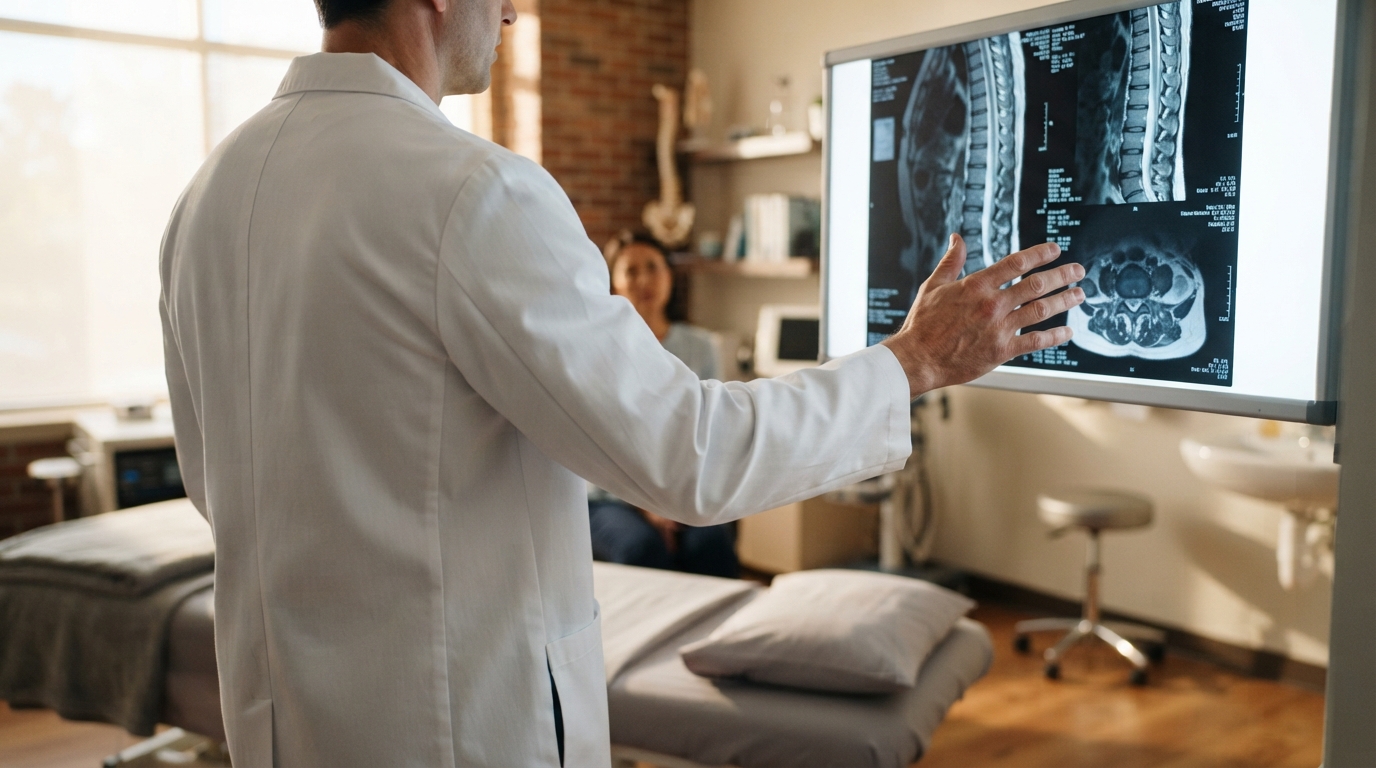
A herniated disc diagnosis typically starts with a physical exam and imaging, usually an MRI, to confirm which disc is affected and whether it is pressing on a nerve. This step matters because back pain has many possible causes, and treatment only works well when it targets the right problem.
Getting an accurate diagnosis for a herniated disc in Hot Springs, AR is the foundation for every decision that follows, from whether physical therapy will help to whether a surgical procedure like artificial disc replacement should be considered. Without that clarity, patients risk months of treatment aimed at the wrong target. A precise diagnosis also helps set realistic expectations about recovery timelines and the likelihood that symptoms will improve with nonsurgical care alone.
Why Diagnosis Comes Before Treatment Decisions
Symptoms alone rarely tell the full story. Numbness, tingling, or shooting pain down the leg can stem from a herniated disc, but similar symptoms can also come from spinal stenosis, arthritis, or muscle strain.
A thorough diagnostic process generally includes:
• A physical exam that tests reflexes, muscle strength, and range of motion
• A review of symptom history, including when pain started and what activities worsen it
• Imaging studies, most often MRI, to visualize the disc and surrounding nerve structures
• In some cases, additional tests to rule out other spinal or neurological conditions
According to the National Institute of Neurological Disorders and Stroke, a herniated disc occurs when the soft material inside a spinal disc pushes through a tear in the tougher exterior, which can irritate nearby nerves. This mechanical detail explains why imaging is often necessary. A doctor cannot always determine from symptoms alone how far the disc material has shifted or how severely a nerve root is affected.
What Imaging Reveals About Severity
MRI scans give clinicians a detailed view of soft tissue, including the disc, spinal cord, and nerve roots. This level of detail helps distinguish between a mild bulge that may resolve with rest and a more significant herniation that is compressing a nerve.
| Diagnostic Finding | Typical Clinical Meaning |
| Mild disc bulge, no nerve contact | Often managed with conservative care |
| Herniation with nerve root compression | May require injections or targeted therapy |
| Severe herniation with persistent nerve symptoms | Surgical evaluation may be appropriate |
| Degenerative changes at multiple levels | May influence choice between fusion and disc replacement |
These findings do not just confirm a herniated disc exists. They help determine how aggressively it needs to be treated and which structures are involved, which directly shapes the treatment plan.
How Diagnosis Shapes the Treatment Path
Once imaging and exam findings are reviewed together, the treatment plan can be tailored to the specific herniation rather than treated as a generic back problem. For patients with mild to moderate symptoms, this often means starting with the least invasive options.
Common next steps after diagnosis include:
1. Physical therapy focused on strengthening supporting muscles and improving posture
2. Anti-inflammatory medication or targeted injections to reduce nerve irritation
3. Activity modification while the disc heals
4. Surgical consultation if symptoms persist despite weeks of conservative treatment
Pinnacle Spine & Neurosurgery offers artificial disc replacement as a surgical option for patients whose diagnostic findings show a herniated disc that has not responded to nonsurgical treatment. This procedure is considered when imaging confirms the specific level and extent of disc damage, which is why the diagnostic step cannot be skipped or rushed.
Frequently Asked Questions
How long does it take to diagnose a herniated disc? A physical exam can often suggest a herniated disc in a single visit, but confirming it with MRI imaging typically adds a few days to a couple of weeks depending on scheduling.
Can a herniated disc be diagnosed without an MRI? A physical exam can raise strong suspicion of a herniated disc, but MRI is generally needed to confirm the diagnosis and pinpoint the exact location and severity before planning treatment.
Does every herniated disc require surgery? No. Many herniated discs improve with physical therapy, activity changes, and time. Surgery is typically reserved for cases where nerve compression is severe or symptoms persist after conservative treatment.
What happens after a diagnosis confirms a herniated disc? The care team reviews imaging and exam results together to recommend a treatment path, starting with conservative options and progressing to surgical evaluation only if needed.
A clear, imaging-confirmed diagnosis remains the most reliable way to match treatment to the actual severity of a herniated disc rather than guessing based on symptoms alone. Patients in the Hot Springs area who are dealing with persistent back or leg pain can benefit from a diagnostic evaluation that maps out exactly what is happening at the affected disc level before deciding on next steps.