At glance:
• Acting within the first 24-48 hours after flooding dramatically reduces structural damage and mold risk.
• Professional restoration covers water extraction, structural drying, sanitization, and full repairs.
• Local crews familiar with Murrieta and the Inland Empire can respond faster and coordinate insurance claims directly.
When water enters a home or commercial property, every hour of delay increases both the cost and the complexity of recovery. A structured, professional cleanup process is the most reliable way to protect your investment and the health of anyone inside.
Why Timing Is Everything After Water Intrusion
The EPA states that mold can grow on damp surfaces within 24 to 48 hours and advises drying wet or damp materials within that window to prevent growth. In a Southern California climate where interior temperatures stay warm year-round, that window can close even faster than homeowners expect.
Flood restoration differs from typical water damage cleanup in scope and contamination risk. Standard water damage from a burst pipe involves Category 1 “clean water” that poses minimal health risks. Floodwater, by contrast, is almost always Category 3 “black water” grossly contaminated with sewage, chemicals, bacteria, and debris. That distinction matters because it determines which materials can be cleaned versus which must be removed entirely.
Porous materials like carpets, upholstery, and drywall may need removal if contaminated. Non-porous items like metal and plastic can usually be cleaned and disinfected.
The Flood Damage Cleanup Process, Step by Step
Professional flood damage cleanup in Murrieta CA follows a defined sequence designed to stop ongoing damage before beginning any repairs.
1. Safety Assessment and Source Control Flood and water damage restoration begins with critical safety assessments and source control. Electrical hazards pose the greatest immediate danger, requiring power shutoff at the main breaker before entering flooded areas.
2. Documentation Take photos of the damage before beginning the cleanup process. Include photos or videos of the outside and inside of the building, including damaged personal property, and label them by room before removing anything. This documentation is essential for insurance claims.
3. Water Extraction and Moisture Mapping Use pumps, wet vacuums, or buckets to remove water. The faster water is removed, the less damage occurs to floors, walls, and furniture. Professionals follow extraction with moisture mapping to locate hidden saturation inside walls and under subfloors.
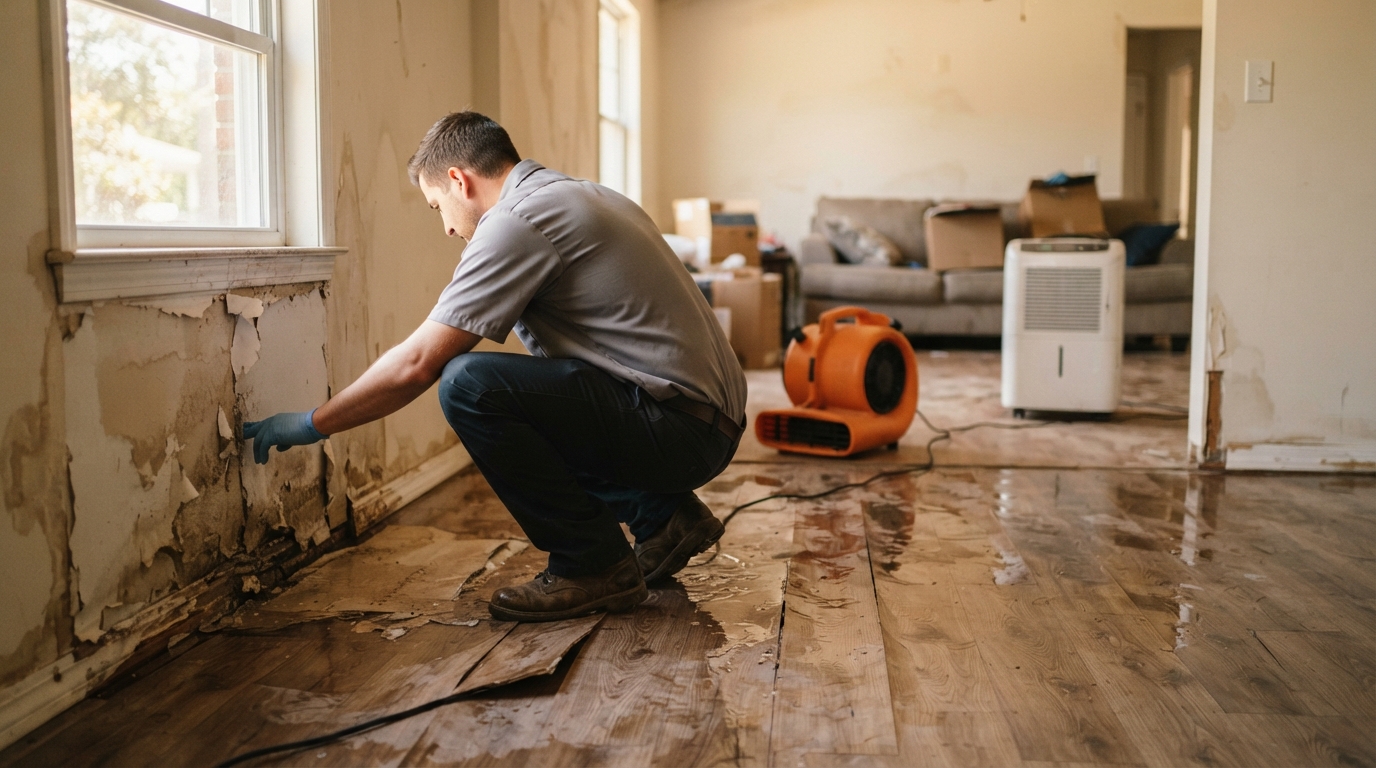
4. Structural Drying and Dehumidification Use fans, dehumidifiers, and open windows to circulate air. Drying can take several days. Moisture meters help track progress.
5. Sanitization and Material Removal Floodwater often contains bacteria, sewage, and chemicals. Clean all surfaces with soap and water first, then apply disinfectants approved for flood cleanup. The CDC’s mold cleanup guidance recommends that any items remaining wet for more than 48 hours and unable to be fully dried should be discarded.
6. Repairs and Reconstruction Once the area is dry and clean, begin repairs. Replace damaged drywall, flooring, and insulation. Inspect electrical wiring and plumbing for damage and repair as needed.
DIY vs. Professional Restoration: A Quick Comparison
| Factor | DIY Cleanup | Professional Restoration |
| Equipment | Consumer fans, mops | Industrial extractors, desiccant dehumidifiers |
| Contamination risk | High with Category 3 water | Managed with proper PPE and protocols |
| Hidden moisture | Difficult to detect | Identified via moisture meters and thermal imaging |
| Insurance documentation | Often incomplete | Detailed estimates and adjuster coordination |
Some flood damage requires professional restoration. If water is contaminated with sewage or chemicals, or if damage is extensive, call experts. Professionals have specialized equipment and training to handle complex situations safely.
Insurance, Mold Prevention, and What to Expect
Standard homeowners policies typically exclude flood damage. Coverage requires a separate flood insurance policy, often through the National Flood Insurance Program (NFIP). Reviewing your policy before an event not after is the single most useful step a property owner can take.
Insurance adjusters evaluate claims based on documented evidence. Without thorough documentation, you may struggle to prove the extent of damage or justify restoration costs.
Once the property is dry, prevention becomes the priority. Install water leak detectors near appliances, water heaters, and plumbing fixtures. These devices alert you to moisture before major flooding occurs. Regular roof inspections prevent water intrusion during severe weather. Check gutters and downspouts quarterly to ensure proper drainage away from your foundation.
Frequently Asked Questions
How quickly should I call a restoration company after flooding? Call immediately. Certified technicians typically arrive within 60-90 minutes to begin mitigation. Quick response helps limit further damage, ensures safety, and supports insurance claims by addressing urgent cleanup, drying, or board-up needs right away.
Will the restoration company handle my insurance claim? A restoration company can help you file claims onsite and work directly with your insurance adjuster. They document all damage, provide detailed estimates, and guide the process from start to finish, ensuring clear communication and fair coverage.
How long does the full restoration process take? Drying alone can take several days depending on the extent of saturation. Full reconstruction — including drywall, flooring, and painting can extend the timeline further depending on the scope of damage.
What if I smell mold but cannot see it? A musty odor often shows up before any visible growth. Flood water reaches inside walls and under flooring before mold becomes visible on a painted surface, so a persistent musty smell with no obvious source is a reason to check those hidden locations rather than wait for something you can see.
If your Murrieta property has experienced water intrusion from any source storm runoff, a burst pipe, or sewage backup prompt professional action is the most cost-effective decision you can make. Five Star Restoration provides 24/7 emergency water extraction, structural drying, mold remediation, and full reconstruction services across Murrieta and the surrounding Inland Empire communities. Reaching out as soon as water is discovered gives your property the best chance at a full recovery.